Showing posts with label College. Show all posts

Thursday, September 03, 2026

Michael Brooks, the Legendary University of Michigan Hillel Director

Everyone remembers their first boss. Michael Brooks was mine.

Michael was an iconoclast in the American Jewish community. To me, he was a mentor and a motivator. Sometimes he inspired me by saying the most outrageous thing. Other times, he left me scratching my head because he had said the most outrageous thing.

I was very active at Michigan State Hillel during my undergraduate years, so I had heard about the legendary Michael Brooks, who grew the University of Michigan Hillel into the powerhouse that it was.  But I met Michael only once before he called me to interview for a job in Ann Arbor. After a terrible fire destroyed the MSU Hillel building and forced the institution to rebuild, Michael came to East Lansing to meet with our Hillel board. We had no full-time director at the time and were distraught. He sat at the table with us, the smell of smoke still lingering, and said, “This is a wonderful thing!” It was only many years later that I fully understood what he meant. Sometimes we need to build anew for the sake of future generations.

Looking back, working with Michael at Michigan Hillel in my first job after rabbinical school was a gift. Whenever I was feeling bored, Michael would challenge me to take on a new project. When we had lunch together, he would begin the conversation by saying, “I want to know what’s on your mind.” It is not hyperbole to say that Michael Brooks understood community better than almost anyone I have known in the Jewish professional world.


Michael was odd, witty, and famously an outside-the-box thinker. He taught me how to sit back and give others the opportunity to put their visions into practice. He taught me to allow people to fail before stepping in. He understood that leadership was not always about being the person with the answer. Sometimes it meant creating the space for someone else to discover it.

But for all his wisdom and mentorship, one of my favorite memories of Michael will always be on the racquetball court. Michael beat almost everyone he played, but before our first match, I conveniently forgot to mention that I had been playing racquetball regularly since middle school. Being thirty years his junior certainly gave me an edge, but I proudly became one of the few people who actually beat Michael Brooks on the racquetball court!

I am grateful to Michael for giving me my first job more than 22 years ago, and I feel tremendously fortunate to have had the blessing of being inspired, challenged, and mentored by the legendary Michael Brooks.

May his memory be for a righteous blessing. Yehi zichro baruch.


Monday, May 13, 2024

Israel's Memorial Day 2024

As I drove through Basel, Switzerland in my rental car yesterday, many thoughts raced through my head. Only a short five-minute walk from my hotel is the Stadtcasino in Basel, the location where the First Zionist Congress was held in 1897. This meeting was convened and chaired, of course, by Theodor Herzl, the founder of the modern Zionism movement. 

It was at this event they adopted the poem "Hatikvah" as the official anthem of the new Zionist Organization. Meaning the hope, it would later become the national anthem of the State of Israel. I often remark at bar and bat mitzvahs how fitting it is that the national anthem of Israel translates as "the hope" because that is what keeps us feeling optimistic for the future. We must remain hopeful to pass our Jewish heritage to the next generations.

As I drove I thought of how the city of Basel played such a prominent role in the story of the miraculous Nation of Israel. I also thought about how Yom Hazikaron, Israel's Day of Remembrance, would begin later that evening in Israel. Yom Hazikaron, a day in which we pay our respect to the fallen who died protecting the Jewish State, was built on the ashes of the Shoah. I smiled as I considered the irony of these thoughts while driving my rented Volkswagen.

As we honor those who defended the State of Israel today on Yom Hazikaron, I salute all those who serve Israel so that the Jewish people continue to have a homeland. At a time when anti-Semitism is once again permeating throughout the world and there are anti-Israel protests on most American college campuses, it is so dire that Israel be protected from its enemies on all sides. When the sun sets in Israel this evening on Yom Hazikaron, the Jewish people worldwide will celebrate Israel's 76th year of independence. We will sing Hatikvah with pride and be hopeful for the future. That is all we can ever do.


Friday, June 02, 2023

Snapchat’s Effect on Our Teens’ Mental Health


Co-authored by Joshua Miller

Parents are more concerned than ever about their children’s mental health. Studies show that social media use has a strong effect on our teens’ daily emotions and behavior. Rather than write yet another article lamenting teens’ social media usage, I invited my nineteen-year-old son, Joshua, to co-author this Jews in the Digital Age column with me to ensure it includes perspectives from both a parent and a teen. 

Parents of teens are familiar with and use social network applications like Facebook and Instagram. They have also, in recent years, begun to use TikTok, the popular video application. However, Snapchat is different since most parents do not use it and are generally unaware of their teens’ activity on the platform.

Snapchat’s own annual reports explain that it is used primarily by high school and college students. The mobile application allows users to share photos, videos, and messages. As of February 2023, Snapchat has approximately 750 million monthly active users, 63% of which use the application regularly, and more than three billion snaps are created and exchanged each day.


Snapchat causes negative mental health issues, such as anxiety and depression, in high school and college students, making it an activity that should be high on the concern list of parents, teachers and mental health professionals. There exists a worldwide mental health crisis among teens and college students, and the use of Snapchat is prevalent among this age demographic. Studies have been conducted to show a causal relationship between Snapchat use and this mental health crisis.

Many teens will be enjoying a fun experience with family or friends, and then experience a sudden mood swing upon opening the Snapchat application on their phone. The phone screen will display photos of their friends' activities, who they’re with, and where they are currently located using Snapchat’s “Snap Map” GPS (global positioning system) feature. The teen who seemed to be happy and content is now feeling lonely, anxious and depressed thanks to the “fear of missing out.” Commonly known by the acronym “FOMO,” Snapchat contributes to this fear by making it appear that others in the teen’s peer group are enjoying life more. The teen often feels that they have not been invited or included in a competing activity even though they were satisfied with their situation prior to looking at the “Snap Map.” Seeing what others are posting on Snapchat, the teen loses focus and cannot be present with the people they are actually with in real life (“IRL”).

Wednesday, December 04, 2019

The Holocaust and Antisemitism

When I was in college I took a course called "The Holocaust and Antisemitism." The professor, Ken Waltzer, explained that you can't learn about the Holocaust without having a thorough understanding of the history of antisemitism. He was correct.

I'm now teaching my own college course about the Holocaust and much of my syllabus is based on Professor Waltzer's course from over twenty years ago. A few weeks ago I took my class on a tour of the Holocaust Memorial Center of Metropolitan Detroit (the nation's first freestanding Holocaust museum). As we walked around the museum I explained to the students that while the Holocaust is a historical event that happened decades ago, the antisemitism that led up to it continues to this day.

There were 1,879 acts of antisemitism in 2018 according to the Anti-Defamation League, including the attack on the three congregations sharing the Tree of Life synagogue in Pittsburgh. Over the past week alone, we have seen the antisemitic incident of anti-Semitic graffiti carved into a door and drawn on a stairway at the Sixth & I Historic Synagogue in Washington. We have seen Amazon.com selling Christmas ornaments, towels and mousepads with glorified photos of the Auschwitz death camp. Jewish students are threatened on college campuses and the Jews in London are considering emigrating en masse if Jeremy Corbyn is elected.


Yesterday, as I was on a conference call discussing the upcoming #WeRemember campaign that the World Jewish Congress is launching for the 4th straight year in observance of International Holocaust Remembrance Day, I walked into the university building where I teach my weekly Holocaust class at the University of Detroit Mercy. It was ironic that I was about to teach 34 non-Jewish students about the Holocaust while I was talking about the need for more Holocaust education so the atrocities of the Shoah won't be repeated. Still on the phone, I walked down a stairwell and saw a swastika drawn on the wall next to six neo-Nazi Wolfsangel symbols.

I brought my entire class into the stairwell and we crowded there as I showed them the symbols of hate on the wall of their university. I asked them what they thought we should do about it. I asked them how they would take what they learned over the course of the past semester in our Holocaust class and use that knowledge to educate their peers, their future children, and their future coworkers. How sad is that only seven decades since the Holocaust there is still so much senseless hate in this world?

Wednesday, October 26, 2016

Finally a Modern Textbook About Judaisms (Yes, Judaisms Plural)

Judaism is a millennia-old faith rooted in tradition, but the makeup of its adherents is diverse and continues to change. I don't believe the way its taught in university courses has adapted to those changes. I've been teaching the same course about Judaism at Oakland University in suburban Michigan for the past eight years, sometimes for as many as three semesters in the same year. I created the syllabus based on a similar course I personally took as an undergraduate student at Michigan State University where I later returned and taught the same course as a visiting professor. In all those many semesters I never updated the required texts for the course. It wasn't for a lack of desire, but no updated texts have been published that I feel provide a modern survey of the Jewish community.

Until now. Aaron Hahn Tapper, an associate professor in Jewish studies at the University of San Francisco and a Fulbright Senior Scholarship winner, must have recognized such a contribution was long overdue. Hahn Tapper's book "Judaisms: A Twenty-First-Century Introduction to Jews and Jewish Identities" (University of California Press) successfully frames the Jewish faith in the context of its peoplehood and shows the variety of communities and theologies that make up the Jewish people today. Brilliantly, Hahn Tapper pluralizes the term "Judaism" in recognition that the modern adherents of the Jewish faith are not merely a diverse group, but we are made up of diverse groups within our diverse groups.


We've all been taught not to judge a book by its cover, but the cover images of "Judaisms" alert the reader that this is not your typical course reader on the Jewish religion. A photo of an ethnically diverse group lighting a menorah at a biracial Hanukkah event is joined on the page with women at the Western Wall adorned in tallit (prayer shawl) and tefillin (phylacteries) along with a gender transition ceremony at a Jewish day school. This book, which serves both as an easy-to-read text for undergrads as well as a more advanced selection for graduate students (footnotes are available online), articulates that today's Jewish community is vastly different than the one at the turn of the last century let alone a century ago.

Sunday, August 14, 2016

Back to School Tech Guide 2016

Summer, where have you gone? Yes, it's that time of the year again. Summer jobs and internships are coming to an end for college students and they're getting ready to pack their parent's minivan and move back to school. Lined paper notebooks and yellow highlighters aren't on the packing list for today's college students and grad students any more. Previous generations schlepped bulky desktops and tube TVs to campus. Students in 2016 are taking lightweight laptops and tablets along with 3D printers, high end 4K TVs and lightning fast routers.

This year's Back to School tech guide isn't your typical list of technology gadgets. The list includes some great values in addition to some products that require splurging. Some products will help college coeds be more productive, while others are helpful for unwinding after a day of classes and homework. After checking out these products most parents will wish they were able to turn back the clock and return to campus this fall.


Featured: Kenmore Elite 50" 4K UHDTV and Roku Streaming Stick - When it comes to ultra HD TVs, Kenmore isn't often on the list of the most impressive options. However, the Kenmore Elite 4K TV crushes the competition. It's the perfect TV for a college apartment, fraternity house or sorority house. Now available at Sears stores and at Sears online, the Kenmore Elite 4K UHDTVs are an amazing value for the quality and students can instantly stream with a Roku Streaming Stick (also available at Sears) to get over 1,000 channels with the most movies, music, sports and shows of any streaming player. The picture quality is excellent and there are enough HDMI ports on this model. $549.99 sears.com

Kenmore Elite 50" 4K UHDTV


Featured: LG Gram 15 Laptop - There's simply no lighter high-performance laptop on the market than the LG Gram 15. This super lightweight lapper (only 2.2 lbs.) comes with Windows 10 OS installed, a powerful 6th generation Intel Core processor, full HD picture quality and many connective options including a built-in HDMI port for easy connectivity straight into a TV. No college student would ever complain about having to carry around this computer, which is lighter than most tablets and feels as light as a pile of a dozen sheets of paper. The Intel Core i5 version ($1,099) comes with 8GB of memory and 256GB of storage, while the  i7 ($1,199) has 512GB of storage. lg.com/us/laptops

LG Gram 15 Laptop


Intel Compute Stick - This computer the size of a stick of gum immediately became my favorite tech gadget for 2016! This little device transforms any HDMI TV or monitor into a fast computer running Windows 10 OS (or a Linux option). The quad-core Intel Atom processor delivers maximum performance, but it doesn't use a lot of power so it's energy efficient and ideal for student living. Simply plug the Compute Stick into a TV or monitor and you have a computer. It's perfect for communal living because roommates could have one TV for leisure time, but each student could plug in their own Compute Stick when it's time to do some school work. When the student returns home on a school break, they just throw the stick into their pocket and their "desktop" goes with them. Prices vary. intel.com

Intel Compute Stick


LG 21:9 UltraWide Full HD IPS LED Monitor - Most students aren't going to want to lug two monitors to school this fall even if they're used to using dual monitors at home. This full HD monitor from LG, however, is like having a dual monitor with one unit. The UltraWide 21:9 aspect ratio makes games and movies more immersive than ever before, while the clarity of the 1080p pixel Full HD resolution with IPS is a game-changer. Everything looks more crisp and detailed from any viewing angle. With a monitor this good, a separate TV is unnecessary making this a must-have for any college dorm room this year where space is at a premium. The sleek design with a smooth curve base brings a touch of elegance to the monitor too. $599.99 lg.com/us/ultrawide-monitors

LG 21:9 UltraWide Full HD IPS LED Monitor


Arris Surfboard Routers and Extenders - Today's college students don't remember a time of dial-up modems and wonky connections. They have come to expect lightning fast internet speeds and Arris products won't let them down. The Arris system of routers and extehttp://sears.comnders solves the common and persistent problem of Wi-Fi dead zones. Using a unique combination of next-generation networking technology and intelligent software, Arris tailors the Wi-Fi to the user's needs -- whether they're in a dorm room, old fraternity house or small apartment. The simple plug-and-play installation and iOS or Android app makes using Arris technology quick and easy. The routers range in price from $119.99 to $299.99 and the extenders are all under $100. arris.com

Arris Surfboard Routers and Extenders


3Doodler - While adult coloring books are the "new new thing" parents are doing after they send their kids off to college, the college students are doodling with 3D technology. Billed as the world's first 3D printing pen, the 3Doodler has won countless awards for tech innovation. This new form of art is taking the world by storm and it's become a fun collaborative activity for young people. On a rainy, lazy weekend college students are going to put away their homework, turn off the TV and create amazing little projects together with the 3Doodler. The pen comes in assorted colors and the plastic strands are inexpensive. There are several books available from 3Doodler to suggest fun projects and designs. $99 the3doodler.com

3Doodler


BEOPLAY H5 Wireless Earphones - The incoming class of freshmen on college campuses this year aren't impressed with wireless earphones because they are the generation that expects wireless everything. They also are different than students a decade ago who were content with the standard issue white earbuds that came with their Apple products. Today's students are going back to school with high quality, expensive music listening devices. Beoplay H5 provides an immersive listening experience around campus without having to carry bulky over-the-ear headphones. A bonus feature of the H5s is that you can customize presets on your iPhone and quickly access them from your Apple Watch. Ideal for fitness buffs, the H5 fits snugly in the ear and comes with several ear tips options including a Comply Sport version that has a membrane to prevent moisture interfering with the electronics. $249 beoplay.com

BEOPLAY H5 Wireless Earphones


Lumo Run - There's been a lot of talk about Lumo Run and it's finally available to the public. A limited pre-sale last fall impressed runners and the prediction is that this little device will fast become the must-have tech product for athletes. If you've ever visited a college campus you know that running is the most prevalent workout activity. Lumo Run determines key metrics for targeted form by wearing this smart sensor that combines the powerful data of a running lab with the personal attention of a coach. Lumo Run's features include real-time audio coaching, insights after the run, plus personal recommendations for drills and exercises for long-term improvement. $99 (or $199 for running shorts with the sensor built in) lumobodytech.com/lumo-run

Lumo Run


Naim Audio Mu-so Qb Wireless Music System - This extremely compact yet powerful wireless music system is the perfect size for a dorm room or small apartment. It provides amazing sound and connects to everything imaginable. While the price is high for college students at $999.95, it's well worth the cost for a group of roommates to go in together and enjoy the booming sound on a daily basis. The quality beats out any other small size speaker in its class and the design will surely turn the heads of impressed coeds. naimaudio.com

Naim Audio Mu-so Qb Wireless Music System


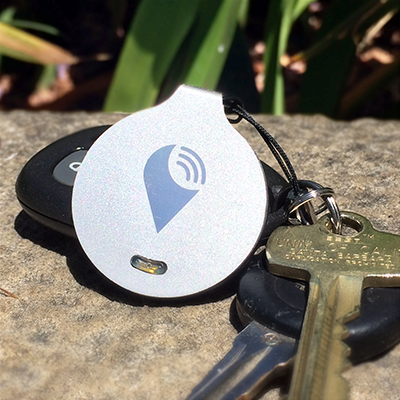
Tile and TrackR bravo - As Bluetooth has become more of a standard that allows devices to communicate wirelessly, more companies are developing devices with Bluetooth to solve everday problems. One of the most common problems people have (and the most frustrating) is losing things. Many products have been created using Bluetooth to help us locate these items. For example, for the past couple of years I've been using XY Findit (xyfindit.com) to locate my keys when I misplace them. Two companies have come up with some creative new devices that use Bluetooth to keep track of things like pets, bikes, mobile devices or anything else that could go missing. Students can place Tile or TrackR bravo Bluetooth devices inside expensive textbooks, on their laptop case or even in a friend's pocket (so they don't lose their friend at a crowded party). Both Tile and TrackR bravo have alert notifications and connect to iOS and Android devices. TrackR bravo also integrates with home Wi-Fi and Nest network to disable alerts from sounding when wandering around the house. Both are under $30 thetileapp.com or thetrackr.com

Tile and TrackR bravo


Dacuda PocketScan Wireless Scanner - While textbooks seem like they would be obsolete for the college student in 2016, they are not. Students are still lugging around heavy texts, but Dacuda’s PocketScan can be a lifesaver for them. This has quickly became one of the most popular tech gadgets of the year. It scans textbooks, documents and photos perfectly. PocketScan, which flawlessly connects to popular software programs like Microsoft Office, has a built-in OCR engine for recognition and editing of text and tables. It offers seamless Bluetooth connectivity and a rechargeable, long lasting battery (over 400 Scans). I've never found a portable scanner of this high quality. $149 thegrommet.com/dacuda

Dacuda PocketScan Wireless Scanner


Logitech CREATE Backlit Keyboard Case and Logi BASE Charging Stand for iPad Pro - I've long been a fan of Logitech and its newer Logi brand. It was difficult choosing only two of their new products to include for this Back to School rundown, but these two products will really add productivity to students. Earlier this month Logitech unveiled the CREATE Backlit Keyboard Case with Smart Connector for the 9.7-inch iPad Pro and its already become the must-have add-on for iPad Pro users. It is compatible with the Smart Connector, eliminating the need to power on, connect or charge the keyboard. The backlit keyboard case comes with an Apple Pencil holder and is lightweight at under a pound, yet fully protective for the iPad. The Logi BASE Charging Stand also uses the Smart Connector. It provides the perfect viewing angle to turn the iPad into a monitor and as a bonus the tablet charges quickly. Keyboard: $129.99 Logi BASE: $99 logitech.com

Logitech iPad keyboard and Logi Base for iPad Pro


Swiftpoint GT Mouse - I first encountered the Swiftpoint mouse at CES a couple years ago and it immediately became my favorite mouse. While it's on the pricier side for a computer mouse, it's well worth the price. This ultra-portable wireless ergonomic mouse is perfect for small working environments. The same mouse that I always recommend to business travelers will be ideal for students working in classrooms and lecture halls where there's not a lot of extra desk space. The mouse combines natural touch gestures with the precision and convenience of a traditional mouse. Switfpoint works perfectly with Windows 7/8/10, Mac OS X and Android. I'm also excited for Swiftpoint's The Z gaming mouse, which comes out in December. $149 thegrommet.com/swiftpoint

Swiftpoint GT Mouse


Corentium Digital Radon Monitor - When the discussion arises of what technology parents should send with their kids back to college this year, the thought of a radon monitor likely doesn't make the list. That off campus apartment your daughter and her friends rented is likely very old and potentially has high levels of radon gas. The Corentium radon gas monitor is a state-of-the-art measuring instrument combining ease of use and performance. Its LCD screen displays the average daily, weekly and long term concentrations of radon. Powered by 3 standard AAA batteries, the monitor makes it easy to take measurements from one room to another in order to get an overview of the concentrations of radon. The unit requires no annual calibrations throughout its useful life and is estimated at over 10 years. $199 (pro models are more costly) corentium.com

Corentium Digital Radon Monitor

Blink Cameras - College students today have the ability to monitor their dorm room and apartment in an easy and cost efficient way. Blink has a trusted track record for being an ultra-affordable home security and video monitoring system that comes with free cloud storage. It is the ideal way for students to keep an eye on their possessions while they're at class or at a party. Blink is wireless, intuitive and easy to set up. It captures 720p HD video and includes a motion detector. $99 (1 camera and sync module) or $219 (3 cameras and sync module) blinkforhome.com

Blink Cameras


Max Flossolution - Oral hygiene might not be the first thing parents think of when sending their kids off to school this fall, but let's face it... we parents care about our kids' teeth and have a lot of our hard earned money invested in it (braces are expensive!). Max by Flossolution is the best oral hygiene technology on the market. It is the first of its kind flossing and brushing system utilizing patented Flossguard and Bite Bumper technology. The kit includes a charging base, a Sonic Motor, a Flossarm, and a cartridge of 14 reusable microflossers with a brush arm. Max comes with a rechargeable battery that lasts more than four weeks and provides five sonic power modes: Smart, Fresh, Bright, Happy and Healthy. I've been using Max for a few months now and my teeth are truly feeling healthier and cleaner. It's a really enjoyable teeth brushing experience. $99.99 flossolution.com
Max Flossolution teeth brushing technology


XYZ Printing da Vinci 3D Pen - XYZprinting is a world leader in desktop 3D printers and has now entered the 3D pen market with the versatile da Vinci 3D Pen. Lightweight and mobile, this 3D pen allows you to move freely along a surface and extend your creation upwards to easily add dimension to your drawings. No computer or software is needed to create fun and impressive 3D art with the da Vinci. I've been very impressed with XYZ Printing's line of 3D printers so it's no surprise that their first 3D pen is a huge success. Students will be able to create amazing art while taking a break from the daily grind of homework at college this fall. $49.95 http://us.xyzprinting.com

XYZ Printing da Vinci 3D Pen


BEZALEL Latitude iPhone Wireless Charging Case and Prelude Portable Charger - This Los Angeles startup develops and sells some very innovative wireless charging technology. Most college students use iPhones and know how frustrating it is at night after a busy day on the go when their phone has no juice left. BEZALEL's Prelude wireless charger renders charging cords, cables and Mophie packs obsolete. It's the first wireless charger that's also fully mobile (other chargers must be plugged into a power source to get juice). The Latitude fits iPhones like a glove and with the built-in Lightening cable connector it also makes it easy to sync and charge the old fashioned way. Prelude: $79.99; Latitude: $49.90 bezalel.co

Bezalel Latitude iPhone 6 Wireless Charging Case & Portable Wireless Charger


Satechi Headphones Stand - Satechi makes great products. I've been using their 7 port Mult-Charging Dock, which allows members of my family to charge up to seven devices at once in a well organized and convenient station. I also love their phone holders, battery packs and travel wall chargers that provide extra USB outlets. Now, they've released the amazing headphone stand that provides simple storage for headphones, allowing you to charge the headphones or listen to music through the stand. It comes in four brushed aluminum finishes. $27.99 satechi.net

Satechi Headphones Stand


Quirky Pivot Power Genius - Smart technology doesn't have to be expensive. With so many electric gadgets in college dorm rooms and apartments, extra electrical outlets are a must. This power strip has four total outlets, but two of them can be turned on or off remotely from an app on your mobile device (manually or scheduled automatically from anywhere). Another advantage of the Pivot Power Genius I like is that the outlets pivot to accommodate plugs and adapters of all shapes and sizes. $23.99 quirky.com
Quirky Pivot Power Genius


Fizzics Beer Maker - Sure, most college and grad school apartments have a fridge well stocked with beer, but today's 21+ students have more refined tastes than previous generations of coeds. Enter Fizzics. This company sought to answer the age old question of why beer tastes so good fresh from the brewer's tap, but not from a can or bottle. The Fizzics Technology Platform improves the flavor, taste and mouth-feel of any carbonated beer. It's portable (4 AA batteries) and doesn't require CO2 or Nitro cartriges. $169.99 fizzics.com

Fizzics Beer Maker


SodaStream Fizzi - What parent doesn't want their college student well hydrated throughout the day? Cans of carbonated beverages are unhealthy and tap water gets boring after a while. SodaStream's new Fizzi actually brings some excitement to water drinking with sparking water and flavoring that isn't bad for you. Fizzi Sparking Water Maker makes carbonating water easy with a quick snap-lock bottle insertion, making it ideal for the busy, on-the-go college student. It doesn't require electricity and it’s new slim design makes it ideal for any dorm space. $79.99 sodastream.com

SodaStream Fizzi


Stringify App with Amazon Echo or Amazon Tap - Just when I thought I couldn't love my Amazon Tap any more along comes the Stringify app. It actually makes your smart things smarter and it's a really cool way to integrate IoT (Internet of Things) into your daily life. Parents (and certainly grandparents) won't recognize the college dorm or apartment of the 21st century. Everything is connected. Stringify takes that connectivity to the next level by making everything connected through an Amazon Tap, Echo or Echo Dot. Integration of such things as alarm systems, thermostats, light bulbs and speakers is only the half of it. Using Stringify's Flow Ideas, students can have a weather sensor send a notification to their phone to bring an umbrella when there's rain in the forecast or keep the side door unlocked when a roommate's Fitbit alerts it that she's on a run. The app is currently iOS only with Android coming this fall. Free download. stringify.com

Stringify App with Amazon Tap


TomTom Spark Cardio + Music Fitness Tracker - I've long been a fan of Fitbit trackers and the Microsoft Band, so it takes a lot to get me excited about yet another activity tracker on the market. TomTom's Spark Cardio is extremely impressive and certainly got me excited. It's ideal for today's active student in that it's water resistant (up to 50 meters), has strong GPS and stores over 500 songs. The eight multi-sport modes cover a range of fitness activities including outdoor runs, outdoor cycle, swim, treadmill, freestyle, stopwatch, as well as the newly introduced indoor cycle and gym. $249.99 tomtom.com
TomTom Spark Cardio + Music Fitness Tracker


Cassia Hub - Think about how many Bluetooth devices there will be in the typical college dorm room or apartment this school year. Cassia Networks new Cassia Hub allows them all to be controlled from one iOS device. The hub extends the range of all Bluetooth devices on the network. Users can set the mood using an iPhone -- that means study time will automatically brighten lights and put on some inspirational music, while party mood will dim lights and automatically setup the playlist for the night. The range is about 1000 feet which alleviates dead spots and multiple devices can be set up. $99.99 ($239.99 for the audio kit with 2 wireless speakers) en.cassianetworks.com

Cassia Hub

booq Daypack - College students will love any of booq's products. They are stylish, versatile and comfortable. booq's new Booqpad is an impressive and protective case for the iPad Pro. The booq product that really excited me this fall, however, is the Daypack. For years I've been lugging around a heavy Tumi computer case that has not been friendly to my lower back. I've since switched to the booq Daypack for both comfort and versatility. booq's comfortably cool backpacks provide a surprising amount of interior storage for everyday carrying. It has a slim profile and an interior that touts a large main compartment with multiple pockets including a slip pocket for a tablet and compartment for a 17” laptop. Daypack is available in four colors: blue-aqua, black-tarp, brown canvas and gray-red. It comes with booq’s Terralinq lost and found service and a five-year warranty. $90 booqbags.com

booq daypack computer carrying bag
Originally published at the Huffington Post

Monday, August 24, 2015

Back to School Tech: Technology Gadgets for College Students

The college students of yesteryear packed their laptop computer and a graphing calculator when they went off to school in late August. Today's tech-focused coeds take a large array of tech gadgets with them to campus. From Bluetooth speakers and keyboards to drones, fitness wearables and Go-Pro cameras, the 21st century undergrad makes Elroy Jetson look like Pebbles Flintstone. This back-to-school tech list has both the practical and the just plain fun gadgets for those headed off to academies of higher learning who are desiring high tech.


Parrot Bebop Drone: A drone might not be a required device to pack for college, but it will certainly be a fun, attention-catching toy for a creative college student. This compact, durable, easy-to-use quadcopter is great for capturing overhead video and photos. The Parrot Bebop is one of the most popular recreational use drones on the market and its small and lightweight enough for out-of-the-box usage. The Bebop's camera has been improved from previous drone models and has a 180-degree angle of view with a 14-megapixel sensor. The Bebop can be piloted with a smartphone or tablet. With a GNSS chipset with GPS, Glonass and Galileo built in, the Bebop will return to its take-off location on its own and hover in place 2 meters above the ground. It can reach speeds of around 45 mph. You'll have to recharge the Bebop's battery often between flights, but it will be fun to capture video footage on beautiful fall days from high above the campus.

Priced: $499 www.parrot.com


Ultimate Ears UE ROLL: Everyone knows college students love their music and they have to be able to take it with them. In 2015, no one is shlepping a heavy stereo to the park to play Ultimate Frisbee, but simply putting on your favorite playlist on your cellphone won't be loud enough either. The UE ROLL from Ultimate Ears plays your music loud in every direction. This is the most powerful, yet small wireless Bluetooth speaker. For added sound you can double up with a second UE ROLL or use one of Ultimate Ears' other Bluetooth speakers like the UE MEGABOOM. This comes with a downloadable mobile app for remote on/off and custom wake up settings.

Priced: $99.99 www.ultimateears.com


Monday, March 30, 2015

Tip of the Hat to My College Professor, Ken Waltzer

Yesterday morning I found myself in a room with about 30 Jewish teens. I had spent Shabbat as scholar-in-residence at Congregation Beth El, a Conservative synagogue in Phoenix, and was asked to talk about college life to these high school students.

I began by sharing with these teens -- some of whom will be off to college in the Fall -- what no one ever told me before I embarked on my college experience twenty years ago. I told them that as I headed off to college I didn't even understand what the differences would be between my future college professors and the school teachers I had encountered to that point. I didn't understand the concept of office hours or that many professors would treat their students as adults. No one told me that professors would invite students to have lunch with them in the cafeteria or actually be interested in your life outside of the classroom.

Rabbi Jason Miller with Prof. Ken Waltzer (2009)


Friday, November 30, 2012

MSU Hillel: If You Build It

Like many rabbis I’m often asked why I chose to become a rabbi. People are interested to know if there was a pivotal moment in my upbringing that steered me to the rabbinate. In responding to that question I’ve always cited my years as a student leader at Michigan State University Hillel.

A few weekends ago I spent a memorable weekend in East Lansing my eldest child and attended Shabbat festivities at MSU Hillel. It was the first Shabbat I experienced on the MSU campus since my graduation from the university almost fifteen years ago. It proved to be a nostalgic weekend for me and one in which I truly gave thanks for the many gifts that MSU Hillel provided for me.

My son in front of the MSU Hillel building earlier this month.


Wednesday, January 04, 2012

Michigan Wins Sugar Bowl, Receives Kiddush Cup

It's been a great beginning of 2012 for Michigan sports teams. The Michigan State Spartans won the Outback Bowl in a nail biting 3rd overtime victory, the Michigan Wolverines won last night's Allstate Sugar Bowl in overtime, and Michigan State beat Wisconsin last night in an exciting down-to-the-buzzer game of college hoops. The Red Wings are neck and neck with the Chicago Blackhawks for first place, the Detroit Pistons are on a two-game winning streak, and the Detroit Lions are in the post-season for the first time since 1999.

There was even an apparent Jewish connection at the end of last night's Sugar Bowl when Michigan coach Brady Hoke hoisted the Sugar Bowl trophy, which can best be described as a Silver Kiddush Cup Award.

Twitter: @RabbiJason

Tuesday, September 21, 2010

When Technology & Shabbat Collide, Give the Benefit of the Doubt

This past Sunday, the president of New York University issued a mass e-mail apology to students and staff. The day after Yom Kippur might sound like a sensible day for issuing apologies, but the question is whether John Sexton actually needed to make a Mea Culpa.

You see, this official apology to the entire university community was for sending an earlier mass e-mail (the university president's academic year report) on Friday evening when Jewish students were already observing Yom Kippur at Kol Nidrei services. Apparently, the report was supposed to be sent during the day on Friday (before the advent of the holiday), but it was delayed due to technical problems.

While it's nice that the university president issued this apology before any complaints were even made, I'm not sure how an e-mail coming into one's inbox on the Day of Atonement is offensive. Personally, I abstain from using my computer or phone (and thus no e-mail) on Shabbat and Jewish holidays, but I'm not offended if messages reach my account during these times.

I don't think Jewish institutions should send official e-mail messages on Shabbat and holidays, but of course it depends on the type of Jewish organization. A reform temple sending a reminder via e-mail to its membership on Saturday afternoon about a program that evening might not be considered unseemly, but a JCC or Jewish federation releasing a broadcast e-mail message in the middle of Shabbat would be tacky, raising eyebrows and drawing complaints. NYU, a secular institution, shouldn't worry about sending e-mail messages to the student body on Jewish holidays. Jewish students at NYU were legitimately angered that the second day of classes were held on Rosh Hashanah, but the president's e-mail message reaching the inbox once Yom Kippur began is not an egregious act. Sexton's apology is just an example of political correctness gone too far.

There are certainly times when technology and Shabbat or Jewish holidays collide. In some cases, a tactful conversation is necessary. For instance, leaders in my synagogue might send each other casual e-mail messages on Shabbat and Jewish holidays regarding congregational matters. But it is only when a leader sends an e-mail to the entire congregation that it is problematic. True, no one is being forced to turn on their computer and log-in to their e-mail account to read it on Shabbat or a holiday, but it gives the impression that official synagogue business is being conducted on these days and that's an impression I don't want to give.
There are other times when technology seems to collide with Shabbat, but without that intention and the benefit of the doubt should be granted. Here are two examples to demonstrate my point:

1) For several years my Facebook account was set up to automatically upload this blog's RSS feed onto my Facebook page. This process often took a few hours after I published a blog post. So, on one occasion I posted to my blog at around 4:00 p.m. on a Friday afternoon. The blog post wasn't fed onto my Facebook account until later that evening, after Shabbat began. The following Monday, I received a finger-wagging message through Facebook from a member of my local Jewish community. She commended me on my interesting blog, but questioned how I, as a rabbi and role-model in the community, could publish a blog post on Shabbat.

Even after explaining to her that the actual post was published well before the onset of Shabbat, but that it didn't posted to my Facebook profile until several hours later, she chastised me for not taking that into account when I originally posted to my blog. I was immediately reminded that certain activities are prohibited even before Shabbat commences lest others think that you have transgressed the laws of Shabbat (i.e, one may not put wheat into the watermill unless there is enough time for it to be ground before the onset of Shabbat).

2) I am an avid user of Constant Contact, the Web based e-mail newsletter marketing application, and I used to send a weekly newsletter to my subscribers on Friday afternoon. On one particular Friday, the site experienced a maintenance problem and it didn't send the newsletter until Saturday morning. I discovered that the newsletter wasn't disseminated until Saturday morning when I checked my e-mail following Shabbat. Of all the subscribers, I received only one irate message from an individual who complained that I sent the newsletter during Shabbat. The irony is that he sent his chastising message to me on Shabbat afternoon. I replied with the explanation that Constant Contact experienced maintenance problems, he he responded, "I figured it was something like that. Sorry. And I guess I shouldn't have responded on Shabbat anyway!"

So, sometimes it's important to give people the benefit of the doubt when technology and Shabbat collide. Before jumping to conclusions, it's possible that the message sent to your discussion group on Shabbat was actually sent by someone in Israel where Shabbat had already ended in that timezone. Maybe that message from the Jewish federation's CEO to the entire community was scheduled before the holiday, but it got delayed in Cyberspace.

And if you're a college student at NYU who returned home after breaking the fast Saturday night to find that an e-mail message from your university president had been waiting for you in your inbox since Friday night... let it go. Your e-mail account's Sabbath observance hasn't been compromised.

Monday, June 21, 2010

Avot: My Teachers

Yesterday was Father's Day. It was my 7th Father's Day as a Dad. I love Father's Day because it's a chance to honor fathers and to appreciate fatherhood.

Yesterday, in addition to thinking about my father and father-in-law who have both been influential teachers in my life, I also took some time to consider the role of my teachers as father figures.

Last month, while in New York City, I spent an afternoon honoring the memory of two of my teachers. I went to the Beit Midrash at the Jewish Theological Seminary (JTS), where I spent six years learning the ancient texts of the Jewish people. There, a gathering of my teachers, classmates, and current rabbinical students paid tribute to Rabbi Morris Shapiro, of blessed memory. Rabbi Shapiro, ordained by Yeshivat Chochmei Lublin, spent many years as a sage consultant in the Beit Midrash where he was available to help students struggling over a passage of Talmud text. This was the 30-day anniversary of his recent death marking the end of the shloshim period and it was a fitting learning session in his honor. Sitting there with my own rabbi -- Danny Nevins -- and two of my classmates -- Josh Cahan and Rachel Ain -- I couldn't help but to think of all the wisdom that Rabbi Shapiro had passed from the Old Country to the rabbis of tomorrow.

From the Seminary, I ventured downtown to an apartment across the street from the Empire State Building. This apartment -- the home of my beloved college professor Jonas Zoninsein, of blessed memory -- was now a shivah home where his family, friends and colleagues gathered to reminisce about his life. Professor Zoninsein was my teacher at James Madison College at Michigan State. A scholar of Latin American economics, he taught with devotion to the subject and a passion for education. I had the merit of sharing some stories from my undergraduate experience in his classroom with his daughter Manuela.

Both of these teachers were so passionate about their teaching that they took on a fatherly role to their students.

And then yesterday morning, on Father's Day, I received word that a project I created for one of the many classes I took with Rabbi Neil Gillman at JTS was included in a website in his honor. "Beit Nachum" was created to honor Rabbi Gillman, a theologian who taught at JTS for decades. As the website states, "Just as the students of Hillel and the students of Shammai disseminated and built upon the Torah of their teachers as Beit Hillel and Beit Shammai, we honor and build upon the Torah of our teacher as Beit Nachum. We have learned, through Rabbi Gillman's example, that the words of the living God can inspire lifetime of intellectual integrity, theological courage and humility."

During my time at the Seminary, Rabbi Gillman played a very father-like role to me and many other students. He was kind and gracious, but wasn't afraid to let a student know when they possessed the potential to do better. I decided to submit a creative midrash on Akeidat Yitzchak (The Binding of Isaac) for inclusion on the Beit Nachum website. It is the story of this biblical event as told by Isaac as a guest on the Jerry Springer Show. It is evidence of the freedom that Rabbi Gillman gave his students to be creative and to think and write out-of-the-box.

Happy Father's Day to all the dads out there, and to all of my teachers... Thank you.

Thursday, May 06, 2010

The Cap & Gown Section

I've long had a love-hate relationship with the Detroit Jewish News' "Cap & Gown Yearbook." Started in the late 1980's, the JN includes an entire section in one of its late-May issues devoted to the "best and brightest" high school graduates in the area.

Before I comment on this year's change in the submission rules, allow me to explain the love-hate relationship I've had. [Full disclosure: I cannot include the Cap & Gown issue on my CV.]

I loved the Cap & Gown issue when I was working at the University of Michigan Hillel Foundation in Ann Arbor. At the end of each graduating senior's bio (AKA "Brag Paragraph"), it listed where they were headed for college. The vast majority were either going to Michigan or Michigan State with a couple handfuls of Ivy Leaguers. Each year when the Cap & Gown section was published, I immediately tore out the pages from the newspaper and marked the incoming class of Jewish kids at U-M with my yellow highlighter. These would be the first freshmen I'd welcome to campus in the fall. Their high school accomplishments were listed right there. I knew who the Jewish youth group leaders were and which of these 18-year-olds had volunteerism in their DNA. The Jewish News was doing my reconnaissance work for me.

Working with high school students is a different story. They are already under such pressure to succeed in high school that making the cut for the Jewish High School Academic Hall of Fame only adds to the stress. Over the past couple decades, the standards for inclusion in the Cap & Gown section have changed. When I was in high school (Andover Class of 1994 for those of you scoring at home), seniors needed a minimum grade point average (GPA) and had to be chosen by their school. That meant it was much more difficult to be one of the top Semites at predominantly Jewish schools like West Bloomfield, Bloomfield Hills Andover, and North Farmington than it was at say Birmingham Seaholm, Detroit Country Day, or any of the Walled Lake schools (this was the 90s after all). In fact, I remember one of my peers from West Bloomfield High School complaining to the Jewish News that she should have been included even though her GPA wasn't at the newspaper's standard. She was the editor of the school paper, president of her Jewish youth group, and had a handful of other notable credentials. The paper caved and printed her bio the week after the Cap & Gown issue alongside her irate letter complaining of the unfair selection process.

In the past decade, the standards have eased and there are a lot more graduates included in the Cap & Gown issue. Only 40-some Jewish teens were honored in the first Cap & Gown Yearbook in the late 1980's, but last year's section included 224. Even with that many star teens included, there are still many talented and accomplished teens who are left on the sidelines.

As the paper explained in a March 2010 blurb: "[E]very year, whatever criteria the newspaper used to determine eligibility would leave out many deserving students. This year, the Jewish News is inviting every Jewish student who is graduating from a Michigan high school to be part of our new Cap & Gown Yearbook. Publisher Arthur Horwitz said, "We've grown from several dozen entries to well over 200 of our community's high school seniors who attained a qualifying grade point average. It has been one of our most popular issues and a keepsake."

So, the question is: Why after 20 years of a competitive process (on varying levels), has the Detroit Jewish News decided to include every graduating Jewish high school student into the Cap & Gown Yearbook? Here are some theories:

1) It's the Economy Stupid: It's no secret that print media is in hospice care. Newspapers are ending home delivery and magazines are closing (Newsweek was put up for sale just yesterday). The Jewish News has laid off most of its workforce and reduced the hours of those who are left. The Cap & Gown issue generates a lot of money from proud parents, bubbies and zaydies who take out paid advertisements to congratulate their graduates. I'm sure the thinking was that the more teens who are included in the Cap & Gown Yearbook the more ad revenue. And that's just business -- plain and simple.

2) Everyone's a Winner: In the 21st Century, we've become more politically correct and therefore uncomfortable to proclaim winners. The Jewish News simply doesn't want to be put in a position to say that this young person is an achiever while this one is not. It's not good for PR (or for selling newspaper subscriptions for that matter) when people perceive that the community's paper has rejected their daughter.

3) Whose Standards?: I'm hoping that this was ultimately the reason the JN decided to let all who have graduated come and be recognized. Ideally, the Jewish News has realized what most employers realized a long time ago. A person's GPA only tells part of their story. The many high school graduates who lacked book smarts but spent their high school careers volunteering with disabled children, working part-time jobs, and starring in school theater productions should be celebrated alongside the bookworms who carried 4.0 averages with little extra-curricular notches in their belts.

I'm sure that the Jewish News' decision to not exclude any Jewish teen from this yearbook was based on a combination of all three of these theories (and likely others too). After all, this also put the Jewish community's newspaper in the awkward position of deciding who is a Jewish teen. Of course, with every graduating senior being included, the Cap & Gown Yearbook will undoubtedly lose its clout. Will parents be as honored when they see their 3.9 GPA varsity soccer captain who's headed to Penn listed in the paper next to a 2.0 GPA kid who's off to Oakland Community College in the fall? We'll see about that.

The paper articulated the mission of its new Cap & Gown section, explaining, "In recognition of the achievements of all of our high school graduates, this year's Cap & Gown will be expanded. Think of it as a community-wide version of a high school yearbook. It will show the continuing vitality and promise of our community's future generation, and the array of higher education choices they are making."

I'm all for showcasing the promise of our Jewish community's future generations. I'm just wondering if the lack of a selection process will make this issue too heavy to hold... which I guess is a really good thing for both our community and the Detroit Jewish News. Mazel Tov to all of this year's high school graduates. You're all winners!

Sunday, February 14, 2010

Barack Obama at University of Michigan Commencement

It was recently announced that President Barack Obama will speak at the University of Michigan  commencement this Spring in Ann Arbor. As a Michigan State alum, I hope Obama's theme is environmentalism and that he finishes his graduation speech with the words: "In conclusion, GO GREEN!!!"

When I graduated MSU in 1998, the commencement speaker was former NBA basketball player Greg Kelser (in photo), who now is a TV commentator alongside George Blaha for the Detroit Pistons. As a senior at Michigan State, Kelser along with Ervin "Magic" Johnson led the Spartans to the 1979 NCAA tournament championship, the first in the school's history. The year after I graduated, Elie Wiesel addressed Michigan State's graduating class.

Two years earlier, in 1996, I heard a wonderful commencement address at my wife's graduation from MSU when White House press correspondent Helen Thomas spoke. The best commencement speech I ever heard at MSU was in the Spring following my freshman year in 1995 when President Bill Clinton delivered the address. I also enjoyed listening to the late NY Times columnist William Safire at my Jewish Theological Seminary commencement in 2004, a memory I blogged about following Mr. Safire's death this past September.

Perhaps no commencement address, however, compares to Conan O'Brien's commencement speech to the Havard Class of 2000.

Thursday, December 11, 2008

Chabad

Chabad Lubavitch has been getting a lot of press recently since the tragic murders of Rabbi Gavriel and Rivka Holtzberg (z"l), the Chabad shlichim (emissaries) in Mumbai, India who were killed by terrorists. Their story underscores the important mission of these Chabadnik leaders willing to relocate their families to far-flung corners of the earth for kiruv (Jewish outreach). I've heard from several young people who stopped at the Chabad-Lubavitch Nariman House while backpacking through India only to be treated so warmly by Rabbi Holtzberg and his wife. I experienced similarly warm hospitality when I visited a Chabad House in Sumy, Ukraine a few years ago with students from the University of Michigan.

I have always been amazed and impressed by Chabad's devotion to the Jewish people. Their marketing machine and political savvy are the envy of Jewish leaders everywhere. But I have also been skeptical at times about their approach and their agenda, especially on college campuses where the Jewish students are hyper-impressionable.

Due to their belief that Rebbe Menachem Schneerson (left) is the mashiach (messiah), many have cynically described Chabad Lubavitch as the closest religion to Judaism. Regardless of this belief, which is often denied by Chabadniks in large metropolitan Jewish communities where such a messianic tenet would not be well received, Chabad is doing important work throughout the globe.

In many Jewish communities, Chabad has taken on the important job of training young people to work with the developmentally disabled through The Friendship Circle. The program, now with over sixty chapters, matches teenage volunteers who become friends and mentors to children with special needs. Chabad has also pioneered important programs in the Former Soviet Union, including in the devastated community of Chernobyl.

If you're interested in a fair and in-depth study of Chabad Lubavitch, I would highly recommend Sue Fishkoff's The Rebbe's Army.

The most daring, insightful coverage of Chabad however can be found in last month's issue of New Voices magazine. The young columnists of the New Voices journal demystify Chabad, answering questions like: Why, unlike most ultra-Orthodox, do the Lubavitch reach out to rather than reject secular Jews? What do they get when you put on tefillin? Are they Zionist or anti-Zionist? What do they think of mainstream Jewish movements and what do those movements think of them? Do all Lubavitchers even share the same views on these issues?

A blogger on the Moment Magazine blog writes: "Takedown or not, New Voices has done what no other serious Jewish publication has dared do: subject Chabad to the same journalistic scrutiny every powerful, religious movement deserves."

The New Voices issue includes Chabad-related stories about the Agriprocessors Kosher meat scandal, an interview with a Reform rabbi about the place of Chabad in the religious life of secular Jews, a critique of non-Orthodox support for Chabad, and an exploration of the contemporary meaning of the Chabad headquarters at 770 Eastern Parkway.

The interview with the Reform rabbi who shares his thoughts on Chabad is very interesting. The rabbi is Rabbi Rick Jacobs (left), Senior Rabbi of Westchester Reform Temple in Scarsdale, New York. I met Rabbi Jacobs last year at a STAR Foundation PEER Alumni retreat and was extremely impressed. Rabbi Jacobs tells a funny story in the New Voices interview:

I was in midtown Manhattan, and I'm walking down the street and this wonderful friendly warm Chabadnik stops me and says, 'Are you Jewish?' I'm walking along, I'm wearing a grey suit. I don't know, maybe I have curly Jewish hair. I said, 'Yes, are you?' And he looked at me and started to laugh and he pointed to his tzitzit and to his beard. I said, 'You know, appearances are not always reality.

Rick's story reminds me of another story: Two Jewish Theological Seminary rabbinical students (a man and a woman) were walking by the main gate of Columbia in New York's Upper West Side when a Chabadnik asked the man if he put on tefillin that morning. His response? "No, but she did!"

I'm not sure what the ultimate attraction to Chabad is for so many -- not just the impressionable Jewish college students who flock to Chabad houses for the Rebbetzin's homemade chicken soup and challah, whiskey shots with the rabbi, or hot cholent on Shabbat afternoon. For some college students it may well be that the Chabad rabbi looks, well, more authentically Jewish than his or her Reform or Conservative rabbi back home -- which means more Eastern European and more pious.

The bigger question for me is the new fad of contemporary, progressive Jewish families joining Chabad congregations (in many communities called simply "The Shul"). I know this is driving many rabbis crazy. In some cases, rabbis are seeing their congregants attend Chabad congregations to complement their other synagogue membership. They may go to Chabad for a Shabbat service or even a holiday service (e.g., Simchat Torah), but wouldn't think of not attending their ancestral synagogue for High Holiday services or to celebrate their child's bar or bat mitzvah. But in other cases, Reform and Conservative congregations are seeing their membership numbers decrease to the benefit of the Chabad shul down the street. Again, this could be chalked up to the "authenticity factor" or it could be something deeper. Perhaps it is the warmth that the Chabad rabbis display in their outreach efforts much like the warmth that was a trademark of Rabbi Gavriel and Rivka Holtzberg, stationed in Mumbai and racking up all those "mitzvah points" through their generosity.

May their memories be for blessings.

Monday, October 24, 2005

Ukraine Experience

From the American Joint Distribution Committee's website

Young Adults in Ukraine Inspire College Students from Michigan

From August 22-31, 2005, 15 students from University of Michigan Hillel traveled to Kiev, Kharkov, Sumy, and Konotop, Ukraine, where they joined their peers from Kharkov Hillel and the Jewish Youth Association to paint apartments of elderly Jews in need and to refurbish Jewish community facilities. Below, Sol, a Senior at the University of Michigan, reflects on his experience:Rabbi Jason Miller - Ukraine, JDC

It may have been our group’s 6th rendition of the Yiddish classic Tumbalalika that week, but we were still singing it just as loudly, clapping and dancing hand-in-hand with the elderly with the same exuberance and energy as the first five times.

Although our group — comprised of 15 students and two staff members from University of Michigan Hillel — may have arrived in the Ukraine with the lofty vision of inspiring and educating the local Jewish community, what we soon realized was that the locals would become our teachers.

Over the course of our ten day stay in Ukraine as part of a service program sponsored by the American Jewish Joint Distribution Committee (JDC), Michigan Hillel, and Kharkov Hillel, and financially supported by the Charles and Lynn Schusterman Family Foundation, the Mandell L. and Madeleine H. Berman Foundation, and others, we witnessed something that exceeded all of our expectations: the revival of a Jewish community, whose core is a group of young, bright, and promising individuals. Personally, as a child of Russian immigrants to the United States, it was immensely valuable for me to see this group of individuals that are not only leading their local communities in rebuilding, but led us, active students at University of Michigan, on a journey through Ukrainian-Jewish history past and present.

This educational and inspirational journey was one full of emotion: from saying Kaddish (Mourner’s prayer) for the hundreds of thousands of Jews massacred by Nazis in 1941 at Babi Yar to reading from a Torah for the first time since its arrival over five years ago at the revived Jewish community of Konotop.

Yet, the highs and lows of emotion we felt throughout this journey were fitting for a Jewish community that has suffered through so much, yet amazingly persevered to this day. This once vibrant Jewish community has suffered through mass murder at the hands of the Nazis along with repression under Soviet rule. But since the collapse of the Soviet Union, and Ukrainian independence of 1991, the Jewish community has experienced an oft-turbulent path to revival. We were lucky to get a glimpse of that revival: hearing a student a Capella group sing Hatikva, the Israeli national anthem, interacting with kids at a special needs program at the brand-new JDC sponsored JCC, and picking potatoes for charity at a Jewish cooperative farm.

Rabbi Jason Miller - Ukraine, JDCWhile it is clear that these young Ukrainians left a lasting impact on us, it is also for certain that our being there, the simple notion that 15 young Americans would travel all the way to Ukraine just to show support for its budding community, meant a lot. Regardless of what one may consider the best future of Ukrainian Jewry — whether it be mass immigration to Israel or a steadfast commitment to rebuilding their community locally from the ground up — it would be erroneous to consider their community dead. Witnessing a newly reopened and refurbished synagogue, a boisterous and smile-laden Shabbat service and dinner, and even a young and rising Jewish Ukrainian rapper, one thing is more crystal-clear than Ukrainian vodka: this community is alive. Alive and dancing.