Showing posts with label children. Show all posts

Thursday, November 01, 2018

The Top EduTech Toys of 2018

This blog post is dedicated to the memory of my friend, Jason Zaks z"l. Jason's 2nd yahrzeit was this week and he loved tinkering with the latest EduTech toys. May his memory continue to be for blessings.

The kids have been back in school for a couple months and are back into the school rhythm. So much has changed from when today’s parents were in school. One major change is the type of technology our kids use.

While parents remember when schools had a few computers for all the students or perhaps one computer per classroom, today’s students carry a laptop in their backpacks. They bring their iPhones to school in a pocket and wear smartwatches. Their concern isn’t if they’ll get a good grade on a test as much as it is whether their phone’s battery will die before the end of the school day.

Parents today are concerned when their kids are spending too much time in front of screens. This might mean in front of iPads or TV screens for younger kids and in front of live-action, violent video games like Fortnite for pre-teens and teens.

Technology can be educational and used for learning math, science, engineering and coding. There’s no end to the number of educational-technology games and gadgets today’s youth use throughout the course of a day.

In addition to the technology they bring with them to school, they will likely use more advanced technology in their classes. Many schools now have robotics labs and maker spaces where students are using 3D printers and robotic arms. They’re even coding robots and video games themselves and now they can do this at home as well. For today’s students, there’s likely more technology in their classrooms than in an IBM laboratory in the 1980s.

Here are some edutech products I recommend for today’s students:

PRIMO TOYS CUBETTO PLAYSET – This coding toy teaches preschoolers and kindergartners how to code and create play patterns for a wooden robot. It is Montessori-approved and is powered by a revolutionary coding language made of colorful blocks. The playset consists of a friendly wooden robot named Cubetto, a physical programming console, a set of 16 colorful coding blocks, a world map and an illustrated activity book. Without realizing it, children will develop an early understanding of how coding works in a very age-appropriate way that will give them a head start on one of the most important skills of the Digital Age.

WONDER WORKSHOP CUE – Kids love robots because they are interactive and can be programmed. Cue is one of the most advanced robots on the market in this price zone (under $200). Children will enjoy Cue’s witty attitude. They can choose from four free unique avatars to customize Cue with a personality. Cue has three proximity sensors, Bluetooth and infrared interaction.

PAI TECHNOLOGY CIRCUIT CONDUCTOR – This game teaches children about electricity, currents and magnets through fun, imaginative play. There are 12 different electrical function blocks and specially insulated wires with which kids can build fun circuits and learn about electricity through a free mobile app. Scanning circuits to view electrical flows in real-time will teach your children more about electricity than most science teachers could. The in-game puzzles will enhance problem-solving and critical thinking. Like many of these maker games, the Circuit Conductor will help children with focus, concentration, creativity and hand-eye coordination.

KANO: PIXEL KIT – Children will be able to create and code dazzling lights with this impressive kit. Whether they build their own games, animations or art with this 128-pixel light board, they’ll be exercising their brains. A simple storybook guides children through building Pixel Kit, and then teaches them to code via step-by-step challenges using the Kano online app.


FLYBLOCKS DIY DRONE KIT – This product gives children a multifaceted building and flying experience that promotes lifelong skills. Kids love to fly drones and, with this kit, they will be able to build their drone, too. With the 4 in 1 Build N’ Fly kit, kids are truly immersed in all stages of drone creation and flying.

4D ANIMAL ZOO AUGMENTED REALITY FLASHCARDS & VIRTUAL REALITY HEADSET – Perfect for children between ages 5 and 8, this augmented reality set of 31 interactive cards includes a virtual reality headset. This is part of the Stem-Based Education Series. The game is compatible with most smartphones, tablets and VR headsets.

A version of this appeared in the Detroit Jewish News.

Friday, July 13, 2018

Protecting Our Kids from Online Dangers Like Fortnite

Yesterday, I took my 14 1/2-year-old son with me to Toledo, Ohio, where I officiated a funeral. It was nice to spend some time together, but I also wanted to get him out of the house so he couldn't play Fortnite all morning. The new season of this live-action video game came out yesterday and that means that millions of boys his age were glued to the screen trying to get more "kills." At the baseball practice I ran yesterday evening, it was a losing battle trying to get these teenage boys to focus on baseball and not discuss their experiences with Fortnite earlier that day. In this week's Detroit Jewish News, I write about why we parents should be concerned with live-action games like Fortnite (highly addictive and violent) and other areas of the web, where danger lurks for our teens.

Here is the article from the July 12, 2018 edition of the Detroit Jewish News:


Protecting Our Kids in the Dark Web

Earlier this year, I was a guest speaker on a panel hosted by the National Council of Jewish Women. The topic was how parents and grandparents can be more vigilant in protecting our children from predators who lurk online seeking to abduct or abuse unsuspecting youth. Sitting next to Autumn Ceci, the Southfield police officer who investigates sex crimes and human trafficking, and a local psychologist, we each spoke about how the Internet has helped those who seek to harm young people and made it easier for them to hide behind secret identities online. Keeping children and teens from being deceived online is a very serious issue that can lead to human trafficking or sex abuse, both crimes that are plaguing our country.

Police detectives like Officer Ceci investigate incidents including sexual assaults, juvenile offenses, child abuse, neglect, missing persons and gang activity. I was prepared to share with the audience ways to protect our children when they’re using social networks and video games, but I was unaware of how widespread the issue of human trafficking has become in the Digital Age.

Parenting - Teens and Social Media


Online multiplayer action survival games, like the very popular “Fortnite – Battle Royale’, is dangerous as it poses severe risks to children and teens. The National Society for the Prevention of Cruelty to Children (NSPCC) stated that they believed Fortnite was putting children at risk of online grooming. A news story reported that a mother overheard attempts to groom her 10-year old son through his Xbox videogame console as she sat on the sofa next to him. The mother heard an adult male addressing her son by name through her TV speakers, asking her son questions about sex. In another story, a mother discovered an adult male asking her 12-year old son to perform sex acts on him, and for the boy to take and send naked images of himself. These and other reports prompted many schools nationally to issue warnings to parents.

At the panel moderated by NCJW, it was clear that many of the parents and grandparents in the room hadn’t realized just how common it is for young people to be targeted online by predators posing as other people in chat rooms, on social media sites and in video games. I recommended several ways adults should monitor and protect children using technology.

Sunday, February 12, 2017

Raising the Bar for a Bar Mitzvah: Leadership, Questioning and Continuity

At the conclusion of the seven day mourning period in Judaism known as shivah, it is customary for the mourners to take a cathartic walk around the neighborhood as a symbolic return to the community. Many mourners have commented to me that this walk is a therapeutic way to clear their head and move from a state of mourning into the next phase of beginning to adjust to life without their loved one.

A week ago my family celebrated the milestone of my oldest child becoming a bar mitzvah. For our family, this was truly an event we anticipated for many years, if not from the moment he was born. Our son spent a year preparing himself to be able to chant beautifully from the Torah and Haftorah, lead the Shabbat morning services, and deliver a thoughtful and inspiring d'var Torah about the importance of being persistent as a leader. He was amazing and made us extremely proud of his accomplishments. For the entire week following his bar mitzvah, we were still reveling in the celebration.

bar mitzvah boy in synagogue with torah scroll


Yesterday, as Shabbat was in its final hours I asked if anyone in my home wanted to join me for a walk outdoors. The next thing I knew, my wife and I were joined by our three children for a brisk walk around the neighborhood for about an hour. It was the perfect way to reflect as a family on the past Shabbat, what joy we all felt as we celebrated this milestone with family and close friends, and a symbolic way to now come down from the clouds and return to reality. I pray that we should all experience such moments of extreme pride in our children's accomplishments and joyous celebrations for the future vitality of the Jewish people.

What follows is the sermon I delivered last Shabbat at my son's bar mitzvah:


Leadership, Questioning and Continuity
Parashat Bo

Together with my beautiful bride who stood with me under a chuppah on this very bimah almost eighteen years ago, I say zeh hayom asah Adonai, nagilah v'nishmecha bo. We are so grateful to God who has created this day and we will surely celebrate it with joy.

I must tell you that my intent was to just be a Dad this morning. After all, "Dad" is my favorite job! But when Rabbi Bergman asked if I'd like to deliver the sermon this morning, I was honored and decided that I would attempt to share some insights from our Torah portion that might convey just a fraction of the message I want to impart to my son. But make no mistake -- this is not me talking directly to my son. Rather, I hope you too will take to heart the three themes I share this morning. Three themes I believe convey a few lessons to us as parents.

But first a joke: A Jewish mother is with her son at the beach, a son of whom she is of course very proud as he recently passed his medical exams. Within minutes of entering the water for a swim he gets pulled under by a big wave and it's obvious he doesn't know how to swim.

Urgently, trying to get someone to come to her son's assistance, she screams, "HELP! HELP! My son the doctor is drowning!"


Thursday, April 28, 2016

Planting Trees for Future Generations

A few weeks ago one of the directors of Michigan BBYO (B'nai Brith Youth Organization) contacted me. She explained that as part of an upcoming retreat, the Jewish teens in BBYO were interested in planting trees near their BBYO Bittker Retreat Center and then dedicating each tree in a ceremony. She had heard that I used to lead such activities for Camp Tamarack in Ortonville, Michigan and asked if I would share my resources. Of course, I sent her my files from several years of these tree planting ceremonies and told her how meaningful they were. 

A week later I was asked to contribute a piece for "The People & The Book" section of the Jerusalem Report magazine that drew inspiration from the Torah portion Kedoshim. Knowing that mitzvot (commandments) for planting trees are given in this parashah, I began writing about my own tree planting experiences, discussing those ceremonies at Camp Tamarack. What follows is my contribution to the Jerusalem Report:

Trees for Grandchildren

The joy of planting for future generations

If I had to guess the first time I ever planted a tree, it was likely as a young preschool child on the playground behind Adat Shalom synagogue in Farmington Hills, Michigan. I don’t really recall planting that tree, but I know that it was an annual tradition for the little five-year-olds at the shul’s nursery school in the early 1980s.

The next time I was supposed to plant a tree was at a tree planting ceremony outside of Jerusalem during a teen tour following my graduation from high school. However, rather than actually planting trees, we instead donated money for trees to be planted on our behalf the following year since that year was a shmita year, meaning the soil of Israel was being left fallow in a seven-year cycle.


Monday, March 14, 2016

Judaism Now More Post-Denominational

The Jewish day school I attended for grade school and middle school was affiliated with the Conservative movement of Judaism. It was a member of the Solomon Schechter Day School Network, its headmaster was a Conservative rabbi, its curriculum was based on Conservative Jewish principles, and the rules that governed the school (e.g., kashrut) were predicated on Conservative Jewish doctrine. The vast majority of the approximately 500 students that made up the school were from families affiliated with Conservative synagogues. Only a couple handfuls of my peers at the Metro Detroit school came from Reform or Orthodox homes.

This all changed in 2008 when the school chose to disaffiliate from the Solomon Schechter network and become a community school. There were strong feelings about this decision on both sides, but ultimately the transition began and this school joined many other Jewish day schools around the country by shedding its Conservative movement ties. While the student body didn't grow much following this decision (although that had been the projection), the diversity of its student body has certainly been altered. There are now hundreds more Reform affiliated students in the school in addition to an influx of Modern Orthodox families.

At the time, I was surprised that the school made the decision to break with the Conservative movement because it had been a core part of the school's identity while I was a student there in the 1980s. I did, however, understand that this was just another move toward a post-denominational Judaism. Why would a day school limit itself by branding itself with one denomination when it could cast a wider net and attract more students? Waving the banner of post-denominational Judaism, day schools could also use the "Community School" appellation to explain away controversial policy practices.


Friday, December 04, 2015

Mark Zuckerberg's Letter to His Baby Daughter is His Vision for the Future

No matter how much money each of us donated yesterday on what has come to be known as Giving Tuesday, it certainly wasn’t as large a charitable commitment as Facebook founder Mark Zuckerberg and his wife Priscilla Chan made. On the occasion of the birth of their daughter, Max, yesterday the couple pledged to donate 99% of their stock shares of Facebook (currently about $45 billion) during their lifetimes to improve the world for the next generation.

While this level of charitable pledging is unmatched (Warren Buffet, Bill Gates and Eli Broad have been very successful in getting many billionaires to commit to donating 50% of their fortunes during their lifetime), I was more interested in two other aspects of the Zuckerberg-Chan family’s public announcement.

Mark Zuckerberg and Priscilla Chan Welcome Baby Daughter Max Zuckerberg


First, I found their open letter to their newborn daughter to be extremely meaningful and inspirational. I too penned (or rather typed) letters to each of my children on the day of their birth. So many people wait until they’re close to death to sit down and write an ethical will to their children. A truly important time to do this exercise is on the highly emotional first day of our child’s life.

In Zuckerberg’s letter to his daughter, he wrote:

Your mother and I don’t yet have the words to describe the hope you give us for the future. Your new life is full of promise, and we hope you will be happy and healthy so you can explore it fully. You’ve already given us a reason to reflect on the world we hope you live in. Like all parents, we want you to grow up in a world better than ours today. 
While headlines often focus on what’s wrong, in many ways the world is getting better. Health is improving. Poverty is shrinking. Knowledge is growing. People are connecting. Technological progress in every field means your life should be dramatically better than ours today. We will do our part to make this happen, not only because we love you, but also because we have a moral responsibility to all children in the next generation. We believe all lives have equal value, and that includes the many more people who will live in future generations than live today. Our society has an obligation to invest now to improve the lives of all those coming into this world, not just those already here.

The second part of the Zuckerberg-Chan family’s letter that struck me was that it was filled with hope for the future, but also a genuine concern. As a father, I’ve been thinking very seriously about these issues over the past several years as well. Before my first child was born almost twelve years ago, I envisioned a world for him without racism, without war and without terrorism precipitated by hatred. As my children have grown from infants to toddlers to pre-teens, I’ve watched sadly as there has been more hate and evil in our world. No doubt, Mark Zuckerberg and Priscilla Chan, likewise, wish to envision a world for their newborn daughter in which peace and love dominate.

This beautiful letter by Zuckerberg not only articulates his hopes and prayers for his daughter, but it also is a clear and poignant testament to the world he is willing to help create through his personal wealth. We should all be grateful to Zuckerberg and Chan for their devotion to the next generation and to ensuring that our children’s and grandchildren’s lives will be better than our own lives. Mazel Tov on the birth or Max Zuckerberg and thank you for your commitment to the future.

Friday, August 21, 2015

Does Facebook Lead to Depression?

For the past few years I've been reading a lot about what's become known as "Facebook Depression." When an old friend who has since moved out of town came to visit and told me she had deactivated her Facebook account (I hadn't noticed), I asked why. She explained that she and her husband had been struggling to have another baby and seeing so many posts from her friends announcing they were pregnant was enough to drive her insane. Rather than endure the abundance of joyful posts of healthy ultrasound images and photos of pregnant bellies and newborn smiles, she simply pulled the plug on her Facebook account. What follows is my recent article on the so called "Facebook Depression" in the Detroit Jewish News:

In 2004 when Harvard undergraduate Mark Zuckerberg started The Facebook he never imagined that ten years later there would be over 1 billion users on the social networking site. He also never imagined that it would be painfully difficult for him and his wife to see the happy photos uploaded to the site of their peers smiling with their newborn babies.

On July 31, Zuckerberg made a public post to Facebook announcing that he and his wife Priscilla Chan were expecting a child. While nothing would be unusual about such an announcement on Facebook – they occur every day – the Facebook founder and CEO elaborated on the challenges the couple endured in sustaining a healthy pregnancy.

“Priscilla and I have some exciting news: we're expecting a baby girl!” Zuckerberg continued, “We want to share one experience to start. We've been trying to have a child for a couple of years and have had three miscarriages along the way… It's a lonely experience. Most people don't discuss miscarriages because you worry your problems will distance you or reflect upon you -- as if you're defective or did something to cause this. So you struggle on your own... When we started talking to our friends, we realized how frequently this happened -- that many people we knew had similar issues and that nearly all had healthy children after all. We hope that sharing our experience will give more people the same hope we felt and will help more people feel comfortable sharing their stories as well.”


It’s entirely possible that that Zuckerberg and Chan were suffering from what has been labeled as “Facebook Depression.” In their dark days of suffering through the emotional pain of their miscarriages, we can only assume that using the social network that he created became something of a torturous activity. Scanning through dozens of joyous memory-filled photos on Facebook of friends’ children likely had negative effects on their well-being. Each status announcement that rose to the top of their Facebook Newsfeed broadcasting another pregnancy or birth or milestone reminded this famous couple of their inability to sustain a pregnancy and produce a viable offspring – one they undoubtedly looked forward to showing off on Facebook.

Tuesday, July 14, 2015

Why We Must Take Voting for Judges Seriously

The Torah portion called Shoftim, the Hebrew word for judges, is always read at the beginning of the new month of Elul. The Torah portion begins with a mitzvah -- the commandment instructing us to "appoint judges." Although we still have some time before Elul, the month which commences the period of introspection before the autumn High Holidays, I've been reflecting a lot on the role judges play in our society and our responsibility to appoint them to uphold the law and to render sensible decisions.

Over the past week I've come to realize that electing judges can be even more important than voting for our state representatives and school board officials. In Oakland County, Michigan, where I live and work, Judge Lisa Gorcyca was first elected to the 6th Circuit Court back in 2008. Last November she ran unopposed and won another six-year term that began on January 1, 2015. I didn't know much about Judge Gorcyca, and like most citizens of Oakland County, I filled in the bubble with my pen in the voting booth and didn't think much of it. After all, I had no alternative but to vote for her.

Judge Lisa Gorcyca - Michigan Divorce Battle

As a judge in the Family Division, Judge Gorcyca has been dealing with a messy custody case for several years. The divorced couple -- both native Israeli Jews who immigrated to Michigan -- have been battling it out in court over the custody of their three young children. The ex-wife alleges domestic abuse and the children have refused to have any relationship with their father, who has been back in Israel lately for business matters together with his new wife and infant child. Last month, Judge Gorcyca sent the couple's three children to a juvenile detention facility (and ordered they must be kept separate from each other while there) after they refused her court order to have a loving relationship with their estranged father. In essence, the judge held three minors in contempt of court for choosing to not speak to their father, whom they claim was physically abusive to their mother.


Sunday, February 15, 2015

Technology to Improve Kids' Physical Fitness

I arrived early to a recent National Basketball Association (NBA) basketball game and immediately noticed the oddity of players on both teams, in addition to the three referees, all wearing the same bright red t-shirts during their warm-up period in place of their regular pregame attire. I took out my phone and Googled "NBA FIT," which was emblazoned on the shirts, to learn that this was part of the NBA's Live Healthy Week presented by Kaiser Permanente. The goal of this special week dedicated to fitness and healthy living had three simple pillars: be active, eat healthy and play together.
NBA Fit t-shirts (NBA Cares)
What a great idea I thought. As a father, I find myself often lamenting that my children's generation doesn't play outside as much as we did as kids. There are, quite simply, too many distractions competing for their time. If they're not playing X-Box or Sony Playstation, their faces are staring at the glowing screens of their iPad or smartphone. I've long been thinking of a way to capitalize on the youngest generation's love affair with technology while also encouraging them to be more active.

This mashup of technology and fitness has been successfully generated by the newly formed sports and entertainment company Day 6 Sports Group, based in Los Angeles. This company is teaming up with the NBA to re-launch Backyard Sports, a series of digital games starring pro athletes as kid versions of themselves. After originally debuting in 1997 by Atari, the Backyard Sports brand will now be available in mobile game form for smartphones and tablets, making them even more accessible for today's generation of tech-savvy kids.
Backyard Sports Sonic NBA Basketball Game

Thursday, January 29, 2015

Immunizations and Responsible Parenting

With the recent outbreak of Measles due to an unvaccinated child at Disneyland, everyone seems to be talking about the parents, known as anti-vaxxers, who choose to not have their children vaccinated for various reasons. Hillel Day School, the Jewish day school that I attended as a child and where my children now go to school, recently changed its policy about vaccinations -- a decision which I support wholeheartedly.

The Head of School, Steve Freedman, sent out an email to the school community outlining the new policy which he implemented. The bottom line is that no children without up-to-date vaccinations, unless they have a medical waiver from the child's physician, will be allowed to continue at the school. He wrote, "Hillel reserves the right to: Exclude any child whose family has refused immunization, exclude any child who is not immunized against measles or pertussis and has been potentially exposed, for the duration of the incubation period." Regarding students who are not immunized for non-medical reasons, such as on religious grounds or for a philosophical objection, he explained, "Hillel Day school will not accept religious grounds as an objection. On the contrary, Jewish values would insist on vaccinations based on the concept of pikuah nefesh – saving a life. Vaccines not only protect your children, they also protect the others in the community. If not enough people are immunized, others are put at risk, including young children, babies, the elderly, and pregnant women." (Waivers for philosophical objections will only be granted after parents take a required class from the county health department).

After the email from Hillel last week, I was contacted by the Detroit Jewish News for my opinion of this decision, both as a rabbi and as a parent in the school. Here's how I responded:

"A core ethic of Judaism is pikuach nefesh, the idea that preserving human life overrides virtually any other Jewish law. With modern medicine we understand that it is essential for good health that babies and young children receive vaccinations on the required schedule. Not receiving these vaccinations puts that individual's life at risk, as well as countless others. Therefore, I argue that refusing vaccinations for babies and children is antithetical to living in accordance with Jewish law."

"When I read the recent email from Steve Freedman at Hillel Day School, where my children attend, I was grateful for his tough stance on vaccinations. Just one child at a school who isn't vaccinated puts everyone else at risk and that is irresponsible."


Friday, January 09, 2015

Rabbi Jonathan Frankel's Nucleus Intercom

A few months ago I had the opportunity to interview Rabbi Jonathan Frankel, an tech startup entrepreneur who was ordained as an Orthodox rabbi at Yeshiva University. I had heard about his wireless intercom invention for the home and was intrigued. Earlier this week at CES in Las Vegas I had a chance to meet Yonatan in person as he and his business partner Isaac Levy were exhibiting in Eureka Park, the area for technology startups at the Sands Convention Center at CES.

Rabbi Jason Miller with Isaac Levy and Rabbi Jonathan Frankel of Nucleus at CES 2015
With Isaac Levy and Jonathan Frankel of Nucleus at CES 2015


Looking at his doll house as an example of how the Nucleus intercom works I was able to see how he can sit in his third floor office at his home while watching and listening to his baby sleeping on the first floor and interact with his Philadelphia office. With some significant additional funding, 2015 should be a pivotal year for Nucleus and Frankel. This is the article I published in the Huffington Post and the Detroit Jewish News (Renaissance Media) about Nucleus:


Orthodox Rabbi Invents Home Intercom for 21st Century

Rabbi Jonathan Frankel had no problem getting through rabbinical school at Yeshiva University or law school at Harvard. It was keeping track of his three young sons that had him running around his house losing his mind. The tech-savvy Frankel, 30, would often find himself yelling at the top of his lungs to try and get his kids to come to the dinner table. On the way to his job, he’d be unable to communicate with his wife because he didn’t know where she was – and there was usually a baby crying to add to the commotion.

Having grown up in a house with an intercom, Frankel had a feeling that it would be the answer to his family’s communication problem. After graduating from law school, Frankel took a job with Boston Consulting Group and it was there that the idea for a 21st century intercom first came to him. He and his wife were moving into a newly renovated home and he began taking bids for intercom installation. He figured that before all of the drywall was installed would be the perfect time to have professionals set up the intercom system throughout the house.

Rabbi Jonathan Frankel of Nucleus
Jonathan Frankel, an ordained Orthodox rabbi, is the inventor of the Nucleus intercom


Wednesday, December 03, 2014

The Buddy Bench in Memory of My Nephew

Today is a difficult day for my family. We should be celebrating the first birthday of my nephew, Rylan Foster Gelb, but sadly his brief life was cut short on his eleventh day from a rare genetic disease called Galactosemia. I never had a chance to meet Rylan or to hold him and that makes the grieving process all the more challenging for me. So today, instead of eating cake and opening birthday presents, we are mourning this baby boy.

However, as much as Rylan's death has been cause for grief and despair, it has also been the impetus for kindness. In the months following his death, my sister-in-law Stephanie and her husband Hylton, while deep in their own grief, desperately searched for ways to keep Rylan's memory alive. They came up with a few wonderful ways for people to perform acts of loving kindness and then pay those good deeds forward. They have used the tragic death of their newborn son to improve the lives of thousands of others in such a short time.

Stephanie and Hylton Gelb with their newborn son Rylan


In addition to creating the Kounting Kindness website in memory of Rylan and setting up a scholarship fund at The Galactosemia Association of Midwest America (GAMA), Stephanie and Hylton, together with our family and their friends, have dedicated a Buddy Bench at the elementary school behind our home. This Buddy Bench sits prominently on the playground of Forest Elementary School in Farmington Hills, Michigan (the same school that both Stephanie and my wife, Elissa, attended as children) and helps to eliminate loneliness and foster friendship among the young children.

Stephanie Lorfel Gelb stands behind the Buddy Bench, dedicated in loving memory of her son Rylan

The Buddy Bench helps spread the message of inclusion and kindness, allowing Rylan's memory to be kept alive through the increased joy of young children. What's so special for me about this Buddy Bench is that it can be seen from the windows of my home. Already in the few short weeks since it was dedicated, I have stood in my kitchen and looked outside to see many children taking advantage of the Buddy Bench. A child sitting alone on the Buddy Bench signals to others that he is lonely and needs a friend to play with. It also encourages children to perform a good deed by including others in their activities at school recess.

Children at Forest Elementary School sit on the Buddy Bench, dedicated in memory of Rylan Gelb

The Buddy Bench has the opposite effect of bullying because it strongly encourages children to be inclusive and kind to others. Just this past Shabbat, a six-year-old girl approached my wife and I to let us know that she found a new friend by going over to the Buddy Bench when she saw a little girl sitting there waiting for someone to approach her. What a significant way to bring more kindness into the world.

It's remarkable how the tragedy of an infant's death can bring about mitzvot. These acts of kindness have helped to bring a touch of joy to the memory of my nephew Rylan. It's a challenge to find ways to turn such a negative event into many positive initiatives -- especially during the grieving process -- but I give my sister-in-law and brother-in-law tremendous credit for what they have done. The kindness that Rylan has brought into this world is exponential and will only continue to grow. May the short life of Rylan Gelb continue to bring blessings into our world and make it a kinder place for everyone.

    Monday, September 22, 2014

    Birdhouse for Autism: Mobile App for Parents of Autistic Kids

    Dani Gillman was a single mom with an autistic daughter, Brodie, who ran a popular blog detailing her daughter’s challenges and successes as a way to help other parents of autistic children. Using a pencil and paper, she vigilantly kept track of her daughter’s daily regimen, including diet, medications and vitamins, sleeping patterns, bathroom usage and doctor visits. These notes were then organized in a 3-ring binder, but the data Dani recorded was difficult to process in order to adapt Brodie’s daily routine – and it was easy to misplace the binder.

    Screenshot of Birdhouse for Autism Mobile App
    Screenshot of Birdhouse for Autism Mobile App
    Enter Ben Chutz. In 2011, when Brodie was six-years-old, Ben and Dani began dating. The tech-savvy, entrepreneur with strong organizational skills took one look at the methods Dani employed to keep track and analyze Brodie’s complicated life and was immediately puzzled. “He said there must be a better way of doing this,” Dani recalled. “Ben wanted to know why I wasn’t using newer and better technology for this daily practice.” She explained to him that she had searched and there simply wasn’t any better option available.

    Ben, 29, came up with the idea for “Birdhouse for Autism” not only so the two could raise Brodie using the data of her daily patterns, but also to help other parents of autistic children find the answers they need. Just as Dani, 36, has been a salvation for tens of thousands of parents with her mommy blog, “I’m Just That Way,” now the West Bloomfield couple, who belong to Temple Shir Shalom and also have an infant son Julian, are helping thousands of parents across North America with the Birdhouse website and mobile application. The name “Birdhouse” is derived from the anonymous nickname Dani uses for Brodie on the blog and because, as Dani explains, “It sounds like a warm, safe place for a bird.”

    As participants in the Bizdom Startup Accelerator (part of the Rock Ventures' Family of Companies), Birdhouse has free office space in downtown Detroit next to Grand Circus Park and receives consulting from startup mentors. The couple has made great strides since Ben first questioned Dani’s pencil and notebook system in 2011. Today, Birdhouse has a robust website as well as Android and Apple iOS mobile apps – both free – that have been downloaded thousands of times.

    Wednesday, August 27, 2014

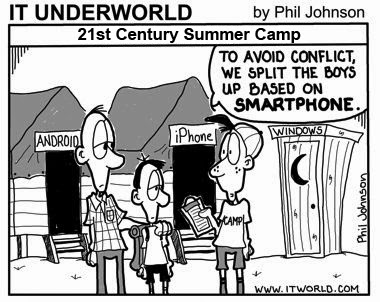
    Technology and Electronics at Summer Camp: Will Policy Change?

    School is back in session in many parts of the country and that means the summer camp season has come to a close. With each passing summer, I try to evaluate the role that technology plays at sleep-away camp. It seems that each year more summer camps institute "screen free policies" concerning the use of technology and electronics at camp, but other camps are gradually relaxing their policies (e.g., letting staff keep a cellphone in their pockets during the day, not checking for campers' Wi-Fi-enabled devices on trips out of camp, etc.). Last week I published the following piece on The Huffington Post's website about technology and summer camp. It has already generated a lot of discussion about appropriate use of technology at summer camp and what the future might look like.

    Sitting with my wife by the lake in Northern Michigan at the beginning of the summer I listened as the director of our family camp, Camp Michigania, recited the rules for the week. "One final thing we ask everyone to abide by," he said to the assembled adults, "please keep your children from using any technology this week and try not to use your own cellphones and computers in public." I noted the irony that he had just read his annual list of policies and procedures from his iPhone.

    Is it hypocrisy when a camp director asks campers to unplug while being tethered to his own smartphone? I contemplated this from my spot on the beach watching my kids kayak and paddleboard as I tapped away at my notebook computer, enjoying the gorgeous surroundings as I put the finishing touches on a blog entry.

    I am a techie, but I am also an advocate for summer camp. I respect those who believe that our kids should leave anything that requires a rechargeable battery at home before getting on the bus to sleep away camp -- hard as that may be. But I also wonder if we're setting ourselves up for failure. Just how far into the future will we be able to continue banning communication devices from these children of the digital age?

    Summer Camp and Electronics and Technology Policy

    The argument against allowing these young campers to import their technology to camp is that they need a chance to unplug and to be fully present without any influences from the outside world. But those influences inevitably sneak into summer camps each year. Overnight camp counselors use the Internet after hours and on days off and then keep the campers abreast of what's happening in the world. Communiques in the form of one-way email messages, faxes and even hand-written letters from family members alert them to the goings on back home. Summer camp for our children is akin to a vacation for us, but aren't we all guilty of sneaking a peek at our email while on vacation? Is the expectation that our kids shouldn't have that ability a double standard?

    Friday, May 02, 2014

    Mourning 11 Days of Unclehood

    I hadn't planned to walk 3 miles this past Sunday morning. It was not because I don't enjoy exercise. A 75-minute Spinning class is part of my typical Sunday morning routine. But on a cold and windy late April morning in Michigan, my wife, three children and I completed a 3-mile trek along a nature trail an hour from our home. It was an annual fundraiser walk to benefit the March of Dimes. My family unfortunately got to know the importance of the March of Dimes' newborn screening program late last year.

    I've been a fan of SavvyAuntie.com since its early days on the web and always dreamed of being a Savvy Uncle though I know it doesn't quite roll off the tongue like "Savvy Auntie". While I have three wonderful children of my own, I have always looked forward to becoming an uncle. When my wife's sister announced she was due with her first child about a year ago, my excitement level rose. Unclehood was within reach.

    Rabbi Jason Miller's Nephew Rylan Gelb
    Rylan Foster Gelb 12/3/2013-12/14/2013


    On December 3, 2013 I became an uncle. I was ecstatic. On my personal blog I wrote about what a blessing it was for me to become an uncle. That might sound silly since I was already blessed with my own awesome and healthy biological children, but I enjoyed a wonderful relationship with my own uncle during my childhood and I was eager to try to replicate that special bond with my new nephew.

    Sadly that high was short lived. Only a few days into my new role as an uncle I learned that my nephew Rylan Foster Gelb had been born with a rare genetic disorder. My sister-in-law and brother-in-law would come to learn more about that genetic disorder only because it was diagnosed through the newborn screening, which is a test researched, funded, and advocated by the March of Dimes. Tragically, my nephew was simply too sick to recover and he passed away on his eleventh day of life. He never left the hospital. He died cradled in his parents' arms. He died looking like a perfectly healthy baby.


    Thursday, April 10, 2014

    Make Passover 2014 Fun

    I was inspired by a workshop I attended last Shabbat by the very talented Jewish educator Noam Zion. For well over a decade, I've been using his haggadah ("A Different Night") and his son Mishael Zion's haggadah ("A Night to Remember") to inspire my students to think about the Four Children in new and different ways through art.

    Noam Zion, who teaches at the Shalom Hartman Institute in Jerusalem, is an advocate for making the Passover Seder more fun. I couldn't agree more. If we seder leaders make the experience more enjoyable and fun for the seder participants, they will get more out of it and look forward to the holiday more in the years to come. Some of the tried and true seder activities like "The Plagues Bag" will continue to work well for younger children, but after a few years of showing the little toys that represent each of the plagues, it will likely be time to try some new tricks. In that vein, I've put together a list of ways to make not just the seder, but the entire Passover holiday more fun.

    PASSOVER SEDER STEPS FOLLOW-ALONG
    PASSOVER SEDER STEPS FOLLOW-ALONG
    Passover Seder Steps game from Holidays in a Box

    Ellen Zimmerman of "Jewish Holidays in a Box" has come out with a new children's game for the seder called Passover Seder Steps Follow-Along. The new activity is designed to help families have more fun and keep everyone more engaged from beginning to end of the Passover Seder. The game comes with 5 gloss-coated boards, 5 game pawns and instructions for use. It's available from Amazon.com for $12.97 and can also be downloaded as a mobile app (the digital version is under $6). Inspired by her daughter's creation when she was 8-years-old, Zimmerman redesigned it to show the progression from step to step (using stone imagery) of the seder. The game is a great teaching tool and will help keep everyone at the table engaged.

    POP HAGGADAH
    Pop Haggadah for Passover
    Artist Melissa Berg's Pop Haggadah for Passover

    Each year I acquire a new Passover haggadah to add to my ever growing collection. This year's favorite is the Pop Haggadah by Melissa Berg. This bright and colorful haggadah is one of the best I've seen in years. The different fonts and artwork on every page make it an exciting haggadah to thumb through or use at the seder. It's honestly perfect for both of children and adults, which is odd when it comes to haggadot. Melissa Berg, who is an artist and has worked in the marketing and filmmaking industries, really hit a homerun with this haggadah. Each section of Berg's haggadah has the traditional Hebrew with English translations, but even these texts are considered artwork. Each vibrant page is a surprise with completely different colors and designs. To borrow a term from the graphic design world: The Pop Haggadah really pops! As a bonus, Berg has included many "extras" on the Pop Haggadah website that can be used for seder activities.

    BRONFMAN HAGGADAH APP
    Bronfman Haggadah App
    Bronfman Haggadah App from the late Edgar Bronfman and his wife Jan Aronson


    Monday, April 07, 2014

    What Do We Think About When We Study Torah

    When my eldest child turned 10-years-old earlier this year we began a weekly ritual of Torah study on Shabbat afternoons. These 30-minute learning sessions have quickly become my highlight of the week as they are an opportunity for me to teach my son Torah and also gain from the new insights that he shares from his own perspective.

    This past Shabbat we delved into Parashat Metzora, the Torah portion that continues the ancient ritual of dealing with one who was afflicted with the skin disease known as tzara'at in the Israelite camp during our ancestors' sojourn in the desert. As we took turns reading the Hebrew verses and their English translations, I began thinking about my late grandfather, Dr. David Gudes. A well-respected dermatologist in Detroit, Michigan, my Papa was an expert on various skin ailments and I often think about him each year during the time we read the Torah portions of Tazria and Metzora.

    Our little Torah study session provided me with a wonderful opportunity to reflect on my Papa's life for my son who never had the chance to meet him. He died almost twenty years ago on October 6, 1994 (Rosh Chodesh Cheshvan). Today, April 7, would have been his 94th birthday.

    Rabbi Jason Miller and Papa, Dr. David Gudes
    Leading the Passover Seder with my grandfather (early 1980s)

    What do we think about when we study Torah? Yes, our thoughts very often transcend to a time long ago when our biblical ancestors lived. But oftentimes the text of the Torah takes us to other places. Reading of a biblical character may cause us to think of an individual who possessed similar character traits. The interaction between two characters in the Torah may set our minds adrift as we think about a similar interaction in our own time. And a theme of the Torah, like the leprosy-like skin ailment of tzara'at, may force us to reflect on a loved one who is no longer with us in the Land of the Living.

    Rabbi Jason Miller and Grandfather, Dr. David Gudes
    Talking with my grandfather, Dr. David Gudes, the day before my bar mitzvah (1989)

    It is a tradition to begin the Torah education of children with the third book of the Torah, Leviticus. Many have theorized that we initiate children with Torah study using this book rather than with Genesis, the first of the Five Books of Moses, because Leviticus is so complex with its minutiae of priestly laws. Whatever the rationale, I'm grateful to have studied from Leviticus this past Shabbat with my son because it allowed my Papa to join our weekly Shabbat Torah study. You never know what you're going to think about when you study Torah. For me, the details of a biblical skin disease brought my beloved grandfather back to life for the generation he never met.

    Wednesday, January 15, 2014

    Sam Berns, Progeria and the Dave Matthews Band

    2013 ended with the tragic passing of a Jewish boy named Sam who inspired millions and 2014 has begun with the tragic passing of a Jewish boy named Sam who inspired millions.

    On the same cold, grey December day on which my own family buried my 11-day-old nephew, the Sommer family buried their 8-year-old boy Samuel Sommer who succumbed to the refractory acute myeloid leukemia he had been diagnosed with a year-and-a-half prior. By some bizarre coincidence not only did Rabbi Phyllis Sommer and Rabbi Michael Sommer bury their son on that same day, but also at the same Jewish cemetery that my family had said goodbye to my nephew Rylan Foster Gelb only hours earlier. Superman Sam's fight to survive and beat the leukemia was journaled beautifully on the blog Rabbi Phyllis maintained during their challenging journey. And now, 30 days have passed since Superman Sam was laid to rest and the blog continues to inspire so many.


    This past Friday, another Sam succumbed to a disease. Sam Berns, the Jewish teen who lived with Progeria passed away after so many learned his story from the HBO documentary "Life According to Sam." I watched this documentary last night, and knowing that Sam had just died, I was overcome with tears. Sam's parents Dr. Leslie Gordon and Dr. Scott Berns worked tirelessly throughout Sam's much too short life committed to curing this disease. Progeria is the same disease that my teacher Rabbi Harold Kushner's son died from and was the impetus for his book "When Bad Things Happen to Good People". As is evidenced by the film, Sam's parents weren't only passionate about finding a cure for Progeria for their own son's sake, but for all of the children throughout the world who age too quickly and end up dying as they reach their teenage years.

    Sunday, December 15, 2013

    Speechless: Mourning For My Nephew

    “When Bad Things Happen to Good People” – Those words, the title of a book by my teacher Rabbi Harold Kushner, keep echoing in my head. Tragedy has struck my family. We planned to go to Chicago last week where I would have the honor of being both the uncle and the rabbi at my newborn nephew’s bris. Instead we're headed to Chicago today – a week later than planned – where I will have the unfortunate responsibility to be both the uncle and the rabbi at my nephew’s funeral. We're grieving.

    A little more than a week ago I searched the Web for an appropriate blessing to say on becoming an uncle. Not finding anything, I wrote my own blessing. Last night I searched the Web desperately seeking what one says at the funeral of an 11-day-old baby. The answer is nothing. We're speechless.


    When my nephew was born I wrote about Abraham of the Torah and his role as uncle to Lot. He took his nephew under his wing, cared for him and protected him. Today I unfortunately look to another uncle in the Torah. Moses mourned the death of his two nephews Nadav and Avihu. The Torah relates that the boys’ father -- Moses’ brother Aaron -- was speechless. So too must Uncle Moses have been in his mourning of this sudden death. We're in shock.

    On the Shabbat when the Torah portion was Parashat Vayechi (And he lived), my nephew died. On the Shabbat in which we learn of the blessings Jacob bestowed upon his sons, my sister-in-law and brother-in-law began to come to terms with the harsh reality that they will never bless their son as Jacob did. On the Shabbat when the Congregation of Israel stands upon finishing the first book of the Torah and, preparing to open the next chapter, proclaims “Chazak chazak v'nitchazek” (Be strong, be strong and let us be strengthened), my family feels weak. From creation there will be no next chapter for my nephew. We're weakened.

    Baruch Dayan Ha-Emet. May the soul of my innocent nephew Rylan Foster Gelb (Yitzchak Chaim) be bound up in the bond of eternal life and may he rest in peace. There is no more to say.

    Thursday, March 21, 2013

    Haggadah Feeling - Some Fresh Haggadot for Passover

    I began collecting different versions of the haggadah, the Passover seder’s playbook-script-manual, when I was in college. It all started by ordering a new one each year in anticipation of the holiday and somehow my collection now exceeds 100 and has demanded its own bookcase. This pales in comparison with the vast haggadah collection of Irwin Alterman of blessed memory, a brilliant community leader in Detroit who passed away earlier this month and had an exquisite library of some 1,500 haggadahs. His son, a childhood friend, tells me that plans are underway to allow the public to admire his collection soon.

    For many Jewish families the version of the haggadah is as much a family tradition as the food served during the seder meal. Just ask many Jewish Americans and they’ll tell you about their deep connection to the Maxwell House Haggadah from childhood seders.

    The 21st century, however, has seen a seismic shift from the rather bland (and free) Maxwell House Haggadah to more creative versions. And that transition has also afforded many Jewish families some poetic liberties with the seder script. The more traditional families have always tended toward the keva (Hebrew for rote or routine), while more progressive families allowed for more kavvanah (that unscripted spontaneity)  while telling the Passover story. Truthfully, the seder was always intended to be a symposium or talk-feast with an ample mix of both keva and kavvanah. A famous rabbi quoted in the haggadah believes one must only mention the paschal lamb, matzah and bitter herb to fulfill the obligation of the seder. The rest as they say is commentary.