Showing posts with label University of Michigan. Show all posts

Thursday, September 03, 2026

Michael Brooks, the Legendary University of Michigan Hillel Director

Everyone remembers their first boss. Michael Brooks was mine.

Michael was an iconoclast in the American Jewish community. To me, he was a mentor and a motivator. Sometimes he inspired me by saying the most outrageous thing. Other times, he left me scratching my head because he had said the most outrageous thing.

I was very active at Michigan State Hillel during my undergraduate years, so I had heard about the legendary Michael Brooks, who grew the University of Michigan Hillel into the powerhouse that it was.  But I met Michael only once before he called me to interview for a job in Ann Arbor. After a terrible fire destroyed the MSU Hillel building and forced the institution to rebuild, Michael came to East Lansing to meet with our Hillel board. We had no full-time director at the time and were distraught. He sat at the table with us, the smell of smoke still lingering, and said, “This is a wonderful thing!” It was only many years later that I fully understood what he meant. Sometimes we need to build anew for the sake of future generations.

Looking back, working with Michael at Michigan Hillel in my first job after rabbinical school was a gift. Whenever I was feeling bored, Michael would challenge me to take on a new project. When we had lunch together, he would begin the conversation by saying, “I want to know what’s on your mind.” It is not hyperbole to say that Michael Brooks understood community better than almost anyone I have known in the Jewish professional world.


Michael was odd, witty, and famously an outside-the-box thinker. He taught me how to sit back and give others the opportunity to put their visions into practice. He taught me to allow people to fail before stepping in. He understood that leadership was not always about being the person with the answer. Sometimes it meant creating the space for someone else to discover it.

But for all his wisdom and mentorship, one of my favorite memories of Michael will always be on the racquetball court. Michael beat almost everyone he played, but before our first match, I conveniently forgot to mention that I had been playing racquetball regularly since middle school. Being thirty years his junior certainly gave me an edge, but I proudly became one of the few people who actually beat Michael Brooks on the racquetball court!

I am grateful to Michael for giving me my first job more than 22 years ago, and I feel tremendously fortunate to have had the blessing of being inspired, challenged, and mentored by the legendary Michael Brooks.

May his memory be for a righteous blessing. Yehi zichro baruch.


Saturday, October 21, 2023

Sam Woll - A Charismatic, Passionate Pursuer of Peace and Justice

“Rabbi, our Hillel needs to stop buying Coke products.”

This was the first thing Samantha Woll said to me when I started my new job at the University of Michigan Hillel Foundation in 2004. It was odd hearing Sam call me “Rabbi.” First, I had only very recently been ordained so I still wasn’t used to the title. And, second, I had known Sam since she was in elementary school – a classmate and friend of my younger brother – so the formality felt unnecessary and perhaps dramatic. But Sam was being respectful.

Ban Coke at Hillel? I thought the request seemed odd. I grew up in a home that never had Pepsi because that company adhered to a boycott of Israel when I was a kid. I seem to recall my mom telling me that Jews drink Coke and non-Jews drink Pepsi. Looking back it seems like she was getting her information less from Middle East politics and more from Lenny Bruce.


Friday, September 29, 2017

Remembering Dick Lobenthal - A Legend

And the king said to his soldiers, “You well know that a prince, a great man of the Jewish people, has fallen this day" (II Samuel, 2:38).

I took Richard Lobenthal out for breakfast six years ago with the purpose of interviewing him about his life. My editor at The Detroit Jewish News gave me the go-ahead to write an extensive article about Dick's career with the ADL (Anti-Defamation League), which spanned four decades. At that breakfast I took copious notes -- over 10 pages filled with anecdotes from a decades-long mission of fighting hate. Several times over the past 6 years I considered writing that article, but it always felt too soon. I felt that if the article was published, he would soon die. So, I never wrote that article, but I still have the notes and plan to write it this year.

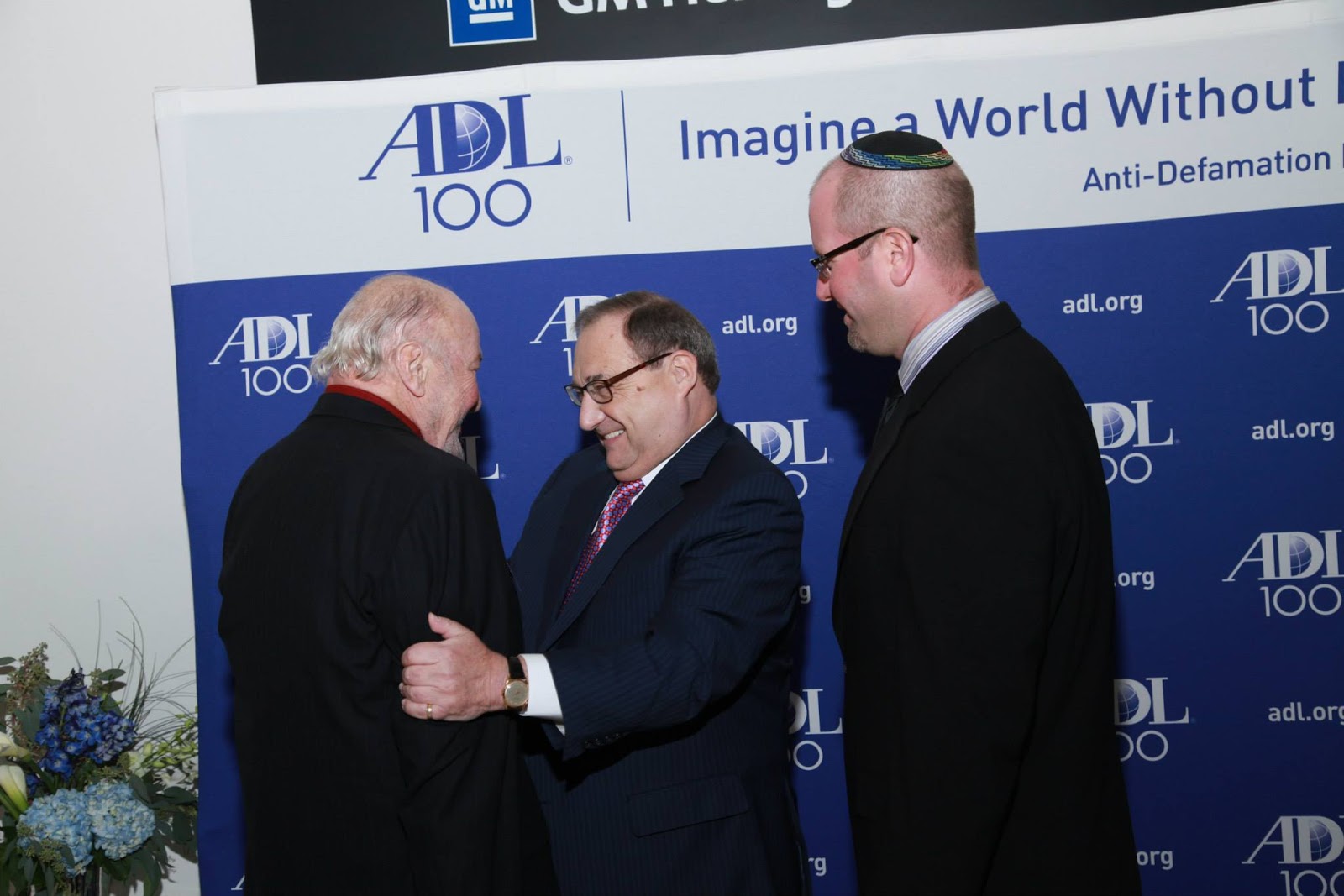
With Dick Lobenthal at the Anti-Defamation League's Centennial Celebration in 2013


I first met Dick Lobenthal at Michigan State University because he was the guy we called whenever there was anti-Semitism on campus or an anti-Israel speaker was coming. I got to know him very well in the summer of 1996 when Daniel Harold and I were his interns at the ADL office in Southfield. After that summer, I returned to MSU to discuss my summer "field experience" with my professor, Michael Schechter. He asked what I thought of my time at the ADL and I said something to the effect of, "This summer I had the honor to get to know a Living Legend."

Watching as Abe Foxman greets Richard Lobenthal at the ADL's Centennial Celebration in Detroit


The last time I saw Dick was when I took him out for lunch before his surgery. He seemed so brave about his prognosis and kept saying that he'd rather talk about me and my family. I honestly didn't think he'd live this long after the surgery, but it shows what a determined fighter he was. Dick's daughter, Lisabeth, asked me to share some stories about this great man at his funeral:

When the Detroit Jewish News emailed me yesterday and asked me to write Dick’s obituary for the paper, I did the normal thing. I went to the Jewish News archives online and did a search for Dick’s name. My eyes got about this big! Dick Lobenthal is mentioned in about 600 different issues of the Detroit Jewish News from the early 1960's to as recently as a couple years ago. Now, that’s pretty impressive considering it means that he’s mentioned in something like 10% of all issues printed during his time here in Metro Detroit.

Now, if you think that’s impressive, consider that, in addition to being quoted in articles – mostly about combating anti-Semitic attacks both locally and abroad – and the mentions about basic ADL business, the vast majority of those mentions are promoting Dick’s speaking engagements. In addition to the radio shows, the phone calls, the letter writing, the op-ed publishing, the advocacy work, the fundraising, the reading and research that he was doing, Dick Lobenthal was doing speaking engagements all the time. Those speaking engagements were not because Dick Lobenthal liked to hear himself talk. They were because he was teaching… he was an educator. He was teaching people to love, not hate. He was preaching tolerance and understanding. And he was indefatigable in this work. Our world, as we all know, is still a very fractured place, BUT, I truly believe the world is a BETTER place because of Dick Lobenthal and the godly work that he did.

In 2005, I invited Dick Lobenthal to speak to students at the University of Michigan Hillel

Two Stories:

It was my Freshman year at Michigan State. Admittedly, I was a naïve, Jewish kid from Metro Detroit who hadn’t been exposed to anything! I went to Hillel Day School, was active in a Synagogue Youth Group, went to Camp Tamarack, etc. Now, here I was an 18-year-old at MSU and now involved with the Jewish Student Union. It seemed like each week that Fall, another Nation of Islam representative, Israel-basher or Holocaust denier was coming to campus. Put simply, there was A LOT of “Hate on campus.” We college kids didn’t know what to do. Do we sit in silently in the audience to witness these speeches? Do we protest? Picket outside? Sit down in the crowd and wait for them to say something offensive and then get up and walk out?


Friday, December 23, 2016

Remembering Philanthropist Mandell "Bill" Berman

I first heard the name Bill Berman at Camp Tamarack when I spent a week of winter break staying in a cabin at Berman Village during Winter Camp one year in the mid-1980s. I later had a chance to meet the iconic Jewish philanthropist and nationally known home builder at a Jewish Federation of Metropolitan Detroit event when my father served as the CFO.

That was just a handshake however. It wasn't until my first year out of rabbinical school that I actually had the honor of getting to know Mandell "Bill" Berman. I began working at University of Michigan Hillel as the assistant director in the summer of 2004. The Hillel Foundation is named for Bill and his wife in recognition of the decades of support they provided.

My first encounter with Bill Berman was at a Michigan Hillel board meeting that he attended. He usually had his driver bring him to Ann Arbor, but this time he decided to drive himself. He was 86 at the time and arrived to the meeting late. I saw him in the Men's bathroom and he told me got a speeding ticket on the way to Ann Arbor. Mr. Berman told me that calmly explained to the driver that he wasn't even driving his age and shouldn't receive the ticket. He then laughed at his own story with his memorable chuckle.

A few weeks later, Mr. Berman called to say he wanted to take me out to lunch (he had mentioned his intention after the first board meeting, but I was still pleasantly surprised to get the invitation). I offered to meet him in Detroit for lunch, but he said he enjoyed coming to Ann Arbor to see the campus. We had a wonderful lunch meeting in which he dispensed so much sage advice. I listened intently to each word. I had the distinct honor to have more private lunches with him over the next couple of years in which I got to know this legend. At that year's Jewish Federations of North America General Assembly in Cleveland, Mr. Berman graciously took the time to speak to our student delegation sharing his thoughts on the Jewish community and inspiring these future leaders. Over the next days at the GA, I was amazed that every time someone saw I was from Michigan, they shared their favorite Bill Berman story with me (everyone had at least one).

President Bill Clinton with Bill Berman at a Hillary Clinton Campaign event in 2016 (Rabbi Jason Miller's Blog)
2 Bills: President Bill Clinton with Bill Berman at a Hillary Clinton Campaign event in 2016

In Metro Detroit, Bill Berman's name was everywhere. Each year a Jewish professional in the community was honored with the Berman Award. When I would take Jewish teens to a youth group Shabbaton at Camp Tamarack, I'd be sure to let them know it was subsidized by Bill and Madge Berman. The beautiful Berman theater at the JCC has become a typical place to enjoy a concert, watch a film or be entertained with a musical or play. On a national level, the Berman name is likewise everywhere. He cared passionately about the Jewish future and understood the importance of surveys and statistics about the American Jewish community. Bill Berman was a builder when it came to homes, but he was also a visionary builder when it came to the Jewish community.

His volunteer leadership roles are too many to try to enumerate. Some of the more prominent positions included serving as president of the Council of Jewish Federations of North America, a co-founder of the Jewish Education Service of North America, a board member of the Jewish Agency and of the American Joint Distribution Committee. He also funded fellowships at Brandeis University and the Jewish Theological Seminary in New York. He established the Fund for Research on Children with Disabilities at the Myers-JDC-Brooksdale Institute in Israel and chaired the 1990 and 2002 landmark Jewish Population Studies in North America. To further the study of the Jewish Community of North America he was the founder of the Berman Jewish DataBank, now at the Jewish Federations of North America, and of the Berman Jewish Policy Archive, now at Stanford University.

Jewish Philanthropist Bill Berman and Rabbi Jason Miller (Hour Detroit)


Tuesday, May 10, 2016

Michigan Public Radio: You Can't Wish Israel a Happy Birthday

On Thursday, the modern State of Israel turns 68 years old. To mark this milestone, Lisa Lis, a local friend of mine, chose to wish Israel a happy birthday when it's her day to sponsor a day's broadcast on the Michigan Public Radio Network. Since Lisa and her husband Hannan, a native Israeli, have donated at least $365 to Michigan's public radio station this year, they were informed that they could have a personalized message read on the air six times during their sponsored day.

While many donors to the University of Michigan operated radio station opt to wish a happy birthday to an individual or a happy anniversary to a couple, Lisa felt it would be appropriate to congratulate Israel on 68 years of independence. According to a few Facebook posts by Hannan, however, MPRN nixed Lisa's idea because it would be an act of advocacy. I immediately recognized the problems with this public radio station blocking a donor's desire to offer birthday greetings to a democratic nation.

Lisa and Hannan Lis

First, the name "Israel" could belong to an individual since it's a popular name for men. After all, the State of Israel was named for the biblical character Jacob, whose name was changed to Israel. Thus, Lisa could simply be wishing a friend named "Israel" a happy birthday.

Second, Michigan Public Radio took issue with Lisa's choice of words. She was going to include the term "blessing" in her greeting. That, the public radio station deemed too religious. I find that interesting since it's a public radio station and there are a lot of public entities that do not shy away from religion or blessings. Our national and local governments are opened with prayer each day, our courts ask witnesses to invoke God's name when taking an oath, and our public squares have Christmas displays each winter. Does Michigan Public Radio never mention the word "blessing" in their broadcasts? Do they ever have religious matters discussed on their radio station?


Thursday, January 14, 2016

Technology for Good: Mobile Apps that Help Us

As we look around the technology landscape at the beginning of 2016, I think it's fair to say that the pace of innovation is quite impressive. Driverless cars, drones, connected homes and 3-D virtual reality have arrived and today's youth don't even know of a time without social media or mobile apps.

We are certainly living in exciting times thanks to tech innovation. However, I like to consider that there are three separate categories of innovation. We can and should be excited about all three categories because the technology is impressive in each. One category consists of technology that ranges from the fun to the mindless. This includes technology without a higher purpose -- think gaming mobile apps like Angry Birds. Sure, it helps preoccupy your kids by handing them the iPad while in the doctor's waiting room, but it doesn't advance society. The second category includes technology that improves our lives, but doesn't solve our most pressing issues. Here, I would include such innovations as drones, Uber/Lyft transportation, socialized TV viewing and advanced GPS technology. They have made our lives easier, but we could also continue living without them.

The third category is the most critical. I argue that this is the technology about which we should really be passionate and enthusiastic. Not only does this technology have a utility,  but it is revolutionary. This is the technology that will solve the greatest ills of the 21st century.

Beacon of Hope

Sex slavery is the fastest growing crime in the world and less than 1% of the victims (half of whom are under 12-years-old) are identified. That problem has led 25-year-old twin sisters America and Penelope Lopez to develop Beacon of Hope. Last year, the sisters won a top prize at the AT&T Developer Summit and Hackathon in Las Vegas for their "Body Camera Hack," a prototype camera with face-tracking technology that can be worn by law enforcement officers to record their actions in the field. This year, the Lopez sisters returned to the AT&T Developer Summit to spend the 36 straight hours of the Hackathon creating their potential solution to the sex slavery problem.

What is Beacon of Hope? Together with a couple other developers, the dynamic sisters have used Gimbal's iBeacon technology to alert law enforcement when a woman is being taken as a sex slave. The small beacons are hidden in tampons and sanitary napkins that will be available in women's restrooms at such places as gas stations, highway rest stops, stadiums and casinos because survivors report the only place they were ever alone was in a public restroom. A woman will be able to easily hide the beacon in her purse or pocket to be tracked by local law enforcement. The beacon immediately sends a signal to the police so they can trace her location. The sisters have taken advantage of AT&T's Smart Cities technology to ensure the tracking beacon is monitored as it travels as sex slavery victims are often moved from city to city against their will. It also utilizes the technologies of IBM Watson, Intel Edison and AT&T Flow Designer. The next version of Beacon of Hope will allow a victim to simply make a hand gesture in front of the beacon dispensary to alert law enforcement.

America and Penelope Lopez of Beacon of Hope


Wednesday, August 27, 2014

Technology and Electronics at Summer Camp: Will Policy Change?

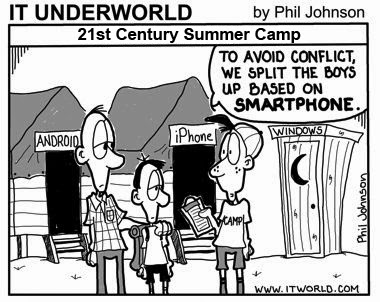
School is back in session in many parts of the country and that means the summer camp season has come to a close. With each passing summer, I try to evaluate the role that technology plays at sleep-away camp. It seems that each year more summer camps institute "screen free policies" concerning the use of technology and electronics at camp, but other camps are gradually relaxing their policies (e.g., letting staff keep a cellphone in their pockets during the day, not checking for campers' Wi-Fi-enabled devices on trips out of camp, etc.). Last week I published the following piece on The Huffington Post's website about technology and summer camp. It has already generated a lot of discussion about appropriate use of technology at summer camp and what the future might look like.

Sitting with my wife by the lake in Northern Michigan at the beginning of the summer I listened as the director of our family camp, Camp Michigania, recited the rules for the week. "One final thing we ask everyone to abide by," he said to the assembled adults, "please keep your children from using any technology this week and try not to use your own cellphones and computers in public." I noted the irony that he had just read his annual list of policies and procedures from his iPhone.

Is it hypocrisy when a camp director asks campers to unplug while being tethered to his own smartphone? I contemplated this from my spot on the beach watching my kids kayak and paddleboard as I tapped away at my notebook computer, enjoying the gorgeous surroundings as I put the finishing touches on a blog entry.

I am a techie, but I am also an advocate for summer camp. I respect those who believe that our kids should leave anything that requires a rechargeable battery at home before getting on the bus to sleep away camp -- hard as that may be. But I also wonder if we're setting ourselves up for failure. Just how far into the future will we be able to continue banning communication devices from these children of the digital age?

Summer Camp and Electronics and Technology Policy

The argument against allowing these young campers to import their technology to camp is that they need a chance to unplug and to be fully present without any influences from the outside world. But those influences inevitably sneak into summer camps each year. Overnight camp counselors use the Internet after hours and on days off and then keep the campers abreast of what's happening in the world. Communiques in the form of one-way email messages, faxes and even hand-written letters from family members alert them to the goings on back home. Summer camp for our children is akin to a vacation for us, but aren't we all guilty of sneaking a peek at our email while on vacation? Is the expectation that our kids shouldn't have that ability a double standard?

Friday, March 08, 2013

Shabbat Around the World

I've experienced Shabbat in some very interesting places. One of the most memorable Shabbat lunches I can recall was in the home of a Chabad rabbi and his family in Kharkov, Ukraine. This was in August 2005 when I led a small Hillel/JDC mission of University of Michigan students to the Former Soviet Union.

The food at that lunch was delicious and the new plates of food seemed to continuously appear throughout the afternoon. As dessert was being served we sang Shabbat zemirot (festive songs) together. The students recognized the traditional songs and began harmonizing. The rabbi asked me to say a few words of Torah and I spoke about the pintele yid – that spark of Judaism that can be found throughout the globe. While the food might be different and some of the customs are unique to that community, the spark is there. How wonderful it is, I explained, for us Americans to travel to the Former Soviet Union in the 21st century and enjoy a warm, spiritual Shabbat, singing the Hebrew songs that are so familiar to us.


In Parashat Vayakhel (Exodus 35:3), the Torah says, לֹא-תְבַעֲרוּ אֵשׁ, בְּכֹל מֹשְׁבֹתֵיכֶם, בְּיוֹם, הַשַּׁבָּת "Do not light a fire in all your dwellings on Shabbat". Why is it necessary for the Torah to state settlements in the plural? Shouldn’t it be enough to say that we are forbidden from kindling fire on Shabbat? Why is it necessary to have the designation "throughout your settlements?" After all, the Torah doesn't add words or letters unnecessarily.


Wednesday, October 03, 2012

Cool Sukkah Contest in Ann Arbor

I hate to contribute to the stereotype that Jewish men aren't handy, but I've only constructed two notable structures in my life. One is a backyard tree house for my kids and I've had to hire a handyman three times already to come over and either fix or reinforce that tree house so it would be safe for my kids to use. The second thing I've ever built is our family's sukkah each year.

Today is the third day of the 8-day sukkah festival (observed for 7 days in Israel) when Jewish people all over the world eat meals in a temporary hut. The first time I constructed my own sukkah was thirteen years ago during my first year of marriage. Truth be told, I supplied the beer and my non-Jewish (and very handy) next door neighbor did most of the manual labor. Over the years, however, I've gotten better at erecting this 12x10 foot booth with canvas sides and a couple bamboo mats for a roof. This year I put it up in record time with some help from my kids (who are now old enough to be more helpful than hindrance).