Sunday, December 28, 2008

Sacred Space

I've been thinking a lot about sacred space recently. Of course, I give much thought to the concept of what makes a place holy (or sacred) whenever I am in Israel. At each turn one encounters a sacred location from Jewish history.

However, what turns a place that is generally considered to be a secular place into a sacred one?

Last week, after I taught my monthly class on Jewish business ethics at a Downtown Detroit law firm I began to drive back uptown to the suburbs. When I turned to get on the highway I saw the old Tiger Stadium in the distance. While Tiger Stadium hasn't been used as the home field of the Detroit Tigers since the Tigers last played there on September 27, 1999, it is still very much on the minds of Detroiters and Tigers fans. Seeing the vacant stadium (or what's left of it since some of it was demolished earlier this year) standing there at the corner of Michigan and Trumbull, I was lured to go pay a visit. I parked my car along the street where the Right Field wall once stood -- the area where my favorite player Kirk Gibson used to defend the outfield. I got out and took some photos of the snow-covered park. I felt extremely nostalgic about the baseball stadium where I viewed my first Major League game (and many more after that).

There is much debate about what will become of the old Tiger Stadium, but no matter what it is used for (hopefully little league games) or how it is memorialized (hopefully a museum) there is no question that for me it is sacred space.

This is true of other places in my life as well. I'm sure that many years from now, the Palace of Auburn Hills (home to the Detroit Pistons for the past twenty years) will also become a sacred space to Pistons fans like me who have enjoyed watching them play there (even though I have fond memories of watching the Pistons play at the Pontiac Silverdome as well).

Some places have sentimental value because they haven't changed much over the years. My oldest son is a preschool student in the exact same classroom where I was a preschool student at Adat Shalom Synagogue in the early 1980s. The classroom hasn't changed much since then, so each time I walk in to drop him off for school I experience yet another flashback to my childhood. Of course, it has been transformed into a more modern classroom to keep pace with the educational advances of the past three decades. A few years ago I even taught a class in that same room for teenagers and found that to be a surreal experience (at least during the first class). That classroom is certainly a sacred space for me as it is the location where both my formal education and my first born child's formal education commenced. Independent of the fact that it is in a holy place (synagogue), it still carries sacredness. It is sacred space.

In some cases, it is specifically the way in which a sacred space has been transformed that gives it meaning and value. In the case of the original location of the Detroit Holocaust Memorial Center (America's First Freestanding Holocaust Memorial Center), the transformation is stark and conveys an interesting message. Several years ago, the Detroit Holocaust Memorial Center moved to a new location a few miles away leaving the JCC with the decision of what to do with the space. A new, state-of-the-art teen center now occupies the entire building where the Holocaust center was once located.

A couple days ago I was given a tour of the JCC's new Beverly Prentis Wagner Teen Center (right) by director Lindsey Fox. It is a very impressive site with ping pong tables, foosball, Nintendo Wii spots, computer labs, a snack-bar, video games, and more. The fact that thousands of Jewish teens will now gather socially in a space once occupied by a memorial to the Holocaust was not lost on me. As soon as I entered the teen center I remembered the chill I felt each time I visited the Holocaust center. I remembered the buzzing sound of the lights above and the coldness of the brick walls. Certain things haven't changed much in the space. The movie auditorium where I once viewed survivor testimonies looks the same -- although now teenagers will watch High School Musical and Adam Sandler movies there. The small seating areas where I once watched films of the Nazi killing machine on small televisions will now be used for Jewish youth to play video games on flat screen monitors. And the conference room where Holocaust researchers once lectured will now be filled with Jewish youth group members eating pizza and socializing.

This is the best way to demonstrate that some sixty years since the end of the Holocaust the Jewish people have endured. This is a loud statement that the Nazi attempts to eradicate the Jewish people were unsuccessful.

A beloved baseball stadium left vacant that will soon be used for youth baseball. A nursery school classroom occupied by multi-generations. A Holocaust memorial center transformed into a Jewish teen center. Each of these is a sacred space transformed to preserve its sacredness.

Tuesday, December 23, 2008

Haredi Driver's Licenses

There is a concept in Jewish Law that can have both positive and negative outcomes. Pirkei Avot (The Ethics of the Sages) opens with the idea to "erect a fence around the Torah" ("asu s'yag laTorah"). This metaphorical fence is intended to protect the Jewish people from even coming close to sin or violating a commandment.

Oftentimes, however, this fence can be "erected" too far from the original intent of the law. I see this all the time in matters of Kosher certification. One of my rabbinic colleagues tells the story of a Haredi man in Jerusalem who claims there are only three Kosher restaurants in Jerusalem. In actuality there are hundreds, however, this man's fence is so far from the actual laws of Kashrut that he has self-limited himself to only a few establishments that meet his rigorous standards.

A couple years ago it was announced that the Ultra-Orthodox were forbidden from using the Internet - a fence erected to ensure they don't deter into some unacceptable sites. An article in New Jersey Star Ledger referred to a man who relied on the Internet from his business, yet was still going to pull the plug because if he didn't his children faced suspension or expulsion from their yeshivah.

In today's Ynet News, we now learn that it is not just the Internet that is banned in the Orthodox community. Driving cars or even getting a driver's license are now outlawed as well! Yeshivah students will be expelled if they get a driver's license. Fortunately, one of the expelled students was later readmitted after the rabbis at the yeshivah learned that he got the license to help his crippled father.

Uri Gilhar writes:
Four students were expelled from the Tiferet Israel yeshiva in Jerusalem last week after it became known that they had obtained driver's licenses in violation of the yeshiva's rules.

After learning that some of their students might have taken driving lessons, the yeshiva heads conducted a thorough investigation and even contacted the Transportation Ministry on the matter.

"Anyone can call the Transportation Ministry, give an ID number and inquire whether that person owns a driver's license," one of the students explained.

Following the inquiry, the yeshiva heads convened to discuss the "problematic phenomenon" and eventually decided to immediately expel any student who is in possession of a license. The rabbis told the students that they could be readmitted once they have their license revoked.

Most ultra-Orthodox rabbis oppose the notion of a haredi person getting a license. "It's inappropriate for a person who defines himself learned in the Torah to have a driver's license," a prominent rabbi told the yeshiva director when the latter came to consult him on the issue.

The Tiferet Israel yeshivah may not allow their students to drive cars, but they do have a nice website. Too bad no potential students will be allowed Internet access to see it!

Tuesday, December 16, 2008

Throwing Shoes

By now everyone has seen the video footage of an Iraqi journalist throwing his shoes at President Bush. The public has treated it as an uproariously funny video clip perfect for YouTube. The president even laughed it off as something not unlike a heckler at a rally. However, the symbolism of the act is much deeper than that.

Enter my favorite Hebrew professor from my rabbinical school days at the Jewish Theological Seminary to bring some scholarly explanation to this act. Prof. Edna Nahshon (right), associate professor of Hebrew at the Seminary, is the author of a new book titled Jews and Shoes.

She is quoted in yesterday's Chicago Tribune, in an article humorously titled: "If the shoe fits, duck."

[Edna Nahshon] said what appeared to be an impulsive caper was really a symbolic act of defiance. "The insult is of such magnitude that Muslims understand and Americans don’t want to," she said. "It looks more like a prank, like a stupid thing to have done ... I think it was intended as a very serious humiliation. It is understood as such."

After all, there’s a reason why Muslims remove their shoes when they enter a mosque to pray. It was not initially a Muslim tradition until the Angel Gabriel reportedly appeared before the Prophet Muhammad and instructed him to remove his shoes while communing with God. Not to mention, shoes are downright dirty.

"Shoes are considered [by Muslims] the truly filthy, defiling item," said Nahshon, an associate professor of Hebrew at Jewish Theological Seminary. "Anyone who has looked at images of the war in Iraq, shoes come up again and again."

Remember images of Iraqis pelting the toppled statue of Saddam Hussein with their shoes? And just a few weeks ago, an effigy of Bush was hung where the statue used to be. Iraqis didn’t stone it. They "shoed" it.

So, what appeared to be a funny prank (like Bill Gates getting a cake in the face) actually was a strong political message. Or perhaps the Iraqi journalist saw video of President Bush doing an African tribal dance without much rhythm and just wanted to provide him with some "sole".

Thursday, December 11, 2008

Chabad

Chabad Lubavitch has been getting a lot of press recently since the tragic murders of Rabbi Gavriel and Rivka Holtzberg (z"l), the Chabad shlichim (emissaries) in Mumbai, India who were killed by terrorists. Their story underscores the important mission of these Chabadnik leaders willing to relocate their families to far-flung corners of the earth for kiruv (Jewish outreach). I've heard from several young people who stopped at the Chabad-Lubavitch Nariman House while backpacking through India only to be treated so warmly by Rabbi Holtzberg and his wife. I experienced similarly warm hospitality when I visited a Chabad House in Sumy, Ukraine a few years ago with students from the University of Michigan.

I have always been amazed and impressed by Chabad's devotion to the Jewish people. Their marketing machine and political savvy are the envy of Jewish leaders everywhere. But I have also been skeptical at times about their approach and their agenda, especially on college campuses where the Jewish students are hyper-impressionable.

Due to their belief that Rebbe Menachem Schneerson (left) is the mashiach (messiah), many have cynically described Chabad Lubavitch as the closest religion to Judaism. Regardless of this belief, which is often denied by Chabadniks in large metropolitan Jewish communities where such a messianic tenet would not be well received, Chabad is doing important work throughout the globe.

In many Jewish communities, Chabad has taken on the important job of training young people to work with the developmentally disabled through The Friendship Circle. The program, now with over sixty chapters, matches teenage volunteers who become friends and mentors to children with special needs. Chabad has also pioneered important programs in the Former Soviet Union, including in the devastated community of Chernobyl.

If you're interested in a fair and in-depth study of Chabad Lubavitch, I would highly recommend Sue Fishkoff's The Rebbe's Army.

The most daring, insightful coverage of Chabad however can be found in last month's issue of New Voices magazine. The young columnists of the New Voices journal demystify Chabad, answering questions like: Why, unlike most ultra-Orthodox, do the Lubavitch reach out to rather than reject secular Jews? What do they get when you put on tefillin? Are they Zionist or anti-Zionist? What do they think of mainstream Jewish movements and what do those movements think of them? Do all Lubavitchers even share the same views on these issues?

A blogger on the Moment Magazine blog writes: "Takedown or not, New Voices has done what no other serious Jewish publication has dared do: subject Chabad to the same journalistic scrutiny every powerful, religious movement deserves."

The New Voices issue includes Chabad-related stories about the Agriprocessors Kosher meat scandal, an interview with a Reform rabbi about the place of Chabad in the religious life of secular Jews, a critique of non-Orthodox support for Chabad, and an exploration of the contemporary meaning of the Chabad headquarters at 770 Eastern Parkway.

The interview with the Reform rabbi who shares his thoughts on Chabad is very interesting. The rabbi is Rabbi Rick Jacobs (left), Senior Rabbi of Westchester Reform Temple in Scarsdale, New York. I met Rabbi Jacobs last year at a STAR Foundation PEER Alumni retreat and was extremely impressed. Rabbi Jacobs tells a funny story in the New Voices interview:

I was in midtown Manhattan, and I'm walking down the street and this wonderful friendly warm Chabadnik stops me and says, 'Are you Jewish?' I'm walking along, I'm wearing a grey suit. I don't know, maybe I have curly Jewish hair. I said, 'Yes, are you?' And he looked at me and started to laugh and he pointed to his tzitzit and to his beard. I said, 'You know, appearances are not always reality.

Rick's story reminds me of another story: Two Jewish Theological Seminary rabbinical students (a man and a woman) were walking by the main gate of Columbia in New York's Upper West Side when a Chabadnik asked the man if he put on tefillin that morning. His response? "No, but she did!"

I'm not sure what the ultimate attraction to Chabad is for so many -- not just the impressionable Jewish college students who flock to Chabad houses for the Rebbetzin's homemade chicken soup and challah, whiskey shots with the rabbi, or hot cholent on Shabbat afternoon. For some college students it may well be that the Chabad rabbi looks, well, more authentically Jewish than his or her Reform or Conservative rabbi back home -- which means more Eastern European and more pious.

The bigger question for me is the new fad of contemporary, progressive Jewish families joining Chabad congregations (in many communities called simply "The Shul"). I know this is driving many rabbis crazy. In some cases, rabbis are seeing their congregants attend Chabad congregations to complement their other synagogue membership. They may go to Chabad for a Shabbat service or even a holiday service (e.g., Simchat Torah), but wouldn't think of not attending their ancestral synagogue for High Holiday services or to celebrate their child's bar or bat mitzvah. But in other cases, Reform and Conservative congregations are seeing their membership numbers decrease to the benefit of the Chabad shul down the street. Again, this could be chalked up to the "authenticity factor" or it could be something deeper. Perhaps it is the warmth that the Chabad rabbis display in their outreach efforts much like the warmth that was a trademark of Rabbi Gavriel and Rivka Holtzberg, stationed in Mumbai and racking up all those "mitzvah points" through their generosity.

May their memories be for blessings.

Tuesday, December 09, 2008

Politicians and Kippahs

Using web applications like Google Analytics and sitemeter, I can track the web searches that have referred visitors to my blog.

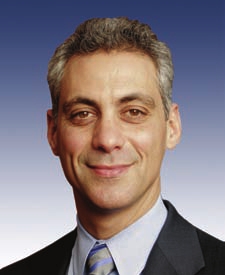
Ever since the '08 presidential election and President-Elect Obama's nomination of Rahm Emanuel to be his chief of staff, there have been hundreds of searches for "Rahm Emanuel Kippah" that have landed web surfers to my blog. Apparently, a few mentions of the word kippah (or yarmulke) throughout my blog and a blog post about Rahm Emanuel are enough for search engines to put my blog in their search results listing. This tells me that there are many people out there interested in seeing a photo of Rahm Emanuel wearing a kippah. Well, sorry to disappoint but I haven't seen one either!

Bill Clinton KippahPutin KippahHowever, I have seen many pictures on the Web of other politicians wearing kippahs (yarmulkes). There are photos of Jewish and non-Jewish politicians donning the Jewish headcovering -- from Rudy Guiliani to Bill Clinton (left) and George Bush, British Prime Minister Gordon Brown to Russian Prime Minister Vladimir Putin (left). But alas, no picture of a Rahm Emanuel under a kippah.

I asked my friend who attends Rahm Emanuel's modern-Orthodox synagogue in Chicago who told me that when Emanuel shows up (not so often) he wears a black suede kippah.

But what's interesting to me is not that so many people are jonesing for the pic of Emanuel wearing a kippah in the same skeptical way people reacted to Joe Lieberman's claims of being an Orthodox Jew in the 2000 campaign, but rather that there's an expectation to see politicians wearing Jewish religious attire.

I think politicians should wear a kippah if they are speaking in a synagogue, especially in the sanctuary. And maybe they should be expected to cover their head when they do the required photo op at the Kotel (Western Wall) in Jerusalem. However, the kippah photo op at Yad Vashem for politicians has always struck me as odd. I know I'm not the only one. In 2005, blogger Jonathan Rosenblum wrote:

I have always found something faintly ridiculous about the perennial photos of gentile politicians donning yarmulkes to wolf down lox and bagels in Jewish neighborhoods. And I would be hard-pressed not to vote for any gentile politician who refused a proferred yarmulke on the sensible grounds that he is not Jewish. Apparently my view is not universally shared, however. When the Turkish Prime Minister visited Israel last week, he was told Israel would take a dim view of his failure to wear a kippah on a visit to Yad Vashem. He didn’t anyway, apparently on the grounds that many of the voters of his Islamic party would take an even dimmer view of his being seen wearing a Jewish religious symbol.Isn’t this nutso? Some noted that Yad Vashem is not a synagogue, but even if [it] were what disrespect would he have been showing by not wearing a yarmulke? Is he expected to daven? Would a Jew be disrespectful if he declined to take communion in a Catholic Church? (Assuming he did not know it was asur (prohibited by Jewish law) to be there in the first place.)

Blogger Dov Bear essentially made the same argument earlier this year in a post about Barack Obama's visit to Yad Vashem where he wore a white yarmulke (right). Adam Dickter, in a New York Jewish Week blog post in March, wrote about Republican nominee John McCain's odd choice for a kippah during his visit to the Kotel. Rather than going for the cheap black kippah (favored by Bill Clinton), he sported an elaborately emroidered white kippah that cutely matched his traveling buddy Joe Lieberman's kippah.

Perhaps one of President Obama's first acts in office will be to set some clear rules on the kippah wearing expectations of politicians. Synagogues-yes. Holocaust memorial centers-no. Funerals-yes. Jewish or Israel organization fundraising events at hotels-no. Kotel-optional. Maybe congress could even pass legislation on a standard political kippah. Something like a navy leather yarmulke with a tactful embroidered American flag would be nice!

In the meantime, if anyone has found a picture of Rahm Emanuel in a kippah, please leave the link in the comments section. Emanuel wearing a tallit? Even better!

Tuesday, December 02, 2008

Obama Home was Yeshivah

Many homes have interesting histories and connections. I recall meeting Jewish professional baseball player Ryan Braun, the Milwaukee Brewers All-Star, who told me that his grandfather's house once belonged to Jewish Hall-of-Famer Hank Greenberg (Braun lived in that house for a time during his youth).

Now, the father of my former camper at Camp Ramah in Wisconsin, Henry Bernstein, has co-written an article about the interesting history and Jewish connections of Barack Obama's house in Chicago. Charles Bernstein, genealogist of the Chicago Jewish community and a founder of the Chicago Jewish Historical Society, writes in the Chicago Jewish News that the construction of the Obama home was financed by a prominent Chicago Jew, was once lived in by a Jewish family, and was home to both a Jewish day school and a yeshiva.

President-Elect Barack Obama's house, located on the South Side of Chicago at 5046 South Greenwood Avenue, is located across the street from the Reform KAM-Isaiah Israel Congregation, Chicago's oldest Jewish congregation. In fact, Secret Service agents who guard the Obama home enter the Reform temple to use the restrooms. The article adds that KAM-Isaiah Israel Congregation members must identify themselves to Secret Service agents who verify them as Temple members.

The Hebrew Theological College (HTC), now located in Skokie, Illinois, had a branch located at the Obama home.

"HTC, known colloquially as 'the Yeshiva,' wanted to establish a South Side base to service [the] Orthodox community. A Milwaukee philanthropist, Anna Sarah Katz, donated $50,000 to HTC, which enabled it to purchase the 5046 Greenwood property. It obtained title from the First National Bank of Chicago, which had acquired the property by taking over the Foreman bank when it went bankrupt during the Depression... Hyde Park's Orthodox population began to dwindle in the early 1950s, and in 1954, the Yeshiva sold the property to the Hyde Park Lutheran Church by a deed signed May 21, 1954. The purchase price was $35,000, based on the revenue stamps of $38.50 affixed to the deed. The deed was signed by Rabbi Fasman, who was still president, and Samuel T. Cohen, secretary"

So, the Obama family will be moving from one home with a rich history to a new home with a very rich history.

Friday, November 07, 2008

Rahmbo Heads Back to White House

Back in April I wrote how Rahm Emanuel was theorized by Newsweek Magazine to be the one to urge Hillary Clinton to drop out of the race on behalf of Barack Obama. That Newsweek article connected the dots from Rahm Emanuel (known as "Rahmbo") to Barack Obama campaign strategist David Axelrod by mentioning that Axelrod was a witness for Rahm Emanuel's wedding ketubah.

Now, Rahm Emanuel is back in the news as the first appointment President-Elect Obama has made. Yesterday morning, Rahm Emanuel accepted Obama's offer to become the Chief of Staff for the Obama administration. Emanuel will resign his congressional seat for this new position.

Of course, the talk throughout the Jewish community has turned from uncertainty about the Obama administration to elation over having a trusted advisor like Rahm Emanuel in the West Wing. Emanuel was a senior advisor to President Bill Clinton from 1993 to 1998 and was even the inspiration for the character Josh Lyman on television show The West Wing. (Not to be outdone, his brother Ari is the inspiration behind superagent Ari Gold on HBO's Entourage)

Rahm Emanuel has a wonderful reputation in the Jewish community as a strong friend of Israel and a dedicated member of the community. Since President-Elect Obama tapped him for this post, I've heard several comments of pride from fellow rabbis and friends. His rabbi and former Torah study partner (in the White House!), Rabbi Jack Moline, praises him for his commitment to his family and his strong value system. In Chicago, he mainly attends Shabbat services at Anshei Sholom B'nai Israel Congregation in Lakeview. The rabbi there, Rabbi Asher Lopatin, has been an advisor to Emanuel along with other Chicago rabbis Michael Siegel and Debra Newman Kamin.

Michael Kotzin, executive vice president of the Jewish United Fund-Jewish Federation of Metropolitan Chicago explained in the Jerusalem Post, "If [Rahm Emanuel] goes to the White House, he'll be going to serve the president - but Israel will have a friend in the White House."

Emanuel is actually not his family's original last name. Rahm's father replaced the family name "Auerbach" with his brother Emanuel's name after Emanuel was killed in an Arab uprising in Palestine in 1936. This was done to keep Rahm Emanuel's uncle's memory alive.

Rahm Emanuel will be the third Jew to serve as White House chief of staff, but the first in a Democratic administration (Josh Bolten served under President George W. Bush and Ken Duberstein served under President Ronald Reagan).

Personally, I believe that having a Jewish chief of staff serve our nation's first Black president will be a very positive contribution to Black-Jewish relations in our country. I wish Chief of Staff Rahm Emanuel much luck as he serves our country and our new President.

Saturday, October 18, 2008

Economy & Faith

Many people are looking to religion and spirituality during this time of economic uncertainty (a euphemism for recession). The title of a recent article on the Time Magazine website asks: "Is it Okay to Pray for Your 401(k)?"

My friend and mentor Rabbi Danny Nevins (dean of the rabbinical school at the Jewish Theological Seminary) is quoted in the article.

"Daniel Nevins also recognizes the legitimacy of the 'help me' prayer, noting that the third of four prayers that religious Jews are expected to recite after meals asks God to 'grant us relief from all our troubles. May we never find ourselves in need of gifts or loans from flesh and blood, but may we rely only upon your helping hand, which is open, ample and generous.' "

Christian and Muslim religious leaders are quoted in the article as well.

Rabbi Nevins continues, "When I ask God for help, I'm not asking for an extra miracle, for a great hand to drop a wad of cash on my mortgage." Such supernatural interventions may occur, he says, "but I just don't know how to prove that."

Rabbi Allan Lehmann (left), a colleague of mine who is the associate dean at the Hebrew College Rabbinical School, wrote a Hosha Na prayer for the economy. Since Monday is the Hoshana Rabba holiday and we could certainly use some saving during our country's financial crisis, I include the prayer below with Rabbi Lehmann's permission.

Hosha-na!- save our:

Accounts from Arrearages
Balances from Bear Markets
Credits from Crunches
Dividends from Downturns
Earnings from Erosions
Farms from Foreclosures
Grants from Going away
Homesteads from Hammering
Investments form Insolvency
Jobs from Jinxes
Keogh plans from Kicking the bucket
Loans from Losses
Markets from Madness
Net worth from Negativity
Options from Overheating
Pensions from Penury
Quantities from Quandaries
Retirement from Rollbacks
Scholarships from Screwups
Treasury form Trouble
Usufruct from Uncollectibility
Venture capital from Volatility
Wall Street from Welfare
X-dividends from Extirpation
Yields from Yukkiness
Zedaka from Zero sum games

Hosha-Na...Ani Vaho Hoshi'a-na!

UPDATE: I neglected to include another interesting article on this topic. Time Magazine also published an article entitled "The Financial Crisis: What Would the Talmud Do?" In this article, my Talmud instructor from The Jewish Theological Seminary, Rabbi Eliezer Diamond, raises a good point concerning the ethics of making money: "What any religious tradition calls on us to ask is, 'how can I make money and simultaneously be a responsible member of the society in which I live, protecting the interests of both the buyer and seller?"

Sunday, October 12, 2008

Fake Synagogue Sign

Obama Vote for the Shvartze Shvartza Schvartze Synagogue Church SignA congregant came up to me during a break in services on Yom Kippur to ask if I'd seen the picture being widely emailed of a synagogue marquee that instructed congregants to vote for Barack Obama. She explained that the sign said "Happy New Year! Please vote for the shvartzeh!"

I could sense that she was conflicted about this since she was an Obama supporter but also took offense to the Yiddish term used to denote black people which can be used derogatorily.

Well, it turns out that the sign is a hoax. It was made at the Church Sign Generator website. In fact, the owner of says-it.com which operates the Church Sign Generator website, posted an apology (and subsequent update) on the website which reads:

If you're received a photo of a sign for "Beth Sholom Synagogue" and wondered where this synagogue is, the answer is: it isn't.

The sign isn't located anywhere in the real world. It's a fake photo created with software on this website. There are blank church sign templates which allow people to enter whatever they like for the name of the church (or synagogue, or mosque, or what have you) and for the message on the sign board, and it creates a fairly realistic photo of a church sign with their input.

Someone used the site to create that sign and then they chose to e-mail it to a lot of Jewish people on Rosh Hashanah. I'm sorry you received it, but I'm afraid there's not much I can do about it.

Please feel free to contact me if you have any questions, but again, there's little I can do. I can't control what people type into the form on the site, and I can't control what people e-mail to each other. It's literally impossible to filter every offensive word or phrase that someone can enter, without restricting use of the site for people who use it legitimately.

Update: several people have written in saying that they weren't offended and that they thought it was funny, and that I shouldn't worry. I hope I haven't given the impression that I've been deluged with complaints; most of the "complaints" were just people wondering where this Beth Sholom was and why they would put up a sign like that. A couple of people found the message demeaning or disrespectful, and I can certainly understand why they would feel that way. For what it's worth, I personally wasn't offended (it's not impossible to offend me, but it is pretty difficult), but I do think that it was in poor taste and could easily be taken badly, especially given the timing.

Best regards,
Ryland Sanders
says-it.com

Tuesday, September 23, 2008

New Fruits

It has long been a pet peeve of mine that most Reform congregations only observe one day of Rosh Hashanah. According to the Torah, Rosh Hashanah is just one day, but it has been celebrated for two days for over a 1,000 years. With the exception of Yom Kippur an extra day was added to all Torah-mandated holidays.

What differs about the extra day added to Rosh Hashanah is that it is observed in Israel (whereas the extra day of the other holidays is not observed). Truth is, the two days of Rosh Hashanah are not really even seen as two separate days, but rather as "one long day" (yoma arichta in the Aramaic of the Talmud). It is because of this that there is question as to whether Jews should recite the Shehecheyanu blessing on the second night of Rosh Hashanah. Thus the custom of having a new fruit (one that hasn't been eaten yet this season) on the table when lighting the candles and reciting Kiddush on the second night of the holiday. The new fruit gives us a reason to make a Shehecheyanu blessing.

I've always liked this custom since eating new fruits is both delicious and adventurous. There's also no shortage of exotic fruits, especially with new fruit breeding taking place as in the case of Apriums and Pluots.

Last year I posted something about William (the Jewish Robot) Levin's viral marketing animations called "The Adventures of Todd and God". Well, another episode of Todd and God has just been released and it focuses on the custom of eating a new fruit on the second night of Rosh Hashanah!

Here's the new Todd and God video:

Friday, September 19, 2008

Elliot Dorff

The other day I had the chance to listen to Senator Barack Obama on a conference call for American rabbis. The most impressive part of the phone call was not the Democratic Presidential nominee's ten minute talk. Rather, it was a rabbi who spoke on the call before Obama. Rabbi Elliot Dorff (right) of the American Jewish University in Los Angeles spoke beautifully and powerfully about his political views.

Rabbi Dorff's latest book has just been published by the Jewish Publication Society. (It seems that he has been publishing books at the rate of Jacob Neusner lately.) This book, For the Love of God and People: A Philosophy of Jewish Law, presents an intelligent and accessible guide to the philosophy that shapes Halakha (Jewish law). While the book is about the Jewish legal system, Dorff also answers the difficult theological questions concerning the relationship of belief in God and the revelation of Torah with observance of Halakha.

Jay Michaelson wrote a praiseworthy review of Dorff's latest book for the Forward. In his review, Michaelson laments the fact that no such book was available to him while he was growing up in the Conservative Movement. In his closing paragraph, Michaelson asks whether this book would have satisfied his philosophical questions when he was a young camper at the Conservative Movement's Camp Ramah. Michaelson dismisses the question because he was more of a rationalist back then anyway. Regardless, I appreciated what Michaelson had to say about Jewish summer camp and how the feelings that occur at camp might just be enough of a reason to subscribe to the system of mitzvot (commandments). Michaelson writes:

"...one of the great successes of Jewish summer camp is how it provides an immersion experience: The love is felt, obviating the need for explanation. Who knows? Maybe I could have been told, 'You know that feeling you get, when the davening is beautiful and the weather is fair; when your friends put their arms around you and sing ‘Lecha Dodi’? That is the reason we do this — because what you feel inside is love, and God is the name we give it.”

Amen to that. And to Rabbi Elliot Dorff for writing a book that will help so many work through their difficult questions concerning belief and the observance of Jewish law in our modern times.

Thursday, September 18, 2008

Politics Politics Politics

It's been almost two months since my last post due to a combination of being too busy and not really wanting to blog about politics. It seems that everything is being overly-politicized right now.

A simple rally to protest Iranian President Mahmoud Ahmadinejad at the United Nations has turned into a Democrat vs. Republican battle royal. According to the JTA, Hillary Clinton was confirmed to speak at the rally back in August. However, when Republican VP nominee Sarah Palin agreed to address the rally, Clinton announced she would withdraw because the rally had become "a partisan political event." Barack Obama wasn't even invited to speak. Bottom line is that Palin has been disinvited and Clinton has backed out. Fortunately no one will oppose Elie Weisel's legitimacy to speak at the rally!

And isn't it possible for a Jewish person to just wear a kippah (yarmulke) without making a political statement? The kippah color, size, material, and position on ones head is already making a religious statement, so why the need to endorse a candidate with a religious head covering? Even this has spun out of control.

The Gore-Lieberman kippahs were popular during the 2000 campaign and since then it's been common to see the candidates names on suede kippahs. However, one company (VanityKippah.com) is now selling a Sarah Palin kippah that says "Sarah Barajewda: Eishet Chayil." They also sell the McCippah, the Obamica, and one for Michelle Obama fans that reads "Michelle is my Rebbetzin."

Oy, I can't wait for this campaign to be over!

Monday, July 21, 2008

Tattoo Jew

The five week hiatus since my last blog post might be the longest dry spot I've had since starting this blog almost five years ago.

But I have a good excuse -- I've been working at Camp Tamarack all summer. As the camp rabbi I've fielded many questions, but by far the most common question I've received from counselors has been "the tattoo question."

Everyone wants to know if they will still be buried in a Jewish cemetery even though they have a tattoo. It's remarkable how concerned twenty-year-olds are about an event far into the future that they won't even be around to witness.

The sentiment that Jews with body art are barred from Jewish cemeteries has also been mentioned recently in a movie, a TV show, and in the mainstream media.

In the wonderful film "The Bucket List," two cancer-stricken men, Carter (Morgan Freeman) and Edward (Jack Nicholson), plan to do some outrageous things before they "kick the bucket." When Morgan Freeman's character is somewhat hesitant about getting a tattoo, Jack Nicholson as Edward says to him: "What, are you afraid of not being able to be buried in a Jewish Cemetery?"

In an episode of "Curb Your Enthusiasm," Larry David pays off a gravedigger to have his mother reburied in a Jewish cemetery despite a small tattoo on her rear end.

And in the July 17th New York Times, the article titled "Hey Mom, the Rabbi Approved my Tattoo" (subtitled "Skin Deep: For Some Jews, It Only Sounds Like 'Taboo') also takes on the belief that Tattooed Jews can't be buried in a Jewish cemetery.

By the time [Roberta] Kaplan's daughter Liz Carnes, 49, had teenage daughters who wanted body art, Ms. Carnes knew how to dissuade them. "I'd say, 'If you get a tattoo, you can’t be buried in a Jewish cemetery,' " said Ms. Carnes, the owner of a video equipment company in Carlsbad, Calif. "For no real reason, just that's what my parents told me."

Nearly every Jew, from those who go to synagogue only on holidays to those who dutifully follow Jewish law, has heard that adage. It has deterred many from being inked, even as tattoos have become widespread among N.B.A. players and housewives alike.


It seems that most young people are familiar with this warning about getting a tattoo. The only problem is that it is a myth! Thankfully, the NY Times article calls it an "urban legend."
But the edict isn't true. The eight rabbinical scholars interviewed for this article, from institutions like the Jewish Theological Seminary and Yeshiva University, said it's an urban legend, most likely started because a specific cemetery had a policy against tattoos. Jewish parents and grandparents picked up on it and over time, their distaste for tattoos was presented as scriptural doctrine.


Rabbi Alan Lucas, in a 1997 teshuvah for the Conservative Movement's Law Committee, took up the issue of body piercing and tattooing in Jewish law. The question he posed was: "Is body piercing (nose, navel, etc.) and tattooing permitted? Does it preclude taking part in synagogue rituals or being buried in a Jewish cemetery?"

He explains that the prohibition of tattooing is found in the Torah in Leviticus 19:28 where it states: You shall not make gashes in your flesh for the dead, nor incise any marks on yourselves: I am the Lord.

The mishnah explains that it is the lasting and permanent nature of tattooing which makes it a culpable act, but Rabbi Simeon disagrees and says that it is only the inclusion of God's name which makes tattooing prohibited. Maimonides felt that tattooing should be prohibited because it was a form of idolatry since the pagans would tattoo themselves.

Rabbi Lucas maintains that:
Regardless of the exact limits of this prohibition, over time, the Rabbis clearly extended the prohibition to include all tattooing... In our day, the prohibition against all forms of tattooing regardless of their intent should be maintained. In addition to the fact that Judaism has a long history of distaste for tattoos, tattooing becomes even more distasteful when confronted with a contemporary secular society that is constantly challenging the Jewish concept that we are created b'tzelem Elohim, "In the Image of God," and that our bodies are to be viewed as a precious gift on loan from God, to be entrusted into our care and not our personal property to do with as we choose. Voluntary tattooing even if not done for idolatrous purposes expresses a negation of this fundamental Jewish perspective.


Rabbi Lucas concludes that Tattooing is an explicit prohibition from the Torah, however, those who violate this may still be buried in a Jewish cemetery and participate fully in all synagogue ritual.

It seems to me that if a Jewish person chooses to get a tattoo that is in good taste and does not violate the Torah prohibitions of idol worship, then this act would not violate Jewish law since in our modern age tattoos can be removed (even if removal is a painful process and one that might need to be repeated several times). A tattoo that expresses ones Jewish pride is certainly not what the Rabbis of the Talmud had in mind when they discussed the tattooing practices of the pagans. And with regard to the "Auschwitz argument" against tattoos: body art in the 21st century certainly does not resemble the forced tattooing of Jewish men and women during the Holocaust.

Sunday, June 15, 2008

Forced Ritual

I haven't posted in a while as I've been busy working at Camp Tamarack, getting ready for the campers to arrive later this month. However, I couldn't resist commenting on S.L. Price's wonderful column in the June 2, 2008 issue of Sports Illustrated titled "Seafood for Thought".

Yesterday morning at Shabbat morning services at Tamarack I spoke to the camp supervisors about Jewish prayer ritual. I also compared the morning tefillot (prayer services) to playing a sport as the flow of the service moves from "suit-up" to "warm-up" to "practice" to "game-time" to "cool-down". I spoke of how much of the ritual within prayer is spontaneous and that is precisely how it should be.

Al Sobotka OctopusIn S.I., Price remarks how the Detroit Red Wings ritual of octopus throwing during the playoffs at Joe Louis Arena (and Al Sobotka's octopus twirling) is a spontaneous crowd ritual that should be preserved, contrary to the reprimands of commissioner Gary Bettman. Price contrasts this fifty-year-old ritual with the forced rituals of the 21st Century National Basketball Association where fans have to be instructed to yell "Dee-fense" by the JumboTron monitor.

I'll take a Zamboni driver twirling an octopus on the ice any day over a halftime show of dancing clowns. And there is certainly something to be said of spontaneous rituals during the Jewish prayer service over a congregation of robots all being told that they should all point their pinky finger at the Torah (see Noam Neusner's Jerusalem Post article "The Pinky Paradox"). There is room for directed ritual behavior, but there's also something beautiful about spontaneity -- whether at a prayer service at synagogue or camp... or on the ice at the "Joe".

Congrats to the 2008 Stanley Cup Champion Detroit Red Wings!

Wednesday, May 21, 2008

Crib Talkers

My 2-year-old twins Jonah and Talya Miller were supposed to take a nap one afternoon. After I put them in their cribs, instead of falling asleep they started talking to each other. I wondered what the conversation was about so I hid a video camera in their room. Funny stuff!


digg this

Tuesday, May 20, 2008

Israel Photo Contest

The Detroit Jewish News recently held an Israel Photo Contest to which I submitted four photos. One of my photos won third place and two others were honorable mentions. My friend, David Salama, won first place with a photo of his two-year-old son Elliot at the Western Wall.

THIRD PLACE

HONORABLE MENTION

HONORABLE MENTION

Tuesday, May 13, 2008

Postville Woes

Yesterday's news about the federal raid on the Postville, Iowa Kosher slaughterhouse was pretty bad. The allegations were that some 80% of the employees were in the country illegally, including a number of the rabbis at Agriprocessors.

Could it get worse? You bet!

Today there are reports in the news that Federal authorities charged that a methamphetamine laboratory was operating there as well, and that employees carried weapons to work. JTA reports:

The [meth lab and weapons] charges were among the most explosive details to emerge following the massive raid Monday at Agriprocessors in Postville, Iowa. In a 60-page application for a search warrant, federal agents revealed details of their six-month probe of Agriprocessors. The investigation involved 12 federal agencies, including the Drug Enforcement Administration, the Federal Bureau of Investigation and the departments of labor and agriculture.

According to the application, a former plant supervisor told investigators that some 80 percent of the workforce was illegal. They included rabbis responsible for kosher supervision, who the source believed entered the United States from Canada without proper immigration documents. The source did not provide evidence for his suspicion about the rabbis.

The source also claimed to have confronted a human resources manager with Social Security cards from three employees that had the same number. The manager laughed when the matter was raised, the source said.

At least 300 people were arrested Monday during the raid, for which federal authorities had rented an expansive fairground nearby to serve as a processing center for detainees. The search warrant application said that 697 plant employees were believed to have violated federal laws. Agriprocessors officials did not return calls from JTA seeking comment.
That sound you hear coming out of Iowa is a big "Oy Vey!"

Friday, May 09, 2008

Israel 60

The State of Israel celebrated its 60th year of statehood yesterday on the 3rd of Iyyar because the official date of Israel's independence (5 Iyyar) falls on Shabbat this year. World leaders, celebrities, and corporate tycoons are joining Israel's Yom Ha'atzmaut festivities in Israel.

Even President Bush will be attending the President's Conference next week. Facebook founder Mark Zuckerberg was scheduled to appear at the President's Conference on a technology panel with Google founder Sergey Brin. However, his name has been dropped from the schedule. Perhaps this is because he was offended that all the press material had him listed incorrectly as "Mark Zuckerman".

Many world leaders have also made official proclamations to honor Israel on its milestone anniversary. The JTA reports that on Yom Ha'atzmaut, Iran president Mahmoud Ahmadinejad called Israel a "stinking corpse" on its way to "annihilation". In other news, the Hallmark Greeting Card company has hired Iranian president Ahmandinejad to write birthday and anniversary cards.

On a more serious matter, I attended a very moving Yom Hazikaron (Israel Memorial Day) program on Tuesday evening. A portion of the documentary film, A Hero in Heaven, about Michael Levin (z"l) was shown. IDF Staff Sergeant Michael Levin, a former USYer and Ramah Poconos camper from Philadelphia who made aliyah to Israel, was killed during the Lebanon war in August 2006. The film is a very moving tribute to Michael, who was a chayal boded (a lone soldier, meaning he had no immediate relatives in Israel).

In the past sixty years Israel has celebrated great successes and mourned for the loss of thousands who died fighting for the country. Below is a video in honor of Israel's 60th anniversary. Am Yisrael Chai!

Tuesday, May 06, 2008

PodCasting Torah with Rabbi Eli Garfinkel

I love reading articles about the intersection of technology and religion, specifically Judaism. My colleague Rabbi Eli Garfinkel, with whom I worked at Camp Ramah Wisconsin in 1997, was featured in a USA Today article last month about the use of podcasts in religious groups.

Podcasting Torah Rabbi Eli Garfinkel

Rabbi Eli Garfinkel, spiritual leader of Temple Beth El in Somerset, N.J., a Conservative Jewish congregation, says he draws listeners from as far away as Italy, Argentina and Israel on his podcast, RabbiPod.

"I've been working on teaching the Torah in an accessible manner for a long time, and when the podcast technology was invented, it just seemed like a natural," he says.
The article explains that Podcasting is an inexpensive way for pastors and rabbis to greatly expand their audience beyond the walls of their own place of worship.
Israel Anderson, a software designer in Denver who operates a free site called God's iPod, screens all podcasts submitted to him and weeds out most. Part of what's driving the popularity of religious podcasts is dissatisfaction with organized religion, Anderson says. "If you're in a home church or go primarily for fellowship but your church isn't particularly good at teaching, a podcast is a good way to hear from a wide variety of people."

Monday, May 05, 2008

Max Fisher Highway

The Jewish Federation of Metropolitan Detroit building in Bloomfield Hills, Michigan is appropriately named for Max M. Fisher, the Jewish businessman and philanthropist who died in 2005. In addition to the Federation building, the home of the Detroit Symphony Orchestra ("The Max") and The Ohio State University's Fisher College of Business also bear his name.

Today, at a ceremony at the Fisher Building, Representative Joe Knollenberg dedicated a thirty-mile stretch of Telegraph Road as the "Max M. Fisher Memorial Highway". I happened to be walking into work at Tamarack Camps (located in the Fisher Building) when the dedication ceremony was beginning and I took the photograph below. This is really a wonderful way to honor such a philanthropic, remarkable man.

Max Fisher Highway

Thursday, April 17, 2008

Seder Sidekick

The guys at Bangitout.com (Seth and Isaac Galena) have published a Passover Seder Sidekick. It is 46 pages, contains many song parodies, and is available online at the Bangitout website.


One of my favorite Passover related videos on YouTube is an instructional video in Japanese teaching how to cut a matzah perfectly in half. Check it out:


Of course, there's also the creative JibJab "Matzah" video created by Smooth-E (Eric Schwartz). And I would be remiss if I didn't recommend the cute video of Rabbi Paul Freedman and his wife Nina rapping from their Jerusalem apartment about Passover to the tune of Snoop Dogg's "Gin 'n Juice".

Wishing everyone a chag sameach - a joyous Passover holiday!

Tuesday, April 15, 2008

Top Rabbis & Ketuba Witnesses

Newsweek's second annual ranking of the top rabbis in the country has been posted to the Newsweek website. This year, the list is called "Top fifty influential rabbis in America" and the creators (media execs Michael Lynton, Gary Ginsberg, and Jay Sanderson) explain their point system (20 points for being "known," 10 points for communal leadership, and so on). They also have created a second listing of the top pulpit (congregational) rabbis in the country.

I was thrilled to see my extremely talented classmate, Rabbi Rachel Nussbaum, make that list. She is the founder and rabbi of Kavana in Seattle. It is also wonderful to see that my colleague, Rabbi Sharon Brous, made both lists. She is the founding rabbi of Ikar in Los Angeles.

Of course, Rabbi David Wolpe of Sinai Temple in LA was ranked the #1 pulpit rabbi in the country and deservingly so. Rabbi Jack Moline, a Conservative rabbi in Alexandria, Virginia, was listed at #3. I've always admired Jack and am happy that he was recognized by being ranked so high on the list. I first met Jack in 1999 when I spoke at his congregation, Agudas Achim, for a Seminary Shabbat.

I recall a funny story Jack Moline told me about his first experience meeting President Bill Clinton. Jack visited the White House weekly to study Torah with his friend and congregant Rahm Emanuel (left), the Illinois Congressman. Emanuel, then senior advisor to President Clinton, had an office in the West Wing. Jack always went to the White House with Kosher corned beef sandwiches for Emanuel and him to enjoy. He was also always prepared to stand at a moment's notice and greet the President with the traditional Jewish blessing one says upon meeting a head of state. One day during a Moline-Emanuel chavruta session, the President walked into Rahm Emanuel's office to chat about a basketball game when Jack jumped up with a mouth full of corned beef trying to utter the blessing.

That story came to mind the other day when I read an article about Rep. Rahm Emanuel in Newsweek magazine. The article theorized that Emanuel ("Rahmbo") might be the most likely Democratic Party leader to be the one to encourage Hillary Clinton to drop out of the race should Barack Obama continue to be the front runner. Why Emanuel? Because, the article explains, he is close to the Clintons from his years campaining for them and serving in the Clinton White House. And he is close to the Obama campaign as well based on his long standing friendship with Obama's campaign strategist, David Axelrod.

How close is Emanuel with Axelrod? "So close," Newsweek states, "that Axelrod signed the ketuba, a Jewish marriage contract, at Emanuel's wedding, an honor that usually goes to a best friend."

So there you have it: Newsweek magazine... ranking rabbis and outing politicos as ketuba witnesses!

Tuesday, April 01, 2008

Kippah Krazy

Lisa Flam, an Associated Press Writer, has brought fashionable kippah wearing to the fore with her recent article "Yarmulkes for the Fashionable Faithful".

In an article that could appear in a fashion magazine as much as it could in a religious publication, Flam explains that more stylish and offbeat options abound in addition to your grandfather's black satin yarmulke.

The yarmulke as it's known in Yiddish, or kippa in Hebrew, is a headcovering "worn as a sign of respect to remind one always that God's presence is over us and as a sign of respect whenever we say a blessing," says Rabbi Joel Meyers, a leader of the Rabbinical Assembly, which represents rabbis in the Conservative Jewish movement.

While the skullcap is among the most recognizable Jewish symbols, it is not sacred, which makes it acceptable to adorn it with sports logos or TV characters, says Meyers, who usually wears a knitted yarmulke.

"The important thing is the wearing of the kippa, not what's on the kippa," Meyers said, recalling one given to him with a propeller he thinks signifies "spiritual uplift."

Proving that there has been a move to more stylish Jewish headcoverings, the presumptive Republican presidential nominee Senator John McCain last week sported a knit kippah at the Kotel (Western Wall) in Jerusalem. Compared to President Bush's choice of skullcaps, McCain's choice seems more modern and stylish. Perhaps that is attibutable to his loyal advisor and supporter (and Vice Presidential hopeful?) Senator Joe Lieberman.

I have always enjoyed seeing celebrities don a yarmulke (especially non-Jewish celebrities like athletes and politicians). The first yarmulke I ever gave to a celebrity was in 1999 on the set of his movie "Little Nicky" when I presented Adam Sandler with a blue suede kippah with the Jewish Theological Seminary logo printed on it.

I know I'm not the only one who enjoys seeing celebrities wearing yarmulkes, since, on their BangItOut website, brothers Seth and Isaac Galena have created an entire category of photographs called "Celebrity Kippah".

The AP article described kippot featuring Dora the Explorer, the Miami Heat logo, and guitars. It also reported about a Jewish man who "has a blue seersucker yarmulke to match a blazer he likes to wear to Friday services." Of course, no matter how fun and creative yarmulkes get, there will always be those who prefer the "retro kippah" from a bygone era.

Wednesday, March 19, 2008

New Purim Tradition

Tomorrow night begins Purim, a holiday on which the Jewish people celebrate our survival and rejoice that our ancestors were redeemed from the evil tyrant Haman. It is also a holiday on which we are commanded to share our good fortune with those in need. The mitzvah of sending gifts to the poor is based on Megillat Esther 9:22.

As Lois Goldrich explains the importance of matanot l'evyonim (gifts to the poor) on the United Synagogue of Conservative Judaism website:
Gifts can be given directly, e.g., bringing food and clothing to a homeless shelter, or indirectly, through an organized charity. It is important to keep in mind that whatever additional tzedakah we give throughout the year, donations must still be given on Purim itself. How important is this mitzvah? As Maimonides writes in his Mishneh Torah (Hilkhot Megillah 2:17): "It is better for a person to increase gifts to the poor than to increase his feast or the mishloah manot to his neighbors. There is no joy greater or more rewarding than to gladden the heart of the poor, orphans, widows, and strangers. For by gladdening the hearts of the downtrodden, we are following the example of the Divine."

Rabbi Menachem Creditor has shared a new Purim tradition that he learned from his teacher Marcia Brooks. She encourages people to bring boxes of Kosher pasta to synagogue to use as graggers (noise makers); shaking them for noise and then donating them to a food pantry once the Megillah is completed. With this new tradition, one fulfills the custom of drowning out the name of "Haman" from the Megillah reading while also performing the mitzvah of matanot l'evyonim.

And in my opinion, shaking a box of pasta is much safer than using those dangerous metal graggers that get rusty and sharp and can cut your finger!

Tuesday, February 26, 2008

Spielberg and the Olympics

Rabbi Or RoseNext Monday evening I am bringing my colleague Rabbi Or N. Rose (left) to Detroit to speak to Conservative Jewish teens about the important subjects of Tikkun Olam (social action) and Tzedek (justice). Rabbi Rose is the co-editor of "Righteous Indignation: A Jewish Call for Justice," which was recently published by Jewish Lights. He is also the associate dean of the Hebrew College rabbinical school.

Rabbi Or Rose's article published today at JTA.org about Steven Spielberg's resignation as the artistic director of the 2008 Beijing Olympic Games brings to light the necessity of persuading Summer Olympics host China to reconsider its support of Sudan.

Steven Spielberg JewishSpielberg wrote: "I find that my conscience will not allow me to continue with business as usual... At this point, my time and energy must be spent not on Olympic ceremonies, but on doing all I can to help bring an end to the unspeakable crimes against humanity that continue to be committed in Darfur. Sudan's government bears the bulk of the responsibility for these ongoing crimes but the international community, particularly China, should be doing more to end the continuing human suffering there."

In his essay, Rabbi Rose opines:

Ironically, the theme for the Summer Games is "One World, One Dream." Does this dream include the nightmares of the people of western Sudan? As an American citizen, I would like to see President Bush demonstrate some of the courage and resolve exemplified by the celebrity activists, using his power to try to persuade China to change its behavior. If China does not cooperate, the president should reconsider his plans to attend the Olympics.

In so doing, Bush could rededicate himself to the cause. His record on Darfur is inconsistent at best, and he has done nothing constructive since pledging, ever so briefly, to tackle the issue in his January State of the Union address. What better way for a president to spend his last months in office than to help bring an end to the first genocide of the 21st century? In a culture where celebrities often gain attention for their poor judgment and bad behavior, Spielberg, [Mia] Farrow and the other high-profile activists – they include Don Cheadle and George Clooney -- should be applauded for their justice efforts. Now we must join them in the struggle to save Darfur and to create a permanent anti-genocide movement.

Kudos to Steven Spielberg for doing the right thing by resigning this post. Hopefully his public act will put added pressure on the White House to persuade the Olympic hosts to change their tune on Darfur. And thanks to Or Rose for bringing this issue to a larger audience. With his essay, he certainly does demand a Jewish call for justice.

Wednesday, February 13, 2008

Israel's Sushi Strike

According to a Reuter's article, Israel's Asian restaurants went on a one-day spring roll strike Tuesday to protest the Knesset's new plan to rid their kitchens of foreign chefs. "The restaurants are angry at government plans to purge Japanese, Chinese and Thai eateries of Asian cooks and replace them with Israelis as part of a broader program to cut the number of foreigners working in the Jewish state... Israel attracts virtually no immigrants from Asia since anyone seeking citizenship here must prove they have Jewish family or links to the country."

The restaurant owners threatened that sushi and noodles would be the next items off the menu. I would think they would strike hard and "86" the sushi in the beginning since it has become so popular in Israel. But apparently they thought it was best to go with the egg rolls first.

Personally, I think they should have taken soup off the menu just so every Asian waiter throughout Israel could say "No soup for you!"

Hopefully, a deal will be struck before Israel becomes sushi-free. Jews and Asians should be able to co-exist peacefully. There might be hope because a restaurant once existed in suburban Detroit during the 1980's called "Shanghai Shapiro's," which was half Chinese and half Jewish deli. But then of course, that restaurant did close its doors.