Exclusive photos of Mitzvahpalooza are online here. This is the bat mitzvah spectacular put on by Long Island defense contractor David H. Brooks for his daughter's entry into Jewish responsibility. Here's a link to the original NY Daily News article. At the simcha, performances were by everyone from 50 Cent to Don Henley to Stevie Nicks to Aerosmith. As Blogger Tabloid Baby pointed out, "Brooks got better talent than the NBC Katrina relief benefit."
While 50 Cent didn't play at my Bar Mitzvah (October 1989 for those wondering), The People's Choice band did and they were, well exactly what you'd expect from a Bar Mitzvah band in the late 80s. The truth is that Sam Thomas was an amazing DJ who traveled with The People's Choice to play Run DMC and Beastie Boys music while the adults ate and the kids danced.
And if you want to learn more about the Bar and Bat Mitzvah culture of the 70s and 80s, I recommend the new book Bar Mitzvah Disco. You can check out their very funny promotional video here.

Friday, December 23, 2005


Tuesday, December 06, 2005
No More Pork in Washington!
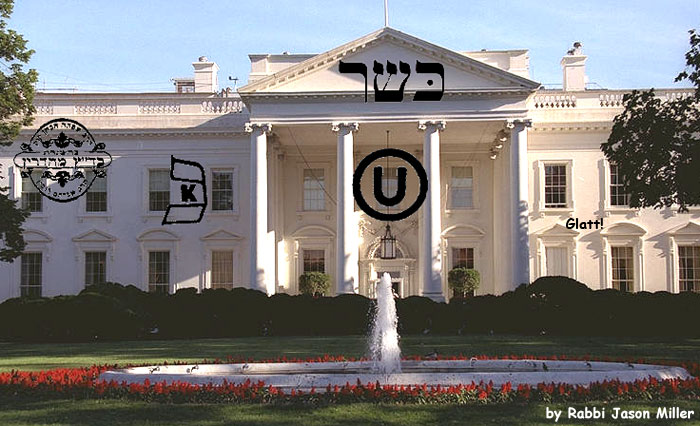
White House goes kosher
From the JTA
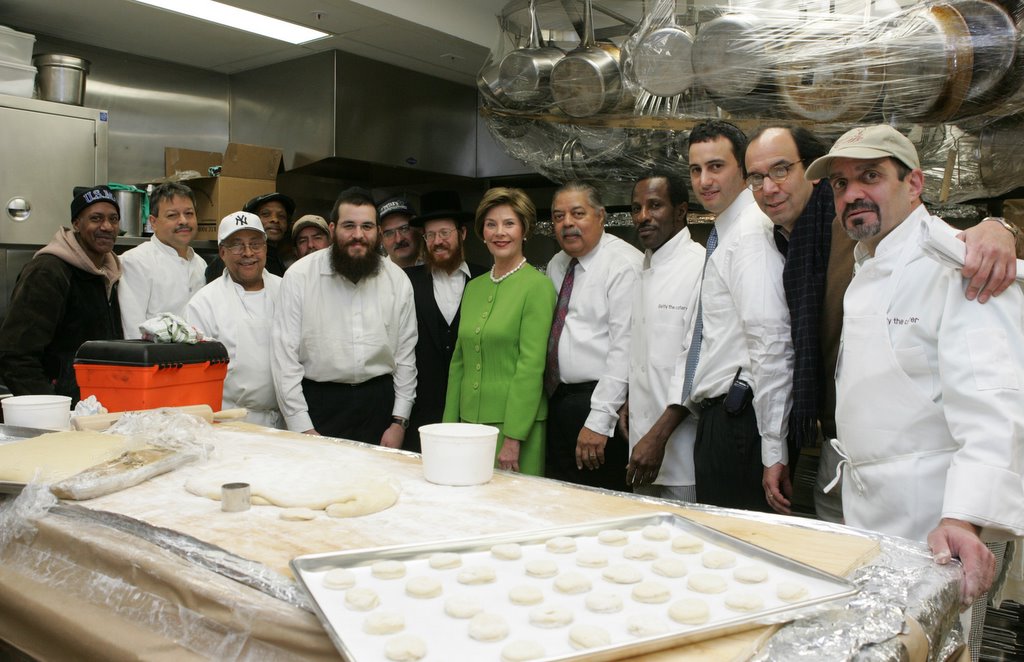
The White House koshered its kitchen ahead of its annual Chanukah reception.
Petak Caterers, under the joint supervision of the Bergen County, N.J., rabbinical council and Washington representatives of Chabad, will serve Glatt kosher meat at the dinner Tuesday night. The meeting is taking place early because President Bush and much of the Washington establishment leaves the city around Dec. 25, when Chanukah starts this year.
The White House said it was the first time that First Lady Laura Bush had handed over the kitchen to kosher caterers for a Chanukah celebration; previous kosher caterers brought food in from outside.
“The First Lady said if the function is kosher, it makes it more comfortable for her guests, and it makes it more comfortable for her,” said Rabbi Levi Shemtov, Chabad’s representative in Washington. Bush will meet with Jewish educators before the party, which hosts a cross-section of the Jewish leadership.

From the JTA
The White House koshered its kitchen ahead of its annual Chanukah reception.
Petak Caterers, under the joint supervision of the Bergen County, N.J., rabbinical council and Washington representatives of Chabad, will serve Glatt kosher meat at the dinner Tuesday night. The meeting is taking place early because President Bush and much of the Washington establishment leaves the city around Dec. 25, when Chanukah starts this year.
The White House said it was the first time that First Lady Laura Bush had handed over the kitchen to kosher caterers for a Chanukah celebration; previous kosher caterers brought food in from outside.
“The First Lady said if the function is kosher, it makes it more comfortable for her guests, and it makes it more comfortable for her,” said Rabbi Levi Shemtov, Chabad’s representative in Washington. Bush will meet with Jewish educators before the party, which hosts a cross-section of the Jewish leadership.
Friday, December 02, 2005
Alan Dershowitz in Ann Arbor
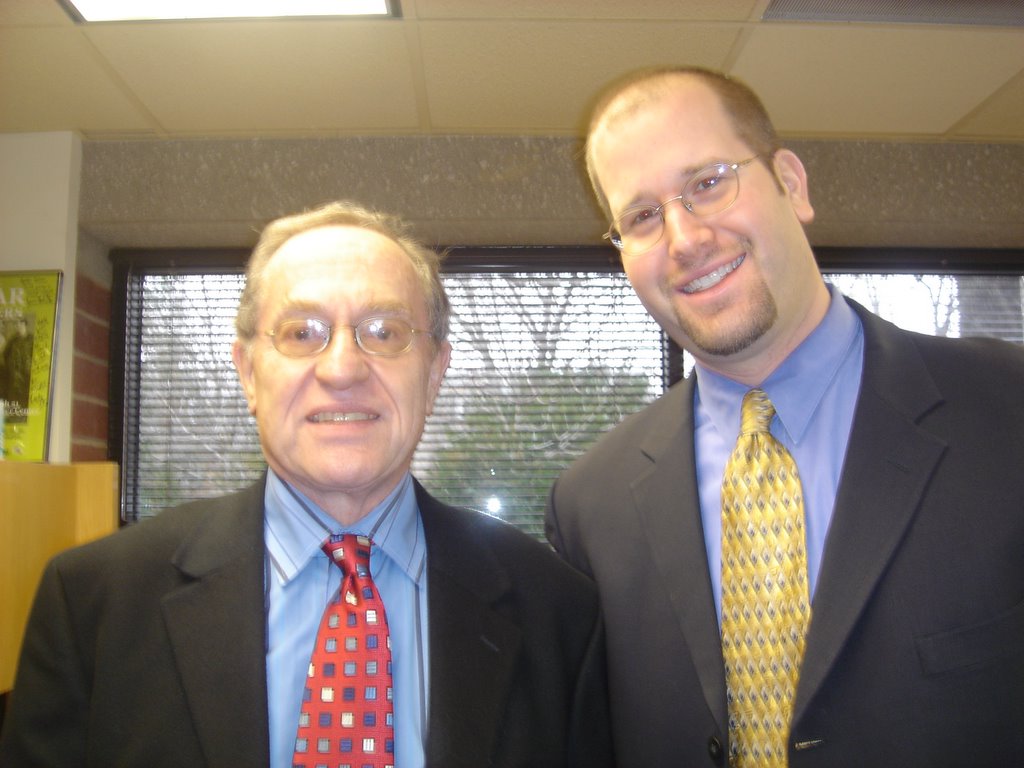
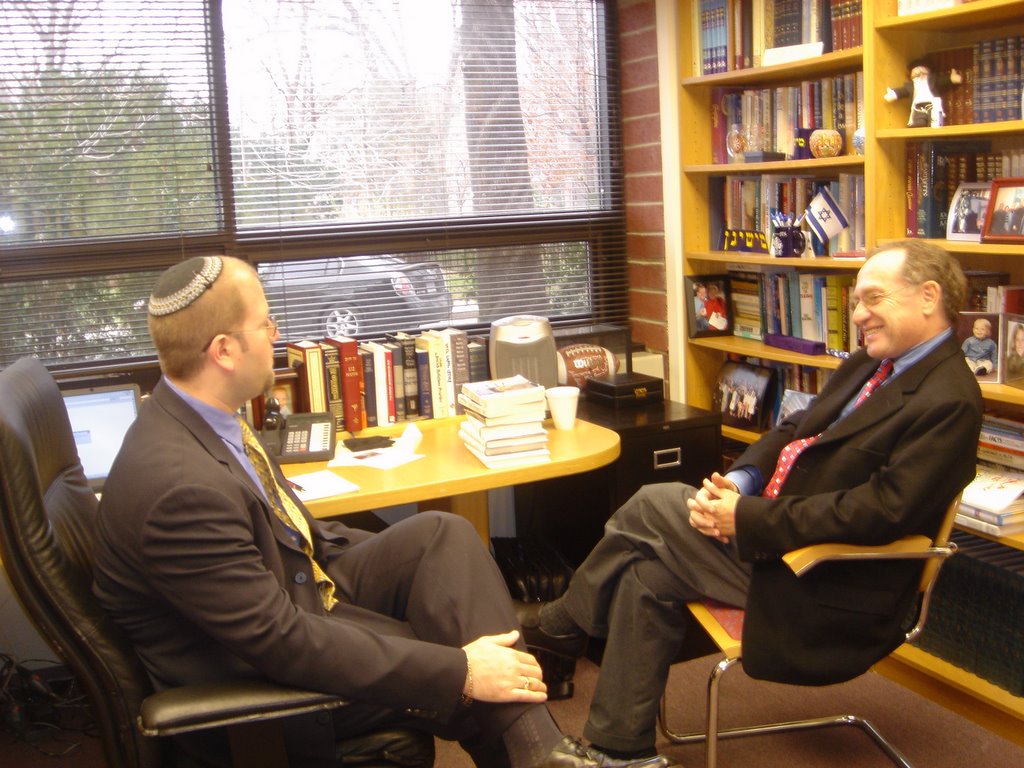
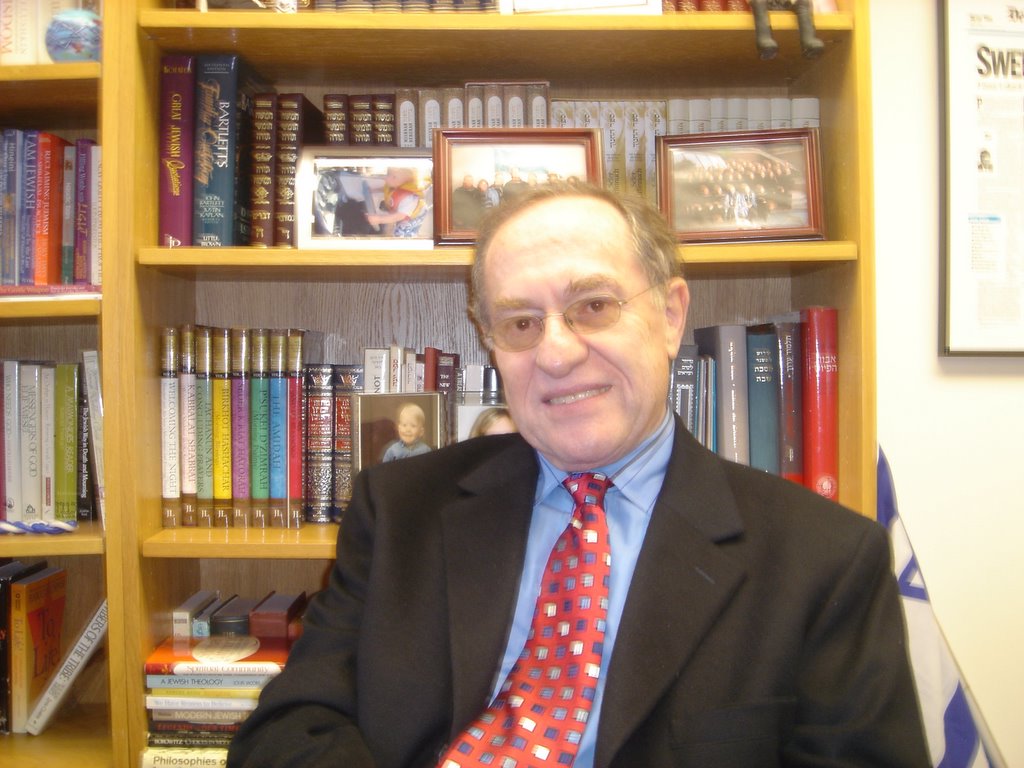
Professor Alan Dershowitz, Harvard's Felix Frankfurter Professor of Law, visited University of Michigan Hillel Foundation on Thursday before addressing the Jewish Law Students Association at the Michigan Union on the topic of Israel advocacy on campus. Here are some photos of Mr. Dershowitz in my office and at the Michigan Union (with Law School dean Evan Caminker and members of the Law School faculty).



Wednesday, November 30, 2005
Bat Mitzvahpalooza: The Most Lavish Bat Mitzvah Party
From the NY Daily News
History will forever record Elizabeth Brooks' bat mitzvah as "Mitzvahpalooza."
For his daughter's coming-of-age celebration last weekend, multimillionaire Long Island defense contractor David H. Brooks booked two floors of the Rainbow Room, hauled in concert-ready equipment, built a stage, installed special carpeting, outfitted the space with Jumbotrons and arranged command performances by everyone from 50 Cent to Tom Petty to Aerosmith.
I hear it was garish display of rock 'n' roll idol worship for which the famously irascible CEO of DHB Industries, a Westbury-based manufacturer of bulletproof vests, sent his company jet to retrieve Aerosmith's Steven Tyler and Joe Perry from their Saturday gig in Pittsburgh.
I'm also told that in honor of Aerosmith (and the $2 million fee I hear he paid for their appearance), the 50-year-old Brooks changed from a black-leather, metal-studded suit - accessorized with biker-chic necklace chains and diamonds from Chrome Hearts jewelers - into a hot-pink suede version of the same lovely outfit.
The party cost an estimated $10 million, including the price of corporate jets to ferry the performers to and from. Also on the bill were The Eagles' Don Henley and Joe Walsh performing with Fleetwood Mac's Stevie Nicks; DJ AM (Nicole Richie's fiance); rap diva Ciara and, sadly perhaps (except that he received an estimated $250,000 for the job), Kenny G blowing on his soprano sax as more than 300 guests strolled and chatted into their pre-dinner cocktails.
"Hey, that guy looks like Kenny G," a disbelieving grownup was overheard remarking - though the 150 kids in attendance seemed more impressed by their $1,000 gift bags, complete with digital cameras and the latest video iPod.
For his estimated $500,000, I hear that 50 Cent performed only four or five songs - and badly - though he did manage to work in the lyric, "Go shorty, it's your bat miztvah, we gonna party like it's your bat mitzvah."
At one point, I'm told, one of Fitty's beefy bodyguards blocked shots of his boss performing and batted down the kids' cameras, shouting "No pictures! No pictures!" - even preventing Brooks' personal videographers and photographers from capturing 50 Cent's bat-miztvah moment.
"Fitty and his posse smelled like an open bottle of Hennessy," a witness told me, adding that when the departing rapper prepared to enter his limo in the loading dock, a naked woman was spotted inside.
I'm told that Petty's performance - on acoustic guitar - was fabulous, as was the 45-minute set by Perry and Tyler, who was virtuosic on drums when they took the stage at 2:45 a.m. Sunday.
Henley, I hear, was grumpy at the realization that he'd agreed to play a kids' party.
I'm told that at one point Brooks leapt on the stage with Tyler and Perry, who responded with good grace when their paymaster demanded that his teenage nephew be permitted to sit in on drums. At another point, I'm told, Tyler theatrically wiped sweat off Brooks' forehead - and then dried his hand with a flourish.
Yesterday, Brooks disputed many details provided to me by Lowdown spies at the affair and by other informed sources, scrawling on a fax to me: "All dollar figures vastly exaggerated."
He added: "This was a private event and we do not wish to comment on details of the party."
History will forever record Elizabeth Brooks' bat mitzvah as "Mitzvahpalooza."
For his daughter's coming-of-age celebration last weekend, multimillionaire Long Island defense contractor David H. Brooks booked two floors of the Rainbow Room, hauled in concert-ready equipment, built a stage, installed special carpeting, outfitted the space with Jumbotrons and arranged command performances by everyone from 50 Cent to Tom Petty to Aerosmith.
I hear it was garish display of rock 'n' roll idol worship for which the famously irascible CEO of DHB Industries, a Westbury-based manufacturer of bulletproof vests, sent his company jet to retrieve Aerosmith's Steven Tyler and Joe Perry from their Saturday gig in Pittsburgh.
I'm also told that in honor of Aerosmith (and the $2 million fee I hear he paid for their appearance), the 50-year-old Brooks changed from a black-leather, metal-studded suit - accessorized with biker-chic necklace chains and diamonds from Chrome Hearts jewelers - into a hot-pink suede version of the same lovely outfit.
The party cost an estimated $10 million, including the price of corporate jets to ferry the performers to and from. Also on the bill were The Eagles' Don Henley and Joe Walsh performing with Fleetwood Mac's Stevie Nicks; DJ AM (Nicole Richie's fiance); rap diva Ciara and, sadly perhaps (except that he received an estimated $250,000 for the job), Kenny G blowing on his soprano sax as more than 300 guests strolled and chatted into their pre-dinner cocktails.
"Hey, that guy looks like Kenny G," a disbelieving grownup was overheard remarking - though the 150 kids in attendance seemed more impressed by their $1,000 gift bags, complete with digital cameras and the latest video iPod.
For his estimated $500,000, I hear that 50 Cent performed only four or five songs - and badly - though he did manage to work in the lyric, "Go shorty, it's your bat miztvah, we gonna party like it's your bat mitzvah."
At one point, I'm told, one of Fitty's beefy bodyguards blocked shots of his boss performing and batted down the kids' cameras, shouting "No pictures! No pictures!" - even preventing Brooks' personal videographers and photographers from capturing 50 Cent's bat-miztvah moment.
"Fitty and his posse smelled like an open bottle of Hennessy," a witness told me, adding that when the departing rapper prepared to enter his limo in the loading dock, a naked woman was spotted inside.
I'm told that Petty's performance - on acoustic guitar - was fabulous, as was the 45-minute set by Perry and Tyler, who was virtuosic on drums when they took the stage at 2:45 a.m. Sunday.
Henley, I hear, was grumpy at the realization that he'd agreed to play a kids' party.
I'm told that at one point Brooks leapt on the stage with Tyler and Perry, who responded with good grace when their paymaster demanded that his teenage nephew be permitted to sit in on drums. At another point, I'm told, Tyler theatrically wiped sweat off Brooks' forehead - and then dried his hand with a flourish.
Yesterday, Brooks disputed many details provided to me by Lowdown spies at the affair and by other informed sources, scrawling on a fax to me: "All dollar figures vastly exaggerated."
He added: "This was a private event and we do not wish to comment on details of the party."
Tuesday, November 29, 2005
Rabbi David Wolpe
A Manifesto for the Future
Drop ‘Conservative’ Label to Tap True Meaning and Reach the Faithful
by Rabbi David Wolpe
In early November, I spoke at the Jewish Theological Seminary in New York. The topic was “The Future of Conservative Judaism.” I prepared for the talk by asking colleagues, friends and congregants to define Conservative Judaism in one sentence. It was a dispiriting experience.
Some had no answer at all. Others found themselves entangled in paragraphs, subclauses and a forest of semicolons. Sensible people began to sound like textbooks.
Many of us have learned that Conservative Judaism is either a complex ideology (at least we never get a straightforward explanation) or simply a movement that stands in the center between Reform and Orthodoxy. An early classic of Conservative Judaism was titled, “Tradition and Change,” but tradition and change is a paradox, not a banner of belief.
Conservative Judaism is crying out for renewal and revitalization. Some of the most spiritually charged, socially sensitive prayer groups and institutions in the country choose to not affiliate themselves with the Conservative movement. Yet they are led by rabbis ordained by the Conservative movement and attended by congregants who grew up in that movement.
In synagogues that do define themselves as Conservative, the congregants often expect halachic observance from their rabbis, yet they are not moved to emulate them. Conservative Jews are increasingly confused and uncertain about their spiritual direction.
As I posed these problems and questions, some turned the question back to me.
“Who are you, and what do you believe?”
When I reflect upon the beliefs with which I was raised and how I have grown in my faith, I realize that the word “Conservative” does not best fit who I am and what I believe.
I am a Covenantal Jew.
Covenantal Judaism is the Judaism of relationship. Three covenants guide my way — our way: The covenant at Sinai brings us to our relationship to God, the covenant with Abraham to our relationship with other Jews and the covenant with Noah to our relationship with all humanity.
First Covenant: Relationship to God
The Jewish relationship to God may be seen as a friendship, a partnership, though of obviously unequal partners. In the Midrash, God swears friendship to Abraham, is called the “friend of the world” (Hag. 16a) and even creates friendships between people (Pirke D’Rabbi Eliezer). Friendship is one aspect of the Divine-human connection.
The Torah speaks of God as a parent, a lover, a teacher and an intimate sharer of our hearts. When we speak of friendship or partnership, all of these relationships and more must be understood.
The terms of all friendships are fixed by history — we define our partnerships by our memories. One friend can speak a single word, “Colorado,” and the other knows that the word refers to a trip taken together 15 years before. However, vital friendships do not dwell solely in the past. They are always creating new memories, entering new phases and enriching what has gone before.
Some Jews believe that everything important in the friendship between God and Israel has already been said. The Torah, the Talmud, the classical commentators and codes have said all the vital, foundational words. Our task now is simply to fill in a few blanks, but otherwise the work is done. We are the accountants of a treasure already laid up in the past.
This is not a covenantal understanding. It is a Judaism frozen in time, as though all the clocks stopped in the 18th century.
Conversely, there are those who think the past weightless, because times have so radically changed. This is a friendship that tries to recreate itself each day, dictated by the demands of the moment. While the past is acknowledged, it is seen largely as something to be overcome, not to be cherished and integrated into the present. This creates a relationship with predictably thin and wan results.
Covenantal Judaism believes in the continuous partnership between God and Israel. When we light Shabbat candles, God “knows” what we mean — we have been doing it for thousands of years. It is part of the grammar of relationship. Our past is the platform from which we ascend. The covenant at Sinai is the first, reverberating word.
Yet there is so much more to say. There is no reason why someone as wise and important as the Rambam (who lived in the 12th century) could not be born tomorrow. This person could both incorporate Rambam’s teachings and move beyond them. There is no reason why something as epochal as the Exodus could not happen next year — witness the creation of the modern State of Israel.
Each day, we tremble with the anticipation of something new and powerful on the horizon. Each night, we pray with the awareness that the yearning of the generations sanctifies our words. We create new rituals because today must not only stand upon yesterday but must reach toward tomorrow.
The classical Jewish view teaches “the decline of the generations” — since Sinai we have grown further from revelation and stand, as a result, on a lower level of holiness. This is not a true covenantal understanding. The covenant does not fade or weaken with time. Our future is as promising as our past is powerful.
For the Covenantal Jew, dialogue between the Jewish people and God began in the Bible and continues today. The Bible is, as Rabbi A.J. Heschel put it, the record of the search of human beings for God and of God for human beings.
Second Covenant: Relationship Between Jews
All Jews are involved in the Abrahamic covenant — not only those Jews whom we like or those of whom we approve but all Jews.
Jews have always fought within our own community, and undoubtedly, we always will. Devotion to Torah does not free us from the constraints of human nature.
Still, a Covenantal Jew seeks active dialogue with Orthodox, Reform and Reconstructionist, as well as secular Jews. The covenant does not depend upon movements or ideologies; it is a covenant of shared history and shared destiny.
The emphasis on the responsibility of Jews to other Jews is uncomfortable for some. It seems parochial and ungenerous.
However, we are built to care in concentric circles: first one’s own family, then one’s community and then larger groups — rippling out to the world, always modified by the degree of need. Aniyei ircha kodmim teaches the Talmud: Care first for the poor of one’s own city.
Pallid universalism is not an ideal but a disaster. Too many Jews remind me of Charles Dickens’ Mrs. Jellyby in “Bleak House,” who is always charging off to do good works, while neglecting her own wretched children at home.
I remember when I was teaching at Hunter College in New York, a student approached me and asked: “Today there is an anti-apartheid rally and a rally for Soviet Jewry. I’m planning to attend the anti-apartheid rally. Can you give me a good reason to go to the Soviet Jewry rally?”
“Yes,” I answered. “If you attend the anti-apartheid rally, who will go to the Soviet Jewry rally?”
There are Jews who simply shun large parts of the Jewish world that do not meet their expectations. On both the right and the left, many simply ignore or discount the other side of the religious or political spectrum. But Republican or Democrat, Satmar or secular, affiliations invalidate neither God’s covenant nor our ties to one another.
This sense of Jewish responsibility explains why Solomon Schechter, the first major figure of American Conservative Judaism, was an outspoken Zionist. Ahavat Yisrael, love of Israel, is not an emotional impulse but a covenantal responsibility. That is why Covenantal Judaism is passionate about the land of Israel and the people Israel.
Covenantal Jews give priority in caring to our own, but we do not care exclusively for our own.
Third Covenant: Relationship With the Non-Jewish World
The first covenant was not made with the Jewish people. God sent a rainbow in the time of Noah as a sign to the world, to all of humanity. Noah lived 10 generations before the first Jew.
The meaning is clear: We have a responsibility toward others of whatever faith; we have a covenantal relationship to the non-Jewish world.
The very first question in the Bible is a question God asks of Adam — “Ayecha” — Where are you? This is not a literal question but a spiritual one, a question God asks us at each moment in our lives.
The second question in the Bible is in a way an answer to the first. The second question is one that human beings ask of God. Cain turns to God and asks, “Am I my brother’s keeper?”
If you answer that question, you will know where you are. Do you care for those who are in need, those who are anguished and alone?
Jewish World Watch has organized our response to the calamity of Darfur. Jewish leaders have shouted to the world, bringing attention to genocide in Cambodia and Rwanda, and championed the recognition of the Armenian genocide. These and countless similar causes and efforts are not strategic or to reflect credit on ourselves. They are sacred Jewish obligations. Jews who care for the Jewish community alone are neglecting the first, most comprehensive covenant.
Sadly, many traditional Jewish communities seem to have little concern for the non-Jewish world.
The rabbis of the Talmud insist that compassion is a characteristic of the people of Israel. The first statement about human beings is that each is made in God’s image. Invidious comparisons between the worth of Jews and others are not only malignant but fundamentally at odds with the Covenantal tradition.
Jews receive as well as give to those outside the Jewish community. Covenantal Judaism is eager to learn wisdom — not only practical but spiritual — from the non-Jewish world.
Judaism has many precedents for religious learning from non-Jews, beginning in the Bible. The world begins with Adam, not with Abraham. Noah, the first man called righteous, is not a Jew.
The chapter of Torah containing the Ten Commandments is named “Yitro” (Jethro) — this central chapter containing the revelation from Sinai is named after a non-Jew. The traditional response when someone asks after our welfare, “baruch Hashem” (praise God) is mentioned three times in the Bible. All three times it is said by a non-Jew: Noah (Genesis 9:26), Eliezer (Genesis 24:27) and Jethro (Exodus 18:10). Thus, even when we praise God, we do it in words that were first spoken by those in our community who were not raised as Jews.
The list could be easily multiplied throughout Jewish history: Maimonides learned from the Islamic scholar Averroes, Kabbalah learned from Sufi mysticism, Heschel learned from Reinhold Neibuhr. Covenantal Jews glory in this interchange, which is not threatened by the insights of others but enriched by them.
The Covenant and Jewish Law
The overriding commandment of Covenantal Judaism is to be in relationship with each other and with God. The more halacha (Jewish law) we “speak,” the more full and rich the relationship. Our faith is neither a checklist nor a simple formula. It is a proclamation and a path.
Changes in Jewish law to include women, from bat mitzvah celebrations to rituals for miscarriage, as well as changes that enable people to drive to synagogue or use instruments in the service as our ancestors did, are elements in a covenantal understanding of the tradition. This is a tradition not rigid but responsive and alive, not repetitious but committed to dialogue with the past, each other and God.
Dialogue with God is not an act of chutzpa, not a conviction of equality. Rather God ennobles us by choosing us as partners for dialogue.
Abraham argues with God; Moses opposes God’s decree, and throughout Jewish history, in medieval poetry and modern literature, Jews insist that God wants not puppets nor robots but human beings who bring their passion, confusion and love to the task of Israel, which in Hebrew means wrestling with God.
Jewish authenticity is not measured by the number of specific actions one performs but the quality of the relationships expressed through those actions. Recall what the Torah says of Moses: In praising our greatest leader, The Torah does not recount that he performed the most mitzvot of anyone who ever lived, or even that his ethics exceeded all others. We are told that Moses saw God “panim el panim” face to face. The merit of Moses is in the unparalleled relationship he had with Israel and with God.
The Covenant and the Future
When the covenant is first presented to Noah, God promises not to destroy the world. In that promise is a chilling omission: God does not promise that we will not destroy the world.
As Rabbi Joshua of Kutna points out, the rainbow is a half circle. That is God’s promise to us. God’s half must be completed by our own intertwining colors.
The relationships we build through sanctity, compassion and love are our reciprocal rainbow. Involving all colors, embracing our community and beyond, it teaches us that in covenant is the secret of salvation.
Covenant is the spine of Judaism. No idea is more important to the development of the tradition. Conservative Judaism, as it has grown, has taken the covenantal idea seriously, sometimes without even realizing it. The time has come to claim it, to develop it in powerful and new ways and to fashion a movement of Judaism that can change Jewish life in America and beyond.
Conservative Judaism remains a large and important international Jewish organization of synagogues, schools, camps, youth groups, adult organizations and centers of training for scholars and clergy. By placing covenant at the center of this worldwide Jewish initiative, we will be reframing the enterprise of creating a Judaism that closes the door neither to the past nor to the future. Such openness and conviction are vital for the future of the Jewish people, a covenanted nation born of passion for improving this world under the sovereignty of God.
This is the time for Covenantal Judaism.
Drop ‘Conservative’ Label to Tap True Meaning and Reach the Faithful
by Rabbi David Wolpe
In early November, I spoke at the Jewish Theological Seminary in New York. The topic was “The Future of Conservative Judaism.” I prepared for the talk by asking colleagues, friends and congregants to define Conservative Judaism in one sentence. It was a dispiriting experience.
Some had no answer at all. Others found themselves entangled in paragraphs, subclauses and a forest of semicolons. Sensible people began to sound like textbooks.
Many of us have learned that Conservative Judaism is either a complex ideology (at least we never get a straightforward explanation) or simply a movement that stands in the center between Reform and Orthodoxy. An early classic of Conservative Judaism was titled, “Tradition and Change,” but tradition and change is a paradox, not a banner of belief.
Conservative Judaism is crying out for renewal and revitalization. Some of the most spiritually charged, socially sensitive prayer groups and institutions in the country choose to not affiliate themselves with the Conservative movement. Yet they are led by rabbis ordained by the Conservative movement and attended by congregants who grew up in that movement.
In synagogues that do define themselves as Conservative, the congregants often expect halachic observance from their rabbis, yet they are not moved to emulate them. Conservative Jews are increasingly confused and uncertain about their spiritual direction.
As I posed these problems and questions, some turned the question back to me.
“Who are you, and what do you believe?”
When I reflect upon the beliefs with which I was raised and how I have grown in my faith, I realize that the word “Conservative” does not best fit who I am and what I believe.
I am a Covenantal Jew.
Covenantal Judaism is the Judaism of relationship. Three covenants guide my way — our way: The covenant at Sinai brings us to our relationship to God, the covenant with Abraham to our relationship with other Jews and the covenant with Noah to our relationship with all humanity.
First Covenant: Relationship to God
The Jewish relationship to God may be seen as a friendship, a partnership, though of obviously unequal partners. In the Midrash, God swears friendship to Abraham, is called the “friend of the world” (Hag. 16a) and even creates friendships between people (Pirke D’Rabbi Eliezer). Friendship is one aspect of the Divine-human connection.
The Torah speaks of God as a parent, a lover, a teacher and an intimate sharer of our hearts. When we speak of friendship or partnership, all of these relationships and more must be understood.
The terms of all friendships are fixed by history — we define our partnerships by our memories. One friend can speak a single word, “Colorado,” and the other knows that the word refers to a trip taken together 15 years before. However, vital friendships do not dwell solely in the past. They are always creating new memories, entering new phases and enriching what has gone before.
Some Jews believe that everything important in the friendship between God and Israel has already been said. The Torah, the Talmud, the classical commentators and codes have said all the vital, foundational words. Our task now is simply to fill in a few blanks, but otherwise the work is done. We are the accountants of a treasure already laid up in the past.
This is not a covenantal understanding. It is a Judaism frozen in time, as though all the clocks stopped in the 18th century.
Conversely, there are those who think the past weightless, because times have so radically changed. This is a friendship that tries to recreate itself each day, dictated by the demands of the moment. While the past is acknowledged, it is seen largely as something to be overcome, not to be cherished and integrated into the present. This creates a relationship with predictably thin and wan results.
Covenantal Judaism believes in the continuous partnership between God and Israel. When we light Shabbat candles, God “knows” what we mean — we have been doing it for thousands of years. It is part of the grammar of relationship. Our past is the platform from which we ascend. The covenant at Sinai is the first, reverberating word.
Yet there is so much more to say. There is no reason why someone as wise and important as the Rambam (who lived in the 12th century) could not be born tomorrow. This person could both incorporate Rambam’s teachings and move beyond them. There is no reason why something as epochal as the Exodus could not happen next year — witness the creation of the modern State of Israel.
Each day, we tremble with the anticipation of something new and powerful on the horizon. Each night, we pray with the awareness that the yearning of the generations sanctifies our words. We create new rituals because today must not only stand upon yesterday but must reach toward tomorrow.
The classical Jewish view teaches “the decline of the generations” — since Sinai we have grown further from revelation and stand, as a result, on a lower level of holiness. This is not a true covenantal understanding. The covenant does not fade or weaken with time. Our future is as promising as our past is powerful.
For the Covenantal Jew, dialogue between the Jewish people and God began in the Bible and continues today. The Bible is, as Rabbi A.J. Heschel put it, the record of the search of human beings for God and of God for human beings.
Second Covenant: Relationship Between Jews
All Jews are involved in the Abrahamic covenant — not only those Jews whom we like or those of whom we approve but all Jews.
Jews have always fought within our own community, and undoubtedly, we always will. Devotion to Torah does not free us from the constraints of human nature.
Still, a Covenantal Jew seeks active dialogue with Orthodox, Reform and Reconstructionist, as well as secular Jews. The covenant does not depend upon movements or ideologies; it is a covenant of shared history and shared destiny.
The emphasis on the responsibility of Jews to other Jews is uncomfortable for some. It seems parochial and ungenerous.
However, we are built to care in concentric circles: first one’s own family, then one’s community and then larger groups — rippling out to the world, always modified by the degree of need. Aniyei ircha kodmim teaches the Talmud: Care first for the poor of one’s own city.
Pallid universalism is not an ideal but a disaster. Too many Jews remind me of Charles Dickens’ Mrs. Jellyby in “Bleak House,” who is always charging off to do good works, while neglecting her own wretched children at home.
I remember when I was teaching at Hunter College in New York, a student approached me and asked: “Today there is an anti-apartheid rally and a rally for Soviet Jewry. I’m planning to attend the anti-apartheid rally. Can you give me a good reason to go to the Soviet Jewry rally?”
“Yes,” I answered. “If you attend the anti-apartheid rally, who will go to the Soviet Jewry rally?”
There are Jews who simply shun large parts of the Jewish world that do not meet their expectations. On both the right and the left, many simply ignore or discount the other side of the religious or political spectrum. But Republican or Democrat, Satmar or secular, affiliations invalidate neither God’s covenant nor our ties to one another.
This sense of Jewish responsibility explains why Solomon Schechter, the first major figure of American Conservative Judaism, was an outspoken Zionist. Ahavat Yisrael, love of Israel, is not an emotional impulse but a covenantal responsibility. That is why Covenantal Judaism is passionate about the land of Israel and the people Israel.
Covenantal Jews give priority in caring to our own, but we do not care exclusively for our own.
Third Covenant: Relationship With the Non-Jewish World
The first covenant was not made with the Jewish people. God sent a rainbow in the time of Noah as a sign to the world, to all of humanity. Noah lived 10 generations before the first Jew.
The meaning is clear: We have a responsibility toward others of whatever faith; we have a covenantal relationship to the non-Jewish world.
The very first question in the Bible is a question God asks of Adam — “Ayecha” — Where are you? This is not a literal question but a spiritual one, a question God asks us at each moment in our lives.
The second question in the Bible is in a way an answer to the first. The second question is one that human beings ask of God. Cain turns to God and asks, “Am I my brother’s keeper?”
If you answer that question, you will know where you are. Do you care for those who are in need, those who are anguished and alone?
Jewish World Watch has organized our response to the calamity of Darfur. Jewish leaders have shouted to the world, bringing attention to genocide in Cambodia and Rwanda, and championed the recognition of the Armenian genocide. These and countless similar causes and efforts are not strategic or to reflect credit on ourselves. They are sacred Jewish obligations. Jews who care for the Jewish community alone are neglecting the first, most comprehensive covenant.
Sadly, many traditional Jewish communities seem to have little concern for the non-Jewish world.
The rabbis of the Talmud insist that compassion is a characteristic of the people of Israel. The first statement about human beings is that each is made in God’s image. Invidious comparisons between the worth of Jews and others are not only malignant but fundamentally at odds with the Covenantal tradition.
Jews receive as well as give to those outside the Jewish community. Covenantal Judaism is eager to learn wisdom — not only practical but spiritual — from the non-Jewish world.
Judaism has many precedents for religious learning from non-Jews, beginning in the Bible. The world begins with Adam, not with Abraham. Noah, the first man called righteous, is not a Jew.
The chapter of Torah containing the Ten Commandments is named “Yitro” (Jethro) — this central chapter containing the revelation from Sinai is named after a non-Jew. The traditional response when someone asks after our welfare, “baruch Hashem” (praise God) is mentioned three times in the Bible. All three times it is said by a non-Jew: Noah (Genesis 9:26), Eliezer (Genesis 24:27) and Jethro (Exodus 18:10). Thus, even when we praise God, we do it in words that were first spoken by those in our community who were not raised as Jews.
The list could be easily multiplied throughout Jewish history: Maimonides learned from the Islamic scholar Averroes, Kabbalah learned from Sufi mysticism, Heschel learned from Reinhold Neibuhr. Covenantal Jews glory in this interchange, which is not threatened by the insights of others but enriched by them.
The Covenant and Jewish Law
The overriding commandment of Covenantal Judaism is to be in relationship with each other and with God. The more halacha (Jewish law) we “speak,” the more full and rich the relationship. Our faith is neither a checklist nor a simple formula. It is a proclamation and a path.
Changes in Jewish law to include women, from bat mitzvah celebrations to rituals for miscarriage, as well as changes that enable people to drive to synagogue or use instruments in the service as our ancestors did, are elements in a covenantal understanding of the tradition. This is a tradition not rigid but responsive and alive, not repetitious but committed to dialogue with the past, each other and God.
Dialogue with God is not an act of chutzpa, not a conviction of equality. Rather God ennobles us by choosing us as partners for dialogue.
Abraham argues with God; Moses opposes God’s decree, and throughout Jewish history, in medieval poetry and modern literature, Jews insist that God wants not puppets nor robots but human beings who bring their passion, confusion and love to the task of Israel, which in Hebrew means wrestling with God.
Jewish authenticity is not measured by the number of specific actions one performs but the quality of the relationships expressed through those actions. Recall what the Torah says of Moses: In praising our greatest leader, The Torah does not recount that he performed the most mitzvot of anyone who ever lived, or even that his ethics exceeded all others. We are told that Moses saw God “panim el panim” face to face. The merit of Moses is in the unparalleled relationship he had with Israel and with God.
The Covenant and the Future
When the covenant is first presented to Noah, God promises not to destroy the world. In that promise is a chilling omission: God does not promise that we will not destroy the world.
As Rabbi Joshua of Kutna points out, the rainbow is a half circle. That is God’s promise to us. God’s half must be completed by our own intertwining colors.
The relationships we build through sanctity, compassion and love are our reciprocal rainbow. Involving all colors, embracing our community and beyond, it teaches us that in covenant is the secret of salvation.
Covenant is the spine of Judaism. No idea is more important to the development of the tradition. Conservative Judaism, as it has grown, has taken the covenantal idea seriously, sometimes without even realizing it. The time has come to claim it, to develop it in powerful and new ways and to fashion a movement of Judaism that can change Jewish life in America and beyond.
Conservative Judaism remains a large and important international Jewish organization of synagogues, schools, camps, youth groups, adult organizations and centers of training for scholars and clergy. By placing covenant at the center of this worldwide Jewish initiative, we will be reframing the enterprise of creating a Judaism that closes the door neither to the past nor to the future. Such openness and conviction are vital for the future of the Jewish people, a covenanted nation born of passion for improving this world under the sovereignty of God.
This is the time for Covenantal Judaism.
Tuesday, November 08, 2005
A very expensive yarmulke!
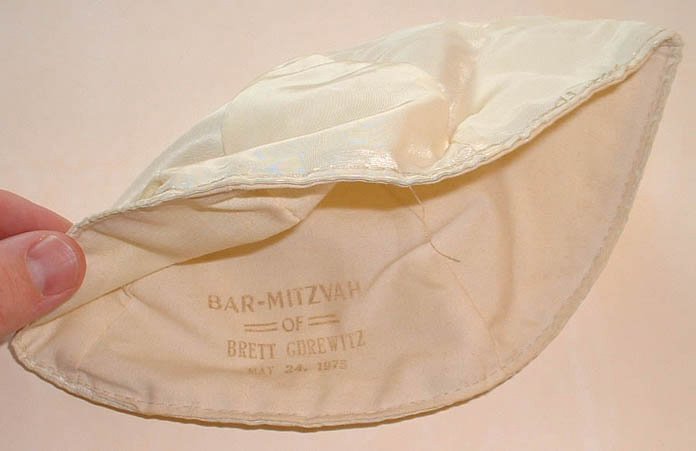
Brett Gurewitz, the guitarist from punk rock band "Bad Religion" is selling his bar mitzvah yarmulke on eBay. The kippah has the inscription on the inside:
"Bar Mitzvah of Brett Gurewitz | May 24, 1975"
I wonder if anyone would be interested in a signed copy of my Bar Mitzvah haftorah?
"Bar Mitzvah of Brett Gurewitz | May 24, 1975"
I wonder if anyone would be interested in a signed copy of my Bar Mitzvah haftorah?
Saturday, November 05, 2005
Congregation Beit Kodesh in Livonia, Michigan - a truly warm and inviting community
Originally published in the Observer & Eccentric Newspapers
Congregation Beit Kodesh growing for the future
BY LINDA ANN CHOMIN

Phyllis Lewkowicz couldn't be happier about welcoming new members to the family at Congregation Beit Kodesh in Livonia. Several months ago, she and members of the temple had formed a Save Our Synagogue committee. When Lewkowicz first came to the area in the 1950s, the synagogue didn't exist, but grew over the years until membership began dwindling. On Sunday, Nov. 6, members will celebrate the congregation's rebirth by dedicating the renovated sanctuary at noon.
"This will be a special occasion," said Phyllis Lewkowicz, one of the visionaries who began holding Shabbat (Sabbath) services at Clarenceville Central Elementary School in 1958. "It's part of the entire plan to improve the sanctuary and building."
Although Beit Kodesh still doesn't have a rabbi, they are welcoming Jason Miller who'll serve as a consultant to help them grow for the future. Rabbi Miller will speak about his position in the congregation and give the Shehechi'anu blessing of thanksgiving, present a new Kiddush cup used for wine sanctification during Shabbat and holiday services then affix three of the 15 Mezuzzah blessings to doorposts in the synagogue before sharing brunch with the congregation. Each of the Mezuzzah [sic] contains a parchment with the Shema prayer from the Torahthe books of Jewish scriptures.
Jeff Kirsch originally sought the help of the United Synagogue of Conservative Judaism to connect with Rabbi Miller who will guide the congregation until they're able to have a full-time rabbi. Currently members like Kirsch lead the services.
"We believe there's potential," said Jeff Kirsch, vice president of the religious committee and a Farmington Hills resident. "We've already seen very positive changes. Membership has gone up."
"We're a viable organization," added congregation president Martin Diskin, a Farmington Hills resident. "I feel at home here. I've broadened my Jewish education over my 30-years with the synagogue."
Rabbi Miller believes the congregation, which serves not only Livonia, but Farmington, Canton, Westland, Novi and Northville, will continue to grow because of offerings such as the Sunday school. The 29-year old rabbi feels there are many young families like his who are looking for a synagogue to meet their needs. Rabbi Miller has a 21-month-old son and his wife is expecting twins in the next 4- to 5-weeks.
"Beit Kodesh is an amazing place. The people are a more dedicated community of Jewish people that I've ever seen," said Rabbi Jason Miller who by day works as assistant director of the University of Michigan Hillel, a program for Jewish college students in Ann Arbor.
"In terms of geography they're situated in an area with many young Jewish families who are unaffiliated and looking for a community just like this. They're going to need the religious education."
Along with educating youth in the Jewish faith another plus for new members is sure to be the congregation's acceptance of interfaith marriages.
"Beit Kodesh is committed to reaching out to those families and bringing them in," said Rabbi Miller. There a lot of Jewish families in this area not being reached. We're proud of who we are, a conservative congregation with people in times of grief, in times of joy. That's what people are looking for in today's age."
To RSVP for the sanctuary rededication and brunch with the rabbi, call (248) 477-8974. The cost for the brunch is $5, no charge for children age 12 and under.
Congregation Beit Kodesh is located at 31840 West Seven Mile, between Farmington and Merriman roads, Livonia. For more information, visit the Web site at www.beitkodesh.org.
Congregation Beit Kodesh growing for the future
BY LINDA ANN CHOMIN
Phyllis Lewkowicz couldn't be happier about welcoming new members to the family at Congregation Beit Kodesh in Livonia. Several months ago, she and members of the temple had formed a Save Our Synagogue committee. When Lewkowicz first came to the area in the 1950s, the synagogue didn't exist, but grew over the years until membership began dwindling. On Sunday, Nov. 6, members will celebrate the congregation's rebirth by dedicating the renovated sanctuary at noon.
"This will be a special occasion," said Phyllis Lewkowicz, one of the visionaries who began holding Shabbat (Sabbath) services at Clarenceville Central Elementary School in 1958. "It's part of the entire plan to improve the sanctuary and building."
Although Beit Kodesh still doesn't have a rabbi, they are welcoming Jason Miller who'll serve as a consultant to help them grow for the future. Rabbi Miller will speak about his position in the congregation and give the Shehechi'anu blessing of thanksgiving, present a new Kiddush cup used for wine sanctification during Shabbat and holiday services then affix three of the 15 Mezuzzah blessings to doorposts in the synagogue before sharing brunch with the congregation. Each of the Mezuzzah [sic] contains a parchment with the Shema prayer from the Torahthe books of Jewish scriptures.
Jeff Kirsch originally sought the help of the United Synagogue of Conservative Judaism to connect with Rabbi Miller who will guide the congregation until they're able to have a full-time rabbi. Currently members like Kirsch lead the services.
"We believe there's potential," said Jeff Kirsch, vice president of the religious committee and a Farmington Hills resident. "We've already seen very positive changes. Membership has gone up."
"We're a viable organization," added congregation president Martin Diskin, a Farmington Hills resident. "I feel at home here. I've broadened my Jewish education over my 30-years with the synagogue."
Rabbi Miller believes the congregation, which serves not only Livonia, but Farmington, Canton, Westland, Novi and Northville, will continue to grow because of offerings such as the Sunday school. The 29-year old rabbi feels there are many young families like his who are looking for a synagogue to meet their needs. Rabbi Miller has a 21-month-old son and his wife is expecting twins in the next 4- to 5-weeks.
"Beit Kodesh is an amazing place. The people are a more dedicated community of Jewish people that I've ever seen," said Rabbi Jason Miller who by day works as assistant director of the University of Michigan Hillel, a program for Jewish college students in Ann Arbor.
"In terms of geography they're situated in an area with many young Jewish families who are unaffiliated and looking for a community just like this. They're going to need the religious education."
Along with educating youth in the Jewish faith another plus for new members is sure to be the congregation's acceptance of interfaith marriages.
"Beit Kodesh is committed to reaching out to those families and bringing them in," said Rabbi Miller. There a lot of Jewish families in this area not being reached. We're proud of who we are, a conservative congregation with people in times of grief, in times of joy. That's what people are looking for in today's age."
To RSVP for the sanctuary rededication and brunch with the rabbi, call (248) 477-8974. The cost for the brunch is $5, no charge for children age 12 and under.
Congregation Beit Kodesh is located at 31840 West Seven Mile, between Farmington and Merriman roads, Livonia. For more information, visit the Web site at www.beitkodesh.org.
Thursday, November 03, 2005
Hillel and Ludacris: Unlikely bedfellows!
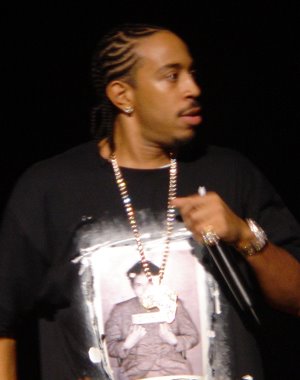 University of Michigan Hillel co-sponsored the Ludacris concert tonight. I think I am now deaf in both ears, but it was a fun event. I took my cousin Jeff Gudes and we watched from the 5th row with Jeff's sister Lindsey. Today was my grandfather David Gudes's 11th yahrzeit and I'm sure he enjoyed seeing three of his grandkids together at a concert, but most likely he had a problem with the music.
What business does a Hillel have in bringing a performer like Ludacris? In the words of Executive Director Michael Brooks:
"U-M Hillel has multiple agendas. One is obviously to serve the needs of the campus Jewish community by providing classes, kosher meals, religious services and Israel programming and counseling. Another is to enrich the life of the entire campus in much the same way that the 92nd Street Y in Manhattan sponsors a wide range of cultural programs that are of interest to a much broader New York audience than just the Jewish community in addition to their more traditional Jewish programming. In the past several years U-M Hillel has similarly brought to campus Chris Rock, Dr. Ruth, Kurt Vonnegut, Adam Sandler, Leonard Nimoy and Spike Lee among many others. On campus we also have a vested interest in building bridges to other communities and the Ludacris concert is very much in this category. It's probably true that few if any other Hillels in the country would regularly do programming like this, but in this respect U-M Hillel isn't like most other Hillels.
If we were diverting resources from our core mission activities to sponsor programs like this we would not be doing it, but in fact we depend on the income from many of these large scale events to help fund other parts of our program. That the Michigan Student Assembly and the University Activities Center immediately came to Hillel to co-sponsor this event with them speaks volumes about the role that U-M Hillel has come to play in campus life and we believe that this is a good thing for both the university and the Jewish community."
 I also met Michael Phelps (winner of six gold and two bronze medals at the U.S. Olympics in swimming) before the concert. Another photo to post to my Wall of Fame.
Monday, October 24, 2005
Ukraine Experience
From the American Joint Distribution Committee's website
Young Adults in Ukraine Inspire College Students from Michigan
From August 22-31, 2005, 15 students from University of Michigan Hillel traveled to Kiev, Kharkov, Sumy, and Konotop, Ukraine, where they joined their peers from Kharkov Hillel and the Jewish Youth Association to paint apartments of elderly Jews in need and to refurbish Jewish community facilities. Below, Sol, a Senior at the University of Michigan, reflects on his experience:
It may have been our group’s 6th rendition of the Yiddish classic Tumbalalika that week, but we were still singing it just as loudly, clapping and dancing hand-in-hand with the elderly with the same exuberance and energy as the first five times.
Although our group — comprised of 15 students and two staff members from University of Michigan Hillel — may have arrived in the Ukraine with the lofty vision of inspiring and educating the local Jewish community, what we soon realized was that the locals would become our teachers.
Over the course of our ten day stay in Ukraine as part of a service program sponsored by the American Jewish Joint Distribution Committee (JDC), Michigan Hillel, and Kharkov Hillel, and financially supported by the Charles and Lynn Schusterman Family Foundation, the Mandell L. and Madeleine H. Berman Foundation, and others, we witnessed something that exceeded all of our expectations: the revival of a Jewish community, whose core is a group of young, bright, and promising individuals. Personally, as a child of Russian immigrants to the United States, it was immensely valuable for me to see this group of individuals that are not only leading their local communities in rebuilding, but led us, active students at University of Michigan, on a journey through Ukrainian-Jewish history past and present.
This educational and inspirational journey was one full of emotion: from saying Kaddish (Mourner’s prayer) for the hundreds of thousands of Jews massacred by Nazis in 1941 at Babi Yar to reading from a Torah for the first time since its arrival over five years ago at the revived Jewish community of Konotop.
Yet, the highs and lows of emotion we felt throughout this journey were fitting for a Jewish community that has suffered through so much, yet amazingly persevered to this day. This once vibrant Jewish community has suffered through mass murder at the hands of the Nazis along with repression under Soviet rule. But since the collapse of the Soviet Union, and Ukrainian independence of 1991, the Jewish community has experienced an oft-turbulent path to revival. We were lucky to get a glimpse of that revival: hearing a student a Capella group sing Hatikva, the Israeli national anthem, interacting with kids at a special needs program at the brand-new JDC sponsored JCC, and picking potatoes for charity at a Jewish cooperative farm.
 While it is clear that these young Ukrainians left a lasting impact on us, it is also for certain that our being there, the simple notion that 15 young Americans would travel all the way to Ukraine just to show support for its budding community, meant a lot. Regardless of what one may consider the best future of Ukrainian Jewry — whether it be mass immigration to Israel or a steadfast commitment to rebuilding their community locally from the ground up — it would be erroneous to consider their community dead. Witnessing a newly reopened and refurbished synagogue, a boisterous and smile-laden Shabbat service and dinner, and even a young and rising Jewish Ukrainian rapper, one thing is more crystal-clear than Ukrainian vodka: this community is alive. Alive and dancing.
Young Adults in Ukraine Inspire College Students from Michigan
From August 22-31, 2005, 15 students from University of Michigan Hillel traveled to Kiev, Kharkov, Sumy, and Konotop, Ukraine, where they joined their peers from Kharkov Hillel and the Jewish Youth Association to paint apartments of elderly Jews in need and to refurbish Jewish community facilities. Below, Sol, a Senior at the University of Michigan, reflects on his experience:
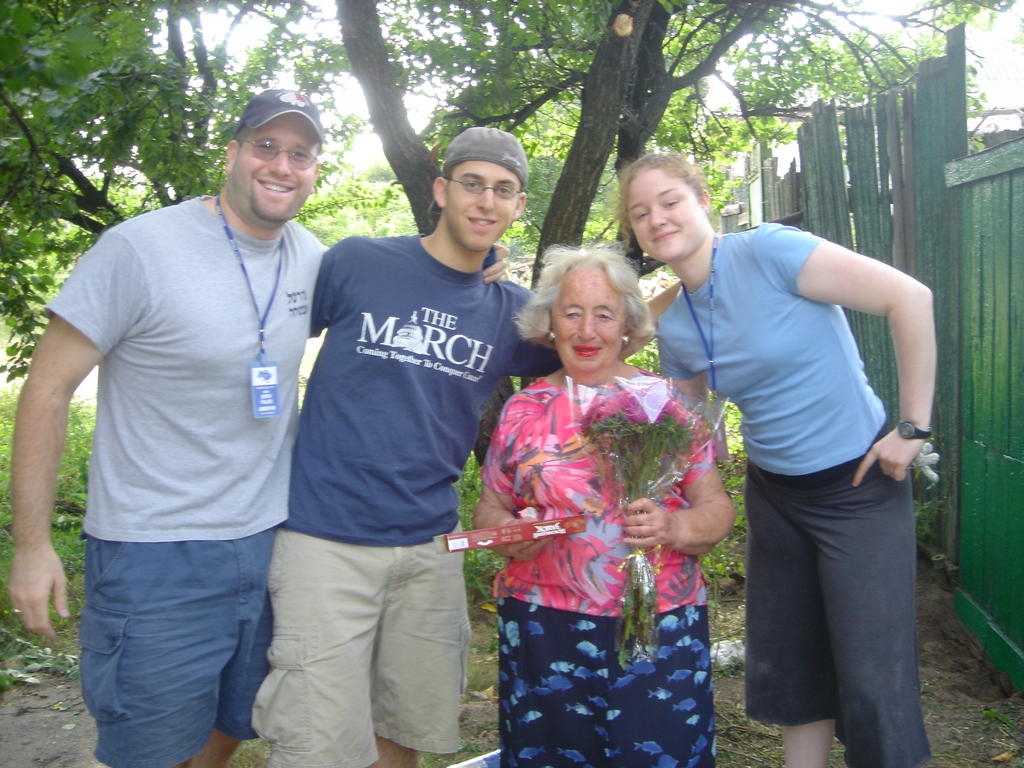
It may have been our group’s 6th rendition of the Yiddish classic Tumbalalika that week, but we were still singing it just as loudly, clapping and dancing hand-in-hand with the elderly with the same exuberance and energy as the first five times.
Although our group — comprised of 15 students and two staff members from University of Michigan Hillel — may have arrived in the Ukraine with the lofty vision of inspiring and educating the local Jewish community, what we soon realized was that the locals would become our teachers.
Over the course of our ten day stay in Ukraine as part of a service program sponsored by the American Jewish Joint Distribution Committee (JDC), Michigan Hillel, and Kharkov Hillel, and financially supported by the Charles and Lynn Schusterman Family Foundation, the Mandell L. and Madeleine H. Berman Foundation, and others, we witnessed something that exceeded all of our expectations: the revival of a Jewish community, whose core is a group of young, bright, and promising individuals. Personally, as a child of Russian immigrants to the United States, it was immensely valuable for me to see this group of individuals that are not only leading their local communities in rebuilding, but led us, active students at University of Michigan, on a journey through Ukrainian-Jewish history past and present.
This educational and inspirational journey was one full of emotion: from saying Kaddish (Mourner’s prayer) for the hundreds of thousands of Jews massacred by Nazis in 1941 at Babi Yar to reading from a Torah for the first time since its arrival over five years ago at the revived Jewish community of Konotop.
Yet, the highs and lows of emotion we felt throughout this journey were fitting for a Jewish community that has suffered through so much, yet amazingly persevered to this day. This once vibrant Jewish community has suffered through mass murder at the hands of the Nazis along with repression under Soviet rule. But since the collapse of the Soviet Union, and Ukrainian independence of 1991, the Jewish community has experienced an oft-turbulent path to revival. We were lucky to get a glimpse of that revival: hearing a student a Capella group sing Hatikva, the Israeli national anthem, interacting with kids at a special needs program at the brand-new JDC sponsored JCC, and picking potatoes for charity at a Jewish cooperative farm.
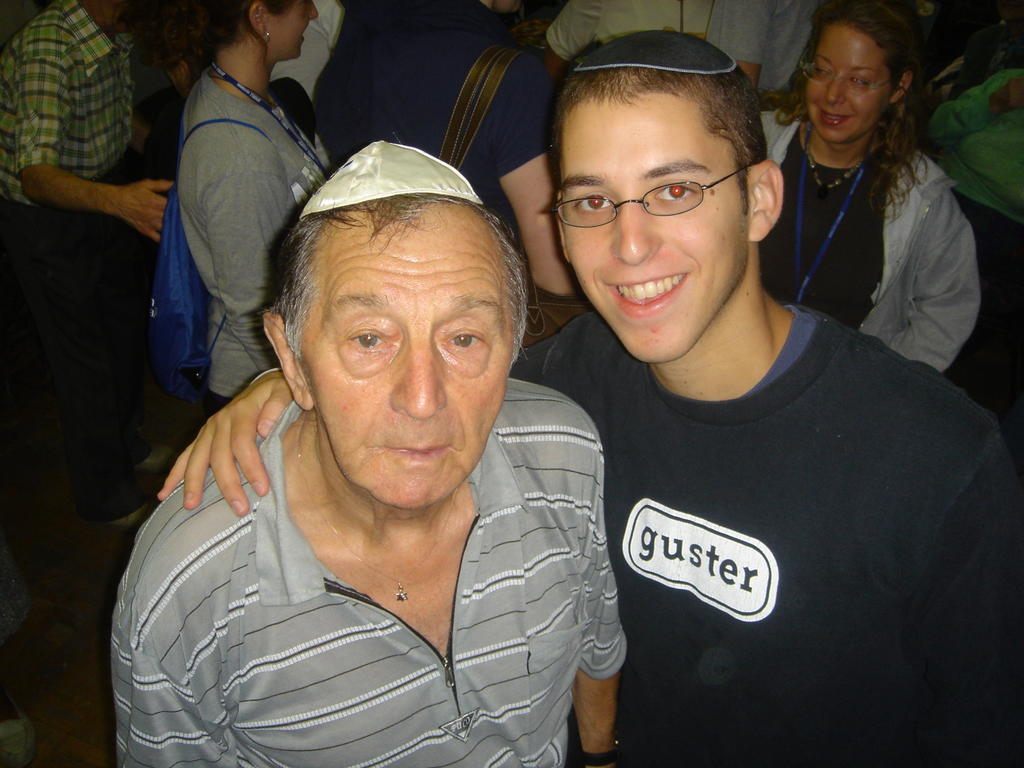 While it is clear that these young Ukrainians left a lasting impact on us, it is also for certain that our being there, the simple notion that 15 young Americans would travel all the way to Ukraine just to show support for its budding community, meant a lot. Regardless of what one may consider the best future of Ukrainian Jewry — whether it be mass immigration to Israel or a steadfast commitment to rebuilding their community locally from the ground up — it would be erroneous to consider their community dead. Witnessing a newly reopened and refurbished synagogue, a boisterous and smile-laden Shabbat service and dinner, and even a young and rising Jewish Ukrainian rapper, one thing is more crystal-clear than Ukrainian vodka: this community is alive. Alive and dancing.
Thursday, September 22, 2005
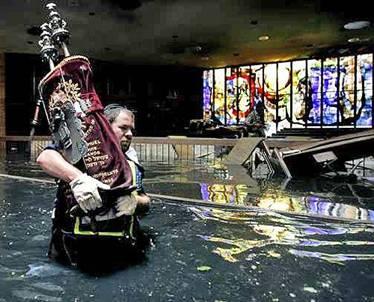
Simchat Torah: The Torah is Saved
Just as water leaves a high place and flows to a low one, so the Torah leaves one whose spirit is proud and cleaves to one whose spirit is lowly.
(Shir Hashirim Rabbah)

(Shir Hashirim Rabbah)
Monday, August 08, 2005
Rusted Root in Vegas - What a Show!
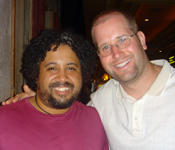
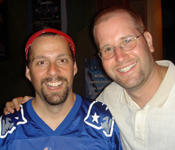
 It's been over a week since Elissa and I returned from our vacation in Las Vegas, but I still haven't posted any photos or blogged about the experience. I'll try and do that tomorrow. In the meantime, while we saw four great "Vegas shows," one of the highlights of the vacation was seeing Rusted Root play a concert at The House of Blues at our hotel (Mandalay Bay).
We only found out that Rusted Root was going to be at The House of Blues a couple nights before and we already had received free tickets to see magician Lance Burton at Monte Carlo the same night (free tickets from attending a time-share presentation... but more on that later). So after seeing the illusions of Mr. Burton it was back to our hotel for Rusted Root. They played an amazing show with a lot of classic songs and some new material as well.
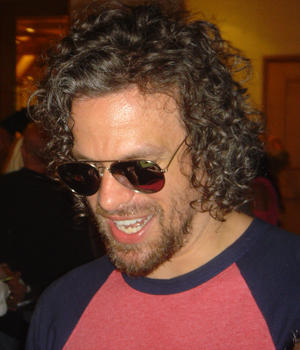
I especially enjoyed talking with Jason Miller (great name!) after the show. He was sitting in for regular percussionist Jim Donovan and signed an autograph "To Rabbi Jason Miller from Jason Miller the Drummer". He told me he wishes he had a title (like a doctorate in drumming), but he actually received a master's degree in percussion performance. It was a truly amazing show and I learned that The House of Blues is a very fun place to attend a concert.



Tuesday, March 29, 2005
Natalie Portman Makes Huge Gift to Hadassah!
Jewish Actress Helps Expand Trauma Unit For Jerusalem Hospital
Jerusalem’s Hadassah hospital received a $50 million donation last week from one of the people born there – famed Jewish actress Natalie Portman.
Portman’s donation is earmarked for an improved and expanded emergency trauma center being funded by the Hadassah Women's Zionist movement. The expansion will enable three times as many victims to be treated at once.
At a ceremony Thursday evening at the Jerusalem Theater, Dr. Kobi Assaf, Hadassah Hospitals’ director of surgery and shock trauma said the expansion of the trauma center will save many lives. "One of the most crucial things we can do for trauma patients is treat them quickly," he said. "The new unit is arranged specifically to do that - everything we need to treat them is right here."
The old center could handle 23,000 admissions a year, but demand rose to 73,000 due to Arab terrorism as well as an increase in car accidents.
23-year-old Portman, whose family name is Hershlag, was born in Israel, and her father worked as a doctor in Jerusalem. She spent last summer studying Jewish History at the Hebrew University.
While studying at Harvard University, Portman wrote an open letter defending Israeli security policies after a pro-PLO student attacked Israel in the campus newpaper. She also frequently paid visits to Israeli victims of terrorism in hospitals during the course of the Oslo War.
Jerusalem’s Hadassah hospital received a $50 million donation last week from one of the people born there – famed Jewish actress Natalie Portman.
Portman’s donation is earmarked for an improved and expanded emergency trauma center being funded by the Hadassah Women's Zionist movement. The expansion will enable three times as many victims to be treated at once.
At a ceremony Thursday evening at the Jerusalem Theater, Dr. Kobi Assaf, Hadassah Hospitals’ director of surgery and shock trauma said the expansion of the trauma center will save many lives. "One of the most crucial things we can do for trauma patients is treat them quickly," he said. "The new unit is arranged specifically to do that - everything we need to treat them is right here."
The old center could handle 23,000 admissions a year, but demand rose to 73,000 due to Arab terrorism as well as an increase in car accidents.
23-year-old Portman, whose family name is Hershlag, was born in Israel, and her father worked as a doctor in Jerusalem. She spent last summer studying Jewish History at the Hebrew University.
While studying at Harvard University, Portman wrote an open letter defending Israeli security policies after a pro-PLO student attacked Israel in the campus newpaper. She also frequently paid visits to Israeli victims of terrorism in hospitals during the course of the Oslo War.
Tuesday, March 22, 2005
Sklar Brothers Rock Michigan's Campus
Jason & Randy Sklar of ESPN's Cheap Seats performed tonight at the Power Center on University of Michigan's campus. The event was sponsored by Michigan Hillel, Big Ticket Productions, and the Mel Gibson Foundation for the Anti-Semitic Arts through Religious Film Production. The Sklar Brothers were hillarious. They are clearly the only stand-up comedians currently using the term "eiruv" in their routine.


It's very possible that prior to the Sklar Brothers taking the stage at the Power Center tonight, I was the last Conservative Jew to perform at the venue (Yom Kippur 2004).
Close to 400 people were in attendance including members of the high school senior class from Nosh 'n' Drash at Adat Shalom Synagogue led by Warren Frankford (1); Hillel student leaders Perry Teicher, Monica Woll, Dina Pittel, Michelle Gorman & Sarah Kirschenbaum (2); Dr. David & Rebecca Salama (3); Jordan Sherman & Matt Orley from ZBT (4); and, my brother Jake & his posse (5).


It's very possible that prior to the Sklar Brothers taking the stage at the Power Center tonight, I was the last Conservative Jew to perform at the venue (Yom Kippur 2004).
Close to 400 people were in attendance including members of the high school senior class from Nosh 'n' Drash at Adat Shalom Synagogue led by Warren Frankford (1); Hillel student leaders Perry Teicher, Monica Woll, Dina Pittel, Michelle Gorman & Sarah Kirschenbaum (2); Dr. David & Rebecca Salama (3); Jordan Sherman & Matt Orley from ZBT (4); and, my brother Jake & his posse (5).
Saturday, March 19, 2005
Dan Ahdoot
Comedian Dan Ahdoot performed tonight at the Michigan Union for Hillel students. Dan was a finalist on Last Comic Standing and he also writes for Comedy Central's Crank Yankers.

Wednesday, February 23, 2005
My mentor, my teacher, my friend - DICK LOBENTHAL
Lobenthal offers insight on prejudice"
By Tom Szczesny
Michigan Daily
February 23, 2005
"Traveling home from Ku Klux Klan rallies in cars loaded with dynamite, standing in churches as they were firebombed and waiting for a sheriff to arrive at his burning house to save him from gun-toting KKK members has provided former director of the Michigan Anti-Defamation League, Richard Lobenthal, with a unique perspective on prejudice.
Throughout his 36-year career at the ADL, Lobenthal was on the front lines of the battle against hate.
Last night at the University’s chapter of Hillel, Lobenthal shared some of his compelling stories with a gathering of students and local residents. Lobenthal’s hope was to convey the relevance of these experiences to the current struggle against intolerance.
Lobenthal said there is still an undercurrent of prejudice continuing to threaten individuals and infringing on their ability to live a secure life. “As we go from the ‘50s and ‘60s to 2005, we’re still dealing with this issue,” he said.

Citing recent events around the country and at the University, including the drawing of swastikas in Mary Markley Residence Hall, Lobenthal expressed anxiety over manifestations of hate in the United States today.
“One thing I’ve become increasingly concerned about is that Americans are losing their ability to be tolerant,” he said. “It’s our inability to recognize our differences and coexist that makes me nervous,” he added.
Lobenthal also explained how such intolerance will impact the country in coming decades. In particular, Lobenthal conveyed his doubt that democracy can survive in a climate of prejudice. “The ability for us to get along together is the most fundamental concept of American democracy,” he said.
Lobenthal said he is disturbed by the fact that individuals have become increasingly incapable of speaking openly about issues of race and tolerance. Even worse, he said the result has been a gradual muting of voices that fight for equal rights.
“When you begin to have a country move to apathy about harassing people … and you don’t have a sense of indignation, … that is very dangerous,” he said. “Until we have a collective sense of outrage, then the world’s going to deteriorate.”
It was this sense that first inspired Lobenthal to become a civil rights activist over four decades ago. He wanted to be heard in firm opposition to the many prejudiced movements — including the Dixiecrats and a resurgent KKK — spreading around the country.
As a result, he joined the ADL, which Lobenthal called the oldest and largest private civil rights organization in the world, and while serving in its Virginia office, he took steps to combat hate by infiltrating the KKK and observing the group’s activities firsthand.
In 1964, Lobenthal became the Michigan director of the ADL. He served in this capacity until 1996, when he stepped down to engage in other forms of civil rights activism, including acting as interim director of the Michigan American Civil Liberties Union.
With his decades-long work as a fighter of prejudice, Lobenthal left a mark on many lives. Rabbi Jason Miller, assistant director of Michigan Hillel, worked as an intern with Lobenthal one summer and called him as a “public defender and unifier.”
Lobenthal’s story resonated with RC sophomore Monica Woll, chair of Hillel’s governing board. “It was inspiring to hear someone so dedicated and passionate about a cause living his life attempting to end racism and segregation,” she said.
Miller said this energy and determination allowed Lobenthal to create a climate of tolerance for disparaged groups. “All these minority groups owe so much to this man who has dedicated his life to fighting hate and building bridges,” he said.
By Tom Szczesny
Michigan Daily
February 23, 2005
"Traveling home from Ku Klux Klan rallies in cars loaded with dynamite, standing in churches as they were firebombed and waiting for a sheriff to arrive at his burning house to save him from gun-toting KKK members has provided former director of the Michigan Anti-Defamation League, Richard Lobenthal, with a unique perspective on prejudice.
Throughout his 36-year career at the ADL, Lobenthal was on the front lines of the battle against hate.
Last night at the University’s chapter of Hillel, Lobenthal shared some of his compelling stories with a gathering of students and local residents. Lobenthal’s hope was to convey the relevance of these experiences to the current struggle against intolerance.
Lobenthal said there is still an undercurrent of prejudice continuing to threaten individuals and infringing on their ability to live a secure life. “As we go from the ‘50s and ‘60s to 2005, we’re still dealing with this issue,” he said.
Citing recent events around the country and at the University, including the drawing of swastikas in Mary Markley Residence Hall, Lobenthal expressed anxiety over manifestations of hate in the United States today.
“One thing I’ve become increasingly concerned about is that Americans are losing their ability to be tolerant,” he said. “It’s our inability to recognize our differences and coexist that makes me nervous,” he added.
Lobenthal also explained how such intolerance will impact the country in coming decades. In particular, Lobenthal conveyed his doubt that democracy can survive in a climate of prejudice. “The ability for us to get along together is the most fundamental concept of American democracy,” he said.
Lobenthal said he is disturbed by the fact that individuals have become increasingly incapable of speaking openly about issues of race and tolerance. Even worse, he said the result has been a gradual muting of voices that fight for equal rights.
“When you begin to have a country move to apathy about harassing people … and you don’t have a sense of indignation, … that is very dangerous,” he said. “Until we have a collective sense of outrage, then the world’s going to deteriorate.”
It was this sense that first inspired Lobenthal to become a civil rights activist over four decades ago. He wanted to be heard in firm opposition to the many prejudiced movements — including the Dixiecrats and a resurgent KKK — spreading around the country.
As a result, he joined the ADL, which Lobenthal called the oldest and largest private civil rights organization in the world, and while serving in its Virginia office, he took steps to combat hate by infiltrating the KKK and observing the group’s activities firsthand.
In 1964, Lobenthal became the Michigan director of the ADL. He served in this capacity until 1996, when he stepped down to engage in other forms of civil rights activism, including acting as interim director of the Michigan American Civil Liberties Union.
With his decades-long work as a fighter of prejudice, Lobenthal left a mark on many lives. Rabbi Jason Miller, assistant director of Michigan Hillel, worked as an intern with Lobenthal one summer and called him as a “public defender and unifier.”
Lobenthal’s story resonated with RC sophomore Monica Woll, chair of Hillel’s governing board. “It was inspiring to hear someone so dedicated and passionate about a cause living his life attempting to end racism and segregation,” she said.
Miller said this energy and determination allowed Lobenthal to create a climate of tolerance for disparaged groups. “All these minority groups owe so much to this man who has dedicated his life to fighting hate and building bridges,” he said.
Wednesday, February 09, 2005
Meet the hacker who makes your home appliances right with God.
Great article from November's Wired Magazine that Jeremy Fogel just sent my way. We actually have a General Electric stove with the Shabbat setting. The first time I saw such a thing was at Rabbi Danny & Lynn Nevins's home a number of years ago on Shabbat.
Danny and I both delighted in the fact that Sabbath observant Jews seemed to "have arrived" as far as GE was concerned, but we were dismayed that the user's manual stated that the Sabbath function was "for Orthodox Jews who do not cook on the Sabbath" similar to the statement in the second paragraph of the article below. Should I be upset at the snub of non-Orthodox Jews observant of Halakhah like myself or, rather, should I only wish that it were true that only Orthodox Jews were forbidden from all the melachot of Shabbat?
The Geek Guide to Kosher Machines
By Michael Erard
Wired Magazine
Jonah Ottensoser leans over the white stovetop to tweak its settings, giving me a full view of the black yarmulke on his head. But he's not about to bake a cake. Ottensoser, a large genial man with a gray beard, is an engineer, not a cook, and he's brought me to the kitchen in his Baltimore office to show off his proud creation: a stove that Jewish consumers will buy just to please God.
From sundown Friday to sundown Saturday, Orthodox Jews are forbidden to work, write, and drive. In all, 39 activities are off-limits to those complying with the Torah's fourth commandment, to keep the Sabbath holy. In the home, that means no cooking or fire lighting - or its modern analog, moving electricity through a circuit.
For decades, observant Jews have found ways to work around Sabbath restrictions in the kitchen. They taped down the button on the refrigerator door frame to keep the light from turning on. Or someone unscrewed the bulb before Friday sunset. They turned on an oven in advance - that way, they could warm food on the Sabbath without altering temperature settings. In recent years, however, well-intentioned appliance makers have been installing safety features that automatically shut off ovens after 12 hours. That meant a unit turned on at dusk Friday would be cold before lunch on Saturday. When companies learned this was complicating dinner preparation for some Jews, they supplied an optional override. Thus, a rudimentary "Sabbath mode" was born.
But as appliances got more high tech - gel-pad touch controls; LED screens with temperature and burner settings; digital humidity gauges - creating a Sabbath mode became more difficult. Mayer Preger, a salesman at the Manhattan Center for Kitchen and Bath, noticed a problem when fridges started using sensors instead of simple light switches. "You can't hack the new refrigerators like you used to," he complains. "There's all these computer chips in them."
That's where Jonah Ottensoser comes in. He doesn't hack the fridges so much as work with manufacturers to give appliances a kosher seal of approval. A retired helicopter engineer who is himself Orthodox, Ottensoser teaches Sabbath law to technical teams at companies like General Electric, Electrolux, and Viking. His job: to guide them in building electronic brains and mechanical guts that are Sabbath-compliant.
Ottensoser works for Star-K, a nonprofit that certifies food products as kosher. Of several hundred kosher agencies in the world, Star-K is the only one that certifies technology, and Ottensoser is the firm's only appliance consultant. That makes him the world's lone kosher geek, the man tasked with certifying that the movement of every electron in an appliance is sanctioned by God.
Since he was hired seven years ago, Ottensoser has helped nine companies design Sabbath modes for more than 300 types of ovens and stoves, and dozens of refrigerators. When the feature is enabled, lights stay off and displays are blank; tones are silenced, fans stilled, compressors slowed. In a kosher fridge, there's no light, no automatic icemaker, no cold-water dispenser, no warning alarm for spoiled food, no temperature readout. Basically, Ottensoser converts your fancy - and expensive - appliance into the one your grandma bought after World War II.
One of the hardest parts of Ottensoser's job is explaining to engineers the intricacies of Jewish law. He starts by focusing on the concept of indirect action. Sabbath law prohibits Jews from performing actions that cause a direct reaction; that would qualify as forbidden work. But indirect reactions are, well, kosher. In Hebrew, this concept is called the gramma. There are two types of grammas, Ottensoser tells me. Say you hit a light switch, but it doesn't come on immediately - that's a time delay, a time gramma. There's also a gramma of mechanical indirectness, like a Rube Goldberg contraption in which a mouse turns a wheel that swings a hammer that turns a key that launches a rocket. You can't claim the mouse actually launches the rocket.
Ottensoser gets manufacturers to build the easier time gramma into their products. Rabbis differ on how much of a delay is required; the Star-K rabbinical authority, Moshe Heinemann, authorizes a 5-second lag. To be on the safe side, Ottensoser increased the delay to 15 seconds and a random wait of as much as 10 seconds. Why? "An indirect action is one where you can't predict what's going to happen," he says.
He explains it to engineers with the following example: Opening a fridge seems like a harmless action without consequence. But every time you open that door, you let warm air in and cold air out, changing the temperature inside. So the compressor switches on to compensate, and you've effectively turned on the appliance and engaged in work. Mechalel shabbos - you've desecrated the Sabbath. For a while, observant Jews tried a mechanical solution, putting their fridges on a timer. "But it killed the refrigerators," says Ottensoser.
Engineers at GE faced another problem: Their freezers have an auto defrost mode that switches on after the door has been opened a set number of times. That results in a direct reaction - mechalel. Ottensoser suggested that the engineers rework the controls to trick the refrigerators into emulating a model from the 1990s, when defrost modes were on a predetermined cycle. "There was no easy workaround," says Valinda Wagner, a product manager at GE. "We had to redesign the control algorithms."
With 900,000 Orthodox Jewish households in the US and millions overseas, offering the Sabbath mode makes good business sense. It's also part of a trend among tech companies, who are acknowledging cultural and religious values to tap emerging markets overseas and become more competitive in niche markets at home. GE offers a five-burner stovetop popular with Hispanics, who use the extra burner to warm tortillas. And Intel's smart home team has put ethnographers into Asian kitchens to look at technology use.
Aside from the coffeemaker, Ottensoser rarely uses kitchen appliances at home, where he leaves the cooking to his wife. "I'm kinda macho that way," he says. But not too macho to trade in a career building helicopters for fixing kitchen appliances. "From a technical viewpoint, there's not much difference," he shrugs. "Electricity is electricity, and mechanics are mechanics."
But back in the Star-K staff kitchen, where Ottensoser is demonstrating the Sabbath mode on a Kenmore stove, things aren't so simple. Holding a page of instructions, he pushes button after button and mutters to himself, "OK, so I hit this." Nothing. "OK."
Consumers who have bought high-end appliances in the last few years should be relieved by Ottensoser's difficulty in activating Sabbath mode, even though many modern ovens come with this feature. The functionality is buried in the appliance, well hidden behind a choreography of button-pushing. That means you're not likely to accidentally trigger it - and have to call for repair service when the oven light won't come on.
Finally, Ottensoser hits the right buttons on the Kenmore, and the LED display reads "SABT." Now it's a kosher oven. I ask if he has a Sabbath mode oven at home. "Three of them," he says. How about a Sabbath fridge? He scoffs. Who wants a fridge so high tech that it requires a Sabbath mode? "They're too fancy. Why do I need to know what the temperature is inside my refrigerator? Why do I need a light in my crisper?"
Danny and I both delighted in the fact that Sabbath observant Jews seemed to "have arrived" as far as GE was concerned, but we were dismayed that the user's manual stated that the Sabbath function was "for Orthodox Jews who do not cook on the Sabbath" similar to the statement in the second paragraph of the article below. Should I be upset at the snub of non-Orthodox Jews observant of Halakhah like myself or, rather, should I only wish that it were true that only Orthodox Jews were forbidden from all the melachot of Shabbat?
The Geek Guide to Kosher Machines
By Michael Erard
Wired Magazine
Jonah Ottensoser leans over the white stovetop to tweak its settings, giving me a full view of the black yarmulke on his head. But he's not about to bake a cake. Ottensoser, a large genial man with a gray beard, is an engineer, not a cook, and he's brought me to the kitchen in his Baltimore office to show off his proud creation: a stove that Jewish consumers will buy just to please God.
From sundown Friday to sundown Saturday, Orthodox Jews are forbidden to work, write, and drive. In all, 39 activities are off-limits to those complying with the Torah's fourth commandment, to keep the Sabbath holy. In the home, that means no cooking or fire lighting - or its modern analog, moving electricity through a circuit.
For decades, observant Jews have found ways to work around Sabbath restrictions in the kitchen. They taped down the button on the refrigerator door frame to keep the light from turning on. Or someone unscrewed the bulb before Friday sunset. They turned on an oven in advance - that way, they could warm food on the Sabbath without altering temperature settings. In recent years, however, well-intentioned appliance makers have been installing safety features that automatically shut off ovens after 12 hours. That meant a unit turned on at dusk Friday would be cold before lunch on Saturday. When companies learned this was complicating dinner preparation for some Jews, they supplied an optional override. Thus, a rudimentary "Sabbath mode" was born.
But as appliances got more high tech - gel-pad touch controls; LED screens with temperature and burner settings; digital humidity gauges - creating a Sabbath mode became more difficult. Mayer Preger, a salesman at the Manhattan Center for Kitchen and Bath, noticed a problem when fridges started using sensors instead of simple light switches. "You can't hack the new refrigerators like you used to," he complains. "There's all these computer chips in them."
That's where Jonah Ottensoser comes in. He doesn't hack the fridges so much as work with manufacturers to give appliances a kosher seal of approval. A retired helicopter engineer who is himself Orthodox, Ottensoser teaches Sabbath law to technical teams at companies like General Electric, Electrolux, and Viking. His job: to guide them in building electronic brains and mechanical guts that are Sabbath-compliant.
Ottensoser works for Star-K, a nonprofit that certifies food products as kosher. Of several hundred kosher agencies in the world, Star-K is the only one that certifies technology, and Ottensoser is the firm's only appliance consultant. That makes him the world's lone kosher geek, the man tasked with certifying that the movement of every electron in an appliance is sanctioned by God.
Since he was hired seven years ago, Ottensoser has helped nine companies design Sabbath modes for more than 300 types of ovens and stoves, and dozens of refrigerators. When the feature is enabled, lights stay off and displays are blank; tones are silenced, fans stilled, compressors slowed. In a kosher fridge, there's no light, no automatic icemaker, no cold-water dispenser, no warning alarm for spoiled food, no temperature readout. Basically, Ottensoser converts your fancy - and expensive - appliance into the one your grandma bought after World War II.
One of the hardest parts of Ottensoser's job is explaining to engineers the intricacies of Jewish law. He starts by focusing on the concept of indirect action. Sabbath law prohibits Jews from performing actions that cause a direct reaction; that would qualify as forbidden work. But indirect reactions are, well, kosher. In Hebrew, this concept is called the gramma. There are two types of grammas, Ottensoser tells me. Say you hit a light switch, but it doesn't come on immediately - that's a time delay, a time gramma. There's also a gramma of mechanical indirectness, like a Rube Goldberg contraption in which a mouse turns a wheel that swings a hammer that turns a key that launches a rocket. You can't claim the mouse actually launches the rocket.
Ottensoser gets manufacturers to build the easier time gramma into their products. Rabbis differ on how much of a delay is required; the Star-K rabbinical authority, Moshe Heinemann, authorizes a 5-second lag. To be on the safe side, Ottensoser increased the delay to 15 seconds and a random wait of as much as 10 seconds. Why? "An indirect action is one where you can't predict what's going to happen," he says.
He explains it to engineers with the following example: Opening a fridge seems like a harmless action without consequence. But every time you open that door, you let warm air in and cold air out, changing the temperature inside. So the compressor switches on to compensate, and you've effectively turned on the appliance and engaged in work. Mechalel shabbos - you've desecrated the Sabbath. For a while, observant Jews tried a mechanical solution, putting their fridges on a timer. "But it killed the refrigerators," says Ottensoser.
Engineers at GE faced another problem: Their freezers have an auto defrost mode that switches on after the door has been opened a set number of times. That results in a direct reaction - mechalel. Ottensoser suggested that the engineers rework the controls to trick the refrigerators into emulating a model from the 1990s, when defrost modes were on a predetermined cycle. "There was no easy workaround," says Valinda Wagner, a product manager at GE. "We had to redesign the control algorithms."
With 900,000 Orthodox Jewish households in the US and millions overseas, offering the Sabbath mode makes good business sense. It's also part of a trend among tech companies, who are acknowledging cultural and religious values to tap emerging markets overseas and become more competitive in niche markets at home. GE offers a five-burner stovetop popular with Hispanics, who use the extra burner to warm tortillas. And Intel's smart home team has put ethnographers into Asian kitchens to look at technology use.
Aside from the coffeemaker, Ottensoser rarely uses kitchen appliances at home, where he leaves the cooking to his wife. "I'm kinda macho that way," he says. But not too macho to trade in a career building helicopters for fixing kitchen appliances. "From a technical viewpoint, there's not much difference," he shrugs. "Electricity is electricity, and mechanics are mechanics."
But back in the Star-K staff kitchen, where Ottensoser is demonstrating the Sabbath mode on a Kenmore stove, things aren't so simple. Holding a page of instructions, he pushes button after button and mutters to himself, "OK, so I hit this." Nothing. "OK."
Consumers who have bought high-end appliances in the last few years should be relieved by Ottensoser's difficulty in activating Sabbath mode, even though many modern ovens come with this feature. The functionality is buried in the appliance, well hidden behind a choreography of button-pushing. That means you're not likely to accidentally trigger it - and have to call for repair service when the oven light won't come on.
Finally, Ottensoser hits the right buttons on the Kenmore, and the LED display reads "SABT." Now it's a kosher oven. I ask if he has a Sabbath mode oven at home. "Three of them," he says. How about a Sabbath fridge? He scoffs. Who wants a fridge so high tech that it requires a Sabbath mode? "They're too fancy. Why do I need to know what the temperature is inside my refrigerator? Why do I need a light in my crisper?"
Thursday, February 03, 2005
Afternoon with Mr. D
Last Wednesday I had a very intriguing discussion over lunch with Mr. Bill Davidson, owner of Guardian Industries, and sports franchises the Detroit Pistons (NBA), Tampa Bay Lightning (NHL), and Detroit Shock (WNBA). Each of these sports teams are the reigning champions of their respective league.
I was invited to lunch with Mr. D. along with a few other recent graduates of the William Davidson Graduate School of Education at The Jewish Theological Seminary. I was very impressed with our candid discussion about the Seminary, Jewish Education, and the Conservative Movement. It was also impressive to tour Guardian Industries' world headquarters (located in Auburn Hills) which looks out onto the Palace of Auburn Hills and the Pistons' practice facility.
Here are some photos from the day:


I was invited to lunch with Mr. D. along with a few other recent graduates of the William Davidson Graduate School of Education at The Jewish Theological Seminary. I was very impressed with our candid discussion about the Seminary, Jewish Education, and the Conservative Movement. It was also impressive to tour Guardian Industries' world headquarters (located in Auburn Hills) which looks out onto the Palace of Auburn Hills and the Pistons' practice facility.
Here are some photos from the day:
Clockwise: Mr. D. and me; Mr. D. in office; Mr. D.'s 3 NBA championship rings; Photo of Bill Laimbeer in Guardian dining room
Subscribe to:
Posts