Friday, July 15, 2011

Motherhood and the Rabbinate: A Male Rabbi Responds

When we hear the words of the Torah being read this Shabbat morning, we'll learn about a group of women who had a mutual goal and succeeded.

A man named Tzelafchad died without having any sons and the laws of inheritance in the Torah only recognized male heirs, making no provision for a deceased father's land to be claimed by his female descendants. However, Tzelafchad's daughters, Machlah, Noah, Chaglah, Milkah and Tirtzah, refused to reconcile themselves to this fact and petitioned Moses to grant them their father's estate. Moses brought their claim to God, who responded: "The daughters of Tzelafchad speak right: thou shalt surely give them a possession of an inheritance among their father's brethren; and thou shalt cause the inheritance of their father to pass unto them. And thou shalt speak unto the children of Israel, saying: If a man die, and have no son, then ye shall cause his inheritance to pass unto his daughter."

These five women didn't let the fact that they were women get in the way of changing history. And neither did the women who broke the gender barrier in the rabbinate. Prior to June 3, 1972, no woman had ever been ordained as a rabbi in the United States. On that date, Sally Priesand became the first woman rabbi in North America. The first Conservative rabbi wouldn't be ordained for another eleven years when Rabbi Amy Eilberg graduated from the Jewish Theological Seminary.

It is appropriate that we learn about the courageous daughters of Tzelafchad this week following an op-ed in the Forward written by a female rabbinical student from the Jewish Theological Seminary who argues that motherhood and the rabbinate don't mix well. Chasya-Uriel Steinbauer, the mother of an infant daughter, is on leave from the Seminary while she stays at home to care for her daughter. Somehow she found the time (probably while her baby was napping) to post on the Forward's Sisterhood blog that mothers who are practicing rabbis are just another example of the "Super Mom-syndrome now cloaked as the Super Ima-Rabbi syndrome."


Well, I couldn't disagree more. Maybe Chasya-Uriel Steinbauer is not able to balance motherhood with the life of a rabbinical student, but I have certainly witnessed many women who were able to strike this balance -- and impressively so.

I remember my first day of rabbinical school orientation like it was yesterday. We sat around a conference room table introducing ourselves. Many of us were right out of college. Some were single, while others were either engaged or newly married. But there were also several older students in my rabbinical school class. I remember Paula Mack Drill introducing herself in her warm way by telling us that first and foremost she is the mother of four children ages nine to two-years-old. And she wasn't the only woman in our class who would spend the next six years raising a family and fulfilling the necessary credits to graduate and become a rabbi. During rabbinical school, many of my female classmates became mothers for the first time (or for the second or third time). And many of the men (myself included) became fathers for the first time.

Was it challenging to be both a mommy (or daddy) and still manage to attend classes, study in the beit midrash, take exams and manage a part-time job? Of course it was. Just like it is a challenge to balance motherhood with medical school or law school or any other graduate school. But it can be done and it can be done without forsaking the children.

The experience of coupling motherhood with a career is something women fought for in the last century. The opening of the doors to women in the rabbinate was very much a result of the Women's Liberation Movement. And Judaism is the better for it. This past Mother's Day I wrote an article for JTA in praise of women rabbis. I wrote this because my rabbinate and my Jewish experience have only been enhanced by the presence of women rabbis.

From among my rabbinical school class alone, I've seen one of my female classmates go on to become an entrepreneur, founding a new congregation and being recognized as one of Newsweek Magazine's top congregational rabbis. I saw another female classmate go on to become one of the highest ranking chaplains in the Navy. I saw other female classmates build small synagogues into larger, thriving communities. And these are only the women with whom I was ordained. Look around the Jewish world and you'll see hundreds of women successfully raising their children while also educating, counseling, writing, leading organizations and preaching.

Chasya-Uriel Steinbauer urges, "I want us to question why we allow our lives to be set up in such ways where we feel that they have no choice but to work or attend school and thus leave our babies in the care of others." You definitely have a choice. But many women in the 21st century are choosing to do the motherhood thing along with being an executive or a graduate student or a rabbi. It can be done and it can be done gracefully without any risk to the children.

I'm actually glad that Steinbauer wrote this because it gives us a chance to praise the women who balance motherhood with their careers. No one says these women have to do it alone. Help comes from devoted spouses, caring parents serving as loving grandparents, and talented nannies. Back in rabbinical school, there were many days when a baby would join us in class. Sometimes it was a mommy who brought the baby and sometimes it was a daddy. Not only did we not mind having a baby or two in class, we actually liked it. It was a testament that we didn't have to check our parenthood responsibilities at the door of the Seminary. It is really no different than a rabbi who sits on the bimah (pulpit) with her baby. It is a scene that might have been odd a few decades ago, but today it is commonplace.

One rabbi who prides herself on also being a mother is Rabbi Phyllis Sommer, who blogs at Ima On (and Off) the Bima. I thought her response to Chasya-Uriel Steinbauer was perfect. Reminding everyone that she is an ima (mother) both on and off the bimah, she wrote:

I am both a mother and a rabbi. Some days I'm more ima. Some days I'm more bima. (See blog title.) Some days, I'm trying to make it all work. But I don't think I'm doing it wrong. I just know that I'm doing it. I've created four wonderful little people and my husband and I delight in their growth of body and spirit. We definitely juggle, we definitely argue over who goes where and when.

I hope Chasya-Uriel Steinbauer returns to rabbinical school soon. I'm sure she'll become a talented rabbi while being a nurturing and devoted mother too. These are not mutually exclusive roles in life. It might just take her a few years to figure that out.

Monday, July 11, 2011

Israelis Merge Facebook and Google

Google is making another effort to successfully compete with Facebook in social networking. Google Buzz and Google Wave never caught on, but Google can't afford to fail with their latest attempt Google Plus. The problem is that over 750 million people worldwide have already built up their Facebook profiles and might not be willing to invest the time in Google Plus.


Leave it to the Israelis to find a way to merge the two platforms. Crossrider, a network of Israeli web developers, just released a new browser extension called Google+Facebook that combines the old Facebook profile with a new Google Plus profile. This merger allows the user to view and post to the Facebook news feed from within Google Plus. The extension was created in only one day on the Crossrider Java framework for browsers, which allows users to create free cross-browser extensions in minutes.

According to Alexandra Man, already "more than 10,000 users have already downloaded the Crossrider extension for Chrome, Firefox and Internet Explorer. After installing the extension and allowing it to access Facebook, a small Facebook button will appear in your Google+ window, right next to the Stream button."

While Google and Facebook will likely never merge and never create any official combination of the Facebook and Google Plus platforms, the Israeli innovators at Crossrider have created a useful extension.

Watch the Crossrider video about the Google+Facebook extension here:


Cross-posted to the Jewish Techs blog at The NY Jewish Week

Sunday, July 10, 2011

Jennifer Aniston Says Shabbat Shalom

In what is certainly a first, a big name celebrity says "Shabbat Shalom" in a movie.

"Horrible Bosses" starring Jason Bateman, Jason Sudeikis, Kevin Spacey, Jamie Foxx, Colin Farrell, and Donald Sutherland has a scene in which Jennifer Aniston exclaims, "Shabbat Shalom!" Here's a clip:

Friday, July 08, 2011

Jewish Summer Camp: A Father's Reflection Upon His Son's First Time at Sleepaway Camp

A few days before my oldest child ventured off to summer camp for the first time, I read a beautiful prayer by my colleague Rabbi Phyllis Sommer. On her "Ima On (and Off) the Bima" blog, she shared her prayer as her son embarked on his second summer away at camp. Titled "A Mama's Prayer for Summer Camp," she offered the following words:

May you find learning and growth of all kinds.
May you gain independence and feel comfort in your Jewish identity.
May the mosquitoes be guided away from you, and may the raindrops not fall into your tent (too much).
May the food be delicious and the pool the right temperature.
May you seek out new experiences and try new things (vegetables would be nice but I'm doubtful).
May you smile brilliantly for the camp photographer and show up daily in the online photo albums...

Rabbi Phyllis ended her beautiful prayer, "May you return home in one piece with all your belongings, and may you ever yearn to return to the land of summer camp."


My son returns home from summer camp this morning. He was only gone for ten days, but these were the longest ten days of my life. I truly missed him like crazy. I had only been apart from him for this long twice before when I led trips to Israel, but at least then I knew he was safe at home with his mommy.

Like any father, I was worried about him. He wasn't in a strange place because he essentially grew up at this Jewish summer camp. We spent the past several summers there as a family while I worked as the rabbi of the camping agency. But this was his first time away from home by himself so I was naturally concerned. Would he make new friends? Would he get enough sleep at night? Would he remember to put on sunscreen? Would he be homesick?

Inspired by Rabbi Phyllis's prayer, I've constructed my own prayer for my son as he returns home to us this morning from his first summer at sleepaway camp:

Tashuv Eleinu... May you return to us feeling energized by your first experience at camp.
Tashuv Eleinu... May you return to us having forged lasting friendships.
Tashuv Eleinu... May you return to us a little more mature and a little more independent.
Tashuv Eleinu... May you return to us feeling pride in your Jewish identity.
Tashuv Eleinu... May you return to us free of sunburn and too many mosquito bites.
Tashuv Eleinu... May you return to us having missed us but without having been homesick.
Tashuv Eleinu... May you return to us eager to share your camp memories with us.
Tashuv Eleinu... May you return to us ready to return to camp for many more magical summers to come.

As a father, I am so grateful for the powerful gift of Jewish summer camp and I am confident that my son's experiences of the past week-and-a-half have ignited a Jewish summer camping spark in him.

Thursday, July 07, 2011

Facebook Group or Private Social Network for Synagogues?

In my last year of rabbinical school, I had an interesting conversation with a rabbi of a large congregation. He told me that he had put his foot down and refused to let his congregation create a synagogue-wide email LISTSERV. His rationale? This forum would be used by the membership to complain about the synagogue... and the rabbi.

I gently suggested to my future colleague that if his members were going to use an email discussion group to complain about the congregation, they were likely already doing this in real-time at kiddush (the reception following services). He laughed and acknowledged I was correct. I'm sure that in the ensuing years he acquiesced and allowed for an email LISTSERV.

Developed in 1986 by Eric Thomas, LISTSERV was the first email list software application. The simple LISTSERV, an automated mailing list manager, allowed for like minded individuals in a group to disseminate email messages to one another. The features of such a platform were minimal. The threads were difficult to follow. In digest format, there were several discussions arriving in the inbox all at once with no logical grouping order. Today, the email LISTSERV has long since run its course. Even the next generation of these discussion groups (Yahoo! Groups, Deja News which became Google Groups, the London-based GroupSpaces, etc.) are limited in features.

Today, Facebook has made these discussion groups unecessary. The Facebook Group application allows for the dissemination of rich content in a secure, private network. I have helped many synagogues transition from the old LISTSERV and email-based group platforms to the Facebook Groups application. As I tell rabbis and synagogue executives all the time: There are over 750 million Facebook users worldwide so there's a good chance that your congregants are already signed on.

Facebook Groups allow for smaller cohorts within a congregation to have a forum to share ideas, documents, links to articles, photos, videos, and promote events. It is private and secure with at least one administrator monitoring the group.

Recently, when encouraging synagogues to start using the Facebook Groups application, I've been met with some resistence. Facebook isn't secure, they argue. They've heard that there is really no privacy with Facebook. They argue that a Private Social Network must be the way to go. I disagree and here's why.

Private Social Networks are certainly great apps and they have features galore. At first glance, applications like SocialGO and Yammer seem like the perfect solution for a company or organization that wants to have a social network that is open to only their employees or members. For many companies, these private social networks might make the most sense because once the employees are logged into Facebook, there will likely be many hours of unproductivity.

Synagogues and temples are different however. In that respect, I say use the network where the members are already participating. And that is obviously Facebook.

The Conservative Movement's Rabbinical Assembly recently announced a deal through a partnership with SocialGo that allows member rabbis to contract with the private social network company to create a web-based social network for their congregation. These private social networks have all the features and functionality as Facebook Groups, but cost a discounted $500 and then $25 per month. Facebook is free and everyone already has an account (or knows how to get one simply enough). Having people log in to another platform is tedious when they are already using Facebook on a daily basis and can simply use the Groups application to interface with the congregation's forums.

In terms of privacy, these Facebook Groups are just as private as LISTSERV groups were and continue to be. One must request to be a member of the group or be invited to participate in the discussions and view the content. Breaches of privacy can happen the same way there can be a breach of privacy from a face-to-face conversation. A group is only as private as its members allow it to be. The bottom line is that congregations shouldn't complicate matters by creating their own private social network. It's unnecessary. Save your money because Facebook Groups will work just fine.

Cross-posted to the Jewish Techs Blog at The NY Jewish Week

Wednesday, July 06, 2011

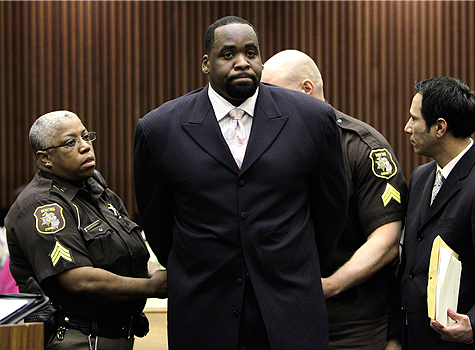
The Self-Proclaimed Jewish Conspiracy Against Kwame Kilpatrick

Ask anyone who grew up in suburban Detroit in the past forty years and they will explain the odd relationship that has long existed between the suburbanites and the City of Detroit. As I was coming of age in the Detroit suburbs, I was well aware of Mayor Coleman Young's sentiment toward the mostly white suburbanites. According to his Wikipedia entry, Mayor Young "was criticized for his confrontational style toward suburban interests and the apparent diversion of city resources to downtown Detroit from other neighborhoods. Young was generally popular with the inhabitants of the inner city, while generally disliked by those of the suburbs because of his outspoken criticism of racism, white flight to the suburbs, economic problems, and other similar issues."

Following the race riots of the late 1960s in Detroit, most Jews fled the city for the northwestern suburbs. My grandparents and parents were part of this migration. They moved from beautiful neighborhoods in Detroit to large homes in Bloomfield Hills and Southfield, Michigan. The City of Detroit became part of the history of Detroit's Jewish community. My parents talk of "Old Jewish Detroit" the way their grandparents talked of the "Old Country." Many Jewish Detroiters will venture Downtown to work, but make sure to head back North on the highway to be home by dinnertime. I've always gone Downtown for professional hockey, baseball or football games, as well as for concerts and theater productions, but we don't often make a day of it like you can in other large American cities.

Some of this has changed in recent years. There has certainly been a bit of a renaissance taking place in Detroit. New stadiums for the Detroit Tigers (Comerica Park) and the Detroit Lions (Ford Field) have helped. Entrepreneurs like Dan Gilbert (Quicken Loans) and Peter Karmanos (Compuware) moving their companies Downtown has helped too. In the Jewish community, there has been a concerted effort to reinvigorate city life in Detroit. A recent New York Times article focused on the young entrepreneurial move to the City of Detroit. The opening of a Moishe House will further help to bring young Jews to the city and create an urban renaissance.


There seems to be a lot of optimism about a turnaround for the City of Detroit. Perhaps all this good news is what makes the reports of disgraced former mayor Kwame Kilpatrick's upcoming book so disappointing. Mayor Coleman Young was a corrupt politician who likely benefited from kickbacks. But somehow, he survived as mayor for twenty years. Kwame Kilpatrick was worse. His hubris, deceit and unlawfulness caused his downfall.

Kwame Kilpatrick is serving a five-year jail sentence right now. But that hasn't kept him from writing a book in which he blames his downfall on a Jewish conspiracy. The fact that there are no Jewish people around who could be blamed for his illegal activity notwithstanding, Kwame alleges that there was a Jewish plot to bring him down.

The Michigan Citizen, which calls itself America's most progressive newspaper, was the first media outlet to receive a copy of Kwame Kilpatrick’s forthcoming book, Surrendered, which will be released in July. In the review of Kwame's book they write:

The book is saturated with a redemptive overtone that tends to relay the renewed spiritual connection Kilpatrick has developed. It’s through this lens that he speaks to what happened to him, not declaring innocence in his actions but the unfairness in how the events surrounding those actions were handled.

Rather than seeking repentance for his misdeeds, Kwame cries that it was unfair the way he was treated and looks for a scapegoat. So, why not the Jews?

There’s always been somewhat of an underlying question in the midst of the Kilpatrick scandal: Who the hell did he piss off to bring this level of scrutiny?

This question could be answered in Kilpatrick’s account of visits by Detroit attorney Reggie Turner on behalf of the area’s powerful Jewish community. Kilpatrick’s General Counsel Sharon McPhail angered many organizations when she set out to improve the placement rates for groups receiving Workforce Development funds. She required recipients to reapply for their funding and submit detailed strategies to improve placement rates.

The Jewish Vocational Services, who received $25 million from the city in workforce funds, had only a two percent placement rate. They were cut.

According to Kilpatrick, the February 2007 Savior’s Day, an important event for African Americans, at Ford Field with Nation of Islam national leader Louis Farrakhan was also an offense to the Jewish community.

It's amazing that throughout history the Jewish people have been an easy scapegoat. Here in Detroit, Henry Ford blamed the Jews for the nation's ills. Father Charles Coughlin publicly scapegoated the Jews for all the political and economic problems in the world.

It's shameful that the unremorseful former mayor is still looking for someone to blame. It's equally troubling that the Michigan Citizen seems to fall for Kwame's overt anti-Semitism. I wonder if they were compelled to give a positive review of Kwame's autobiography in exchange for being the first media agency to get its hands on a copy of the book.

The list of charges in Kwame's indictment is a long one. But perhaps the most egregious crime is that Kwame continues to grow the unfortunate divide among Detroit's Jewish community in the suburbs and the City of Detroit at a time when a renaissance is within reach. And that's just sad.

Natalie Portman Names Son Alef

I first read the reports last month that Natalie Portman and Benjamin Millepied had named their newborn son Alef. There was no confirmation of the name from Portman so I didn't blog about it. Now, it appears that more news sources are picking up on this rumor.


Israel Hayom first raised the possibility that Natalie Portman had named her baby "Alef" back in the middle of June, reporting that the name was first mentioned on the Israeli television show "Good Evening with Guy Pines." The name refers to the first letter of the Hebrew alphabet. While the name might seem odd to some, it is really no odder than many of the names of other babies recently born to celebrities in Hollywood.

The Jewish Portman, who is of Israeli descent, has yet to confirm the birth of her son or whether there was a bris.

Monday, July 04, 2011

Israel's Raid on Entebbe - 35th Anniversary

I missed being born on America's bicentennial by only twenty days. July 4, 1976 was a momentous day for our nation, but I missed it.

It wasn't until about fifteen years later that I would learn that America's 200th birthday wasn't the only important event that occurred on July 4, 1976. As a high school student, I attended a United Synagogue Youth (USY) Jewish youth convention at a hotel outside of Detroit. I wasn't a board member of my congregation's USY chapter and as such wasn't allowed to vote in the election of regional officers. The "alternative activity" for non-voting convention attendees was to watch a movie. The movie selection was a 1977 film titled "Operation Thunderbolt."

The movie was about Operation Entebbe, the hostage-rescue mission carried out by the Israel Defense Forces (IDF) at Entebbe Airport in Uganda. A week earlier, an Air France plane carrying 248 passengers was hijacked by Palestinian terrorists and PLO supporters. The hijacked aircraft was diverted to Entebbe, outside the capital of Uganda. After landing, all non-Jewish passengers were released. Acting on intelligence from the Mossad, the IDF carried out a nighttime operation to rescue the hostages. The 90 minute rescue mission was a success, but the mission's commander, Yonatan Netanyahu, was killed in action.

Watching the film, I recalled learning about Yoni Netanyahu at Jewish summer camp and at Jewish day school. However, I never knew the story behind his death and heroism. I was fascinated by the planning that went into the mission and the subsequent rescue of the hostages. From the movie, I learned about the ruthless dictatorship of Uganda and its villainous leader Idi Amin.

I've watched "Operation Thunderbolt" several more times since that first time in a hotel conference room. I've also seen the movie "Raid on Entebbe" with Charles Bronson, James Woods and Peter Finch and "Victory on Entebbe," which was released in 1976 shortly after the rescue mission and stars an impressive cast of Anthony Hopkins, Burt Lancaster, Elizabeth Taylor and Richard Dreyfuss.


Following the rescue mission, the government of Uganda convened a session of the United Nations Security Council to seek official condemnation of the Israeli raid as a violation of Ugandan sovereignty. The Security Council ultimately declined to pass any resolution on the matter, condemning neither Israel nor Uganda for the terrorist act.

In his address to the Security Council, Israeli ambassador Chaim Herzog said: "We come with a simple message to the Council: we are proud of what we have done because we have demonstrated to the world that a small country, in Israel's circumstances, with which the members of this Council are by now all too familiar, the dignity of man, human life and human freedom constitute the highest values. We are proud not only because we have saved the lives of over a hundred innocent people—men, women and children—but because of the significance of our act for the cause of human freedom."

I hope we continue to teach this important event to children so they, like me, will take pride in Israel's rescue of innocent civilians. This operation was a courageous, well-planned mission to save the lives of the hostages.

At that USY convention I was at first disappointed not to be allowed to vote in the election of officers, but upon reflection I am grateful that I wasn't able to vote. Instead I was offered a glimpse into history and I learned that July 4, 1976 was much more than America's bicentennial. It was an unforgettable day for Israel and in the worldwide fight against terrorism.

Rabbi Approves of Girl Inflicting Wounds for Modesty Reasons

A letter is sent from a college campus midrasha to an Ultra-Orthodox rabbi. The letter writer explains that a young Jewish woman on campus who is a counselor at a midrasha (מרכזת מדרשה) is becoming more devout, but her non-observant parents disapprove. She wants to wear long skirts for modesty reasons, but her parents have forbidden her from doing so. Ynetnews.com reports that the letter continued, "The young woman thought that if she inflicted wounds on her legs she could tell her parents that she is wearing a long skirt to cover the wounds."

According to ynet news, the letter was sent to Rabbi Yitzchok Zilberstein, the son-in-law of prominent Rabbi Yosef Elyashiv, for his opinion. Shockingly, Rabbi Zilberstein approved of the young woman inflicting wounds on her own legs so she could dress modestly, wearing the long skirts her parents have forbidden.

If this story is authentic, it is quite troubling on many levels. The young woman is in college and should be able to determine what she wears on her own, without her parents' consent. [The ynet News translation was erroneous. It said that she was a college student, but the Hebrew explains that she was a counselor in a midrasha (מרכזת מדרשה), meaning that she is likely a teenager.] It should never have gotten to the point where she feels compelled to do self-harm in order to wear modest clothes.


While the commandment to honor ones parents is competing with the young woman's belief in modest dress, there is precedent in Judaism for disobeying ones parents if it leads to adherence of the law in other cases. But above all else, it is in violation of Jewish law to inflict harm on oneself. Inflicting wounds on oneself is a transgression of Jewish law. It would be religious malpractice if Rabbi Zilberstein actually condoned this practice.

According to the article in ynet news, the rabbi responded to the questioner writing, "She is allowed to inflict wounds on her legs in order to dress modestly and evade sin."

There is already documented evidence that young women are self inflicting wounds at a high rate. Reports of intentional cutting and self mutilation among teens, especially young women, is shocking. In a November 2008 article in the Huffington Post, Leslie Goldman wrote about the growing epidemic of troubled Jewish teenage girls who are suffering from eating disorders and body image problems that lead to cutting themselves. I would presume Rabbi Zilberstein was not familiar with this crisis when he penned his response.

Ynet reports, "In his reply, the rabbi commended the student's initiative, saying 'the blood from the self-inflicted wound will atone for the people of Israel,' adding that the coordinator should allow the student to commit the act." The rabbi's opinion is odd. In fact, it even calls to mind the sacrificial system of a bygone era in Judaism. When I first read Rabbi Zilberstein's response I couldn't help but notice that he seems to draw on Christian symbolism.

If there's truth to this story and Rabbi Zilberstein in fact opined that this young woman in college should continue to inflict wounds on her body so that she'll have an excuse to dress modestly in the face of her parents' disapproval, then he owes an explanation for his warped logic. I understand and respect those who feel strongly about modest dress, but there are boundaries. No person in their right mind would grant approval for such a horrible act.

Friday, July 01, 2011

Barry Bremen - The Great Impostor

Trivia question: Who accepted the 1985 Emmy Award for Best Supporting Actress in a television drama?

If you answered a 6-foot-4 Jewish insurance salesman from West Bloomfield, Michigan then you've obviously heard of Barry Bremen. Barry Bremen, known as "The Great Impostor" died yesterday from esophageal cancer on his 64th birthday.

Growing up in Metro Detroit, I watched Barry Bremen's antics with delight. For native Detroiters like my parents, Barry Bremen was a kid they grew up with in the old neighborhood and saw in the hallways of Mumford High School. But for me, he was a local guy who was willing to get arrested if it meant being in the spotlight and making people laugh. In high school I remember asking Barry's son Adam, who is my age, what he thinks of his father's role as "The Great Impostor." Adam, who uses a wheelchair and is himself an inspiration to so many, replied that his father does this because it makes people smile.

Barry flew out to Pasadena, California for the 1985 Emmy Awards. When Peter Graves announced the Best Supporting Actress award goes to Hill Street Blues actress Betty Thomas, Barry Bremen suddenly stood from his front-row seat and accepted the award on Thomas' behalf from an obviously confused Peter Graves. Here's the video of that unique moment in award show history:


Barry Bremen was known as "The Great Impostor." Some of his stunts included wearing a Kansas City Kings uniform and getting onto the floor during pre-game warmups for the 1979 NBA All-Star game which took place just outside of Detroit at the Pontiac Silverdome. Barry must have liked NBA All-Games because he did it again wearing a Houston Rockets uniform at the 1981 All-Star game in the Richfield (Ohio) Coliseum. What might be most impressive is that on three occasions, he played in the U.S. Open practice rounds. Barry was a great golfer (he had a 7 handicap), but most great golfers still don't get to play a round of golf with the likes of Jack Nicklaus, Fred Couples and Curtis Strange.

Golf Magazine even reported on Barry's appearance in a practice round with Fred Couples, Jay Haas and Curtis Strange at the 1985 U.S. Open at the Oakland Hills Country Club in Bloomfield Hills, Michigan.

Scouting the course early in the week, Breman was introduced to Couples, then an up-and-coming pro. "I had a great chuckle with him," Couples said. "[Bremen] said, 'Obviously, I can't tee off with you, but I'll find you out there.'" A friend of Bremen's -- an Oakland Hills member -- smuggled Bremen's clubs and caddie into the club. Bremen, wearing a disguise and claiming to be a qualifier named Mark Diamond, went in search of Couples, who was playing a practice round with Haas.

Couples remembers: "He comes out of the shrubs on the second hole and hits this tee shot that buzzes the spectators. . . He had this big wig on and a visor and looked a little out of place, but we didn't care. He just did his deal and had a great time. It didn't take long for people to scream out, 'Who is that guy?' I mean the cat was out of the bag after a couple holes, but we didn't get in trouble and no one came out to get him."

Perhaps Barry's most outrageous impostor moment was in 1980 when he dressed as a Dallas Cowboys cheerleader and managed to shake pom-pons on the sidelines of a Dallas Cowboys game before being escorted in handcuffs out of the stadium by police.

People Magazine ran a feature article about Barry Bremen after the Dallas incident:

His big dream, though, was to pass as a Dallas Cowboys Cheerleader. So starting last September Barry shed 23 pounds, practiced drag routines with his wife, had a replica Cheerleader uniform custom-made, shaved his legs and bankrolled the project with some $1,200 of his own money.

Then he made his move in last month's Dallas-Washington game. Bursting onto the sidelines in boots, hot pants, falsies and a blond wig, he got out only one cheer (for posterity, it was "Go Dallas!") before Cowboy security had him hogtied and handcuffed. "Perverted," team vice-president Joseph A. Bailey dubbed his act, and Bremen says when he called the Cheerleaders' manager to explain, she could only sputter: "You are not a female."

Previous targets have laughed off Bremen's antics, but the Cowboys have smacked him with a $5,000 lawsuit for trespassing and creating a nuisance, and they want him banned from Cowboy games for life. To Bremen, that is very stuffy. "What are they going to do, put 'Wanted' posters at every entrance?" he asks. "This is ridiculous. I was just having fun."

Barry's prank at the Emmy Awards and posing as a Dallas Cowboys cheerleader were funny, but my favorite Barry Bremen prank came when I was only a few years old. Something odd happened in the 1979 Major League Baseball All-Star Game in Seattle. Future Hall of Famer Reggie Jackson left his New York Yankees uniform back in New York. So, at the beginning of the game he had no choice but to put on a Seattle Mariners uniform. So, while Reggie Jackson -- an actual Yankees player -- wasn't wearing a Yankees uniform there was this tall Jewish guy from Detroit on the field who WAS wearing a Yankees uniform.

Barry Bremen, a devout sports fan, made it down to the field (with the help of legendary announcer Dick Schapp and George Brett) and was desperately trying to sneak into the group picture of Baseball All-Stars. And it was a famous picture with such future Hall of Famers as Reggie Jackson (in a Mariners uniform!), Joe Morgan, George Brett, Mike Schmidt, Gaylord Perry, Dave Winfield, Steve Carlton, Nolan Ryan, Carl Yastrzemski, Lou Brock, and Tommy Lasorda. The photo would also include American League manager Bob Lemon, who was already in Cooperstown at that point, as well as Pete Rose who has yet to be admitted to the Hall of Fame because he bet on baseball.

After the event in Dallas, Barry was asked to give his advice to other impostors. He said, "Don't do it. It's against the law. Stay away. This is my act." And in 2005, Barry was asked if he's retiring from his role as "The Great Imposter" and he replied, "You've heard of the Taser gun? You've heard of 9/11? They don't ask questions anymore."

When the Super Bowl was in Detroit in 2006, Detroit News writer Neil Rubin called Barry Bremen to see what he had planned for the big event. Barry whispered into the phone, "I've been in the stadium for four months. I brought enough food and water. I bought the uniform of every team with a chance to go into the playoffs." Then Bremen, who was 58 at the time, admitted that he was comfortable in his Scottsdale, Arizona winter home playing golf and watching the game on TV.

Several years ago, Barry was featured in a chapter of a book on sports mascots. He autographed his chapter for me and it has become a keepsake that I treasure. Barry could have been just another tall, Jewish guy who raises great kids, is a successful businessman, and has a great golf game. But instead, he was willing to take some risks and do some pretty zany things that others wouldn't even dream of ever doing. I respect that. A lot. He made us laugh and that was his ultimate goal.

Barry's wife Margo had a wonderful quote in that People Magazine article back in 1980. She said, Barry is "fulfilling a grand fantasy to be in the limelight. He feels if you have no guts you have no glory in your life."

May the memories of Barry Bremen be for blessings to his family, friends and fans.